
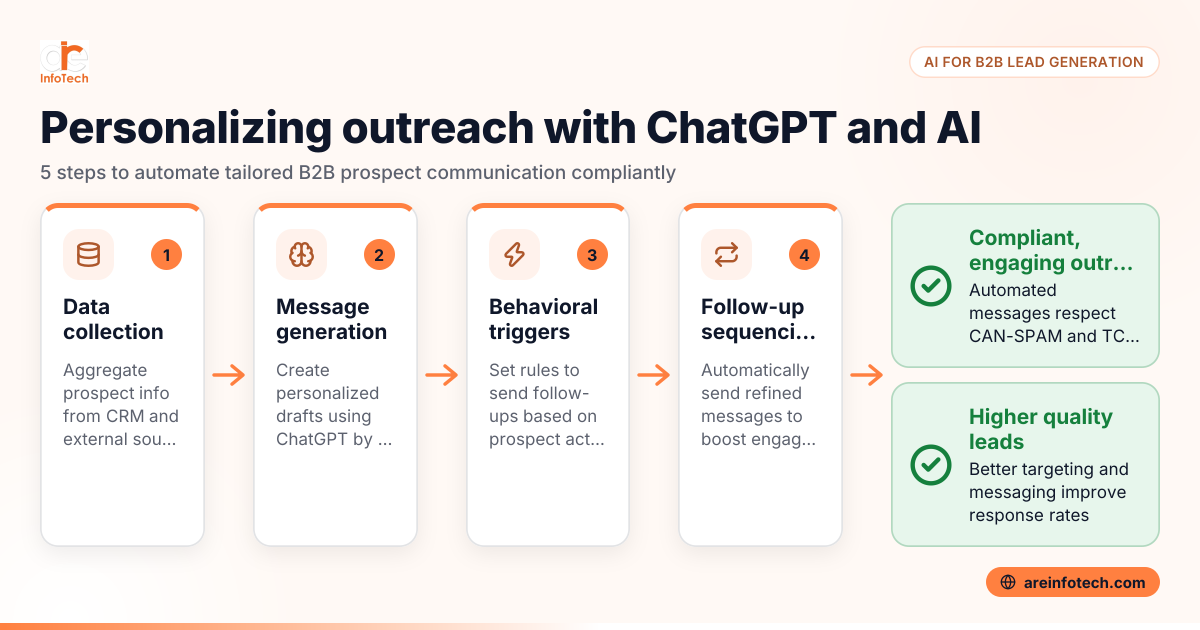
Leveraging ChatGPT and AI tools for B2B lead generation in the United States can transform your sales funnel by automating prospecting, personalizing outreach, and analyzing data to identify high-value leads. These advanced technologies improve efficiency and deliver quality leads faster, enabling your business to stay competitive in dynamic markets such as Chicago, Houston, and Detroit.
AI tools for B2B lead generation use artificial intelligence software to discover, engage, and nurture potential business customers. They analyze data patterns to automate outreach and improve targeting while ensuring compliance with US regulations.
Unlike traditional methods, AI tools tap into machine learning and natural language processing to interpret vast amounts of data—from industry classifications to recent news about companies—and deliver more relevant prospects. For example, a manufacturing supplier in Detroit might use AI software to filter leads by NAICS codes relevant to automotive parts production while prioritizing companies facing supply chain challenges.
Such tools often integrate with core US business systems like QuickBooks for finance tracking or ERP systems common in manufacturing cities to sync lead information and status updates. This interconnected approach reduces manual data entry and allows sales teams to focus on closing deals.
Imagine a Houston-based B2B software provider targeting mid-sized logistics companies. AI tools can scan databases to identify companies with 50-200 employees in Texas, factoring in growth metrics and recent funding announcements. This refined list lowers wasted outreach and improves response rates.
Personalization is key in US B2B sales, where buyers expect tailored communication that addresses specific challenges. AI automation allows companies to craft highly relevant messages at scale.
Using ChatGPT, for instance, you can generate customized emails or LinkedIn connection requests by incorporating prospect data such as industry pain points, recent news, or product interest. The AI can adjust tone and content dynamically to suit different roles—like supply chain managers versus CFOs—ensuring resonance.
AI also allows for adaptive outreach. If a prospect clicks a link in an email but doesn’t reply, the system can trigger a follow-up message with different wording or additional value propositions. This dynamic pivot increases engagement without requiring your sales reps to manually track and remember each interaction.
This approach respects US outreach regulations like CAN-SPAM by embedding unsubscribe options and tracking opt-outs automatically.
A variety of AI tools support different parts of the B2B lead generation process:
A Chicago-based industrial equipment supplier might use an AI prospecting tool integrated with QuickBooks and Salesforce to auto-sync lead purchase history and status. This seamless workflow improves sales follow-up and billing accuracy.
Implementing ChatGPT involves a strategic and phased approach:
Start by linking ChatGPT with systems like Salesforce, HubSpot, or Microsoft Dynamics used in your US business. This enables ChatGPT to access prospect data and log conversations automatically, maintaining a unified sales record.
Create conversation flows that move prospects through qualification stages based on US-specific criteria—such as company revenue thresholds and compliance requirements. ChatGPT can generate scripts that identify pain points unique to your target sectors, like compliance challenges in Texas manufacturing.
Configure ChatGPT to draft and send customized emails, LinkedIn messages, or chat responses. Incorporate regional and industry-specific language, for example, referencing supply chain issues affecting Detroit automotive firms or energy sector trends in Houston.
Use AI analytics to track which messages generate the most engagement and adjust scripts accordingly. Over time, this improves conversion rates and reduces wasted touches.
Program ChatGPT to honor opt-out requests and avoid messaging contacts who have not consented, in line with CAN-SPAM and TCPA regulations. Maintain logs for audit purposes and train your team on responsible AI use.
While AI can handle much of the interaction, avoid fully replacing human touchpoints. Many US B2B buyers still prefer conversations with knowledgeable sales reps once a lead is qualified. Use ChatGPT to assist, not replace, your team.
Automated outreach in the US must comply with strict regulations:
To maintain compliance:
Failing compliance risks can include multi-thousand-dollar fines and reputational damage, particularly for companies targeting large enterprise buyers familiar with these laws.
AI’s ability to analyze large datasets uncovers actionable insights, such as:
A Dallas-based industrial supplier used AI to analyze response data and learned prospects preferred educational content in early outreach rather than direct sales offers. Revising their email sequence to include how-to guides and case studies increased lead engagement by 35%, demonstrating AI’s strategic value.
Yes, small businesses in cities like Detroit or St. Louis can use affordable AI tools to automate labor-intensive tasks like prospecting and personalized email outreach. This levels the playing field, increasing efficiency and allowing smaller teams to compete with larger enterprises.
Many AI lead generation platforms offer native integrations or API connections with QuickBooks and Stripe. This synchronization enables automatic customer data updates and payments tracking alongside lead management, keeping finance and sales aligned.
When configured properly, ChatGPT adheres to regulations such as CAN-SPAM and TCPA by managing opt-ins, opt-outs, and consent-based communications automatically. Ensuring compliance settings and legal reviews during implementation is essential.
Results vary but many US companies experience improved lead quality and increased outreach effectiveness within 4 to 8 weeks. Faster results occur when AI personalization replaces generic messaging and workflows focus on high-value segments.
Costs scale depending on features and volume, but scalable AI platforms offer pricing tiers suitable for US small and medium-sized enterprises (SMEs). The return on investment often justifies the expense by significantly reducing manual labor and increasing qualified lead flow.
Using AI-powered tools like ChatGPT can revolutionize how B2B companies in the United States generate leads. By automating processes while ensuring personalized, lawful communication, businesses from Chicago to Houston can enhance their sales pipeline effectively. For actionable strategies, explore detailed guides on How to Create a Data-Driven B2B Lead Nurturing Strategy for Manufacturing Companies in United States and How to Build a High-Converting LinkedIn Sales Funnel for B2B Businesses in United States. For more insights and tailored approaches, visit the ARE InfoTech blog.
Google Reviews


