
Oct 16, 2026
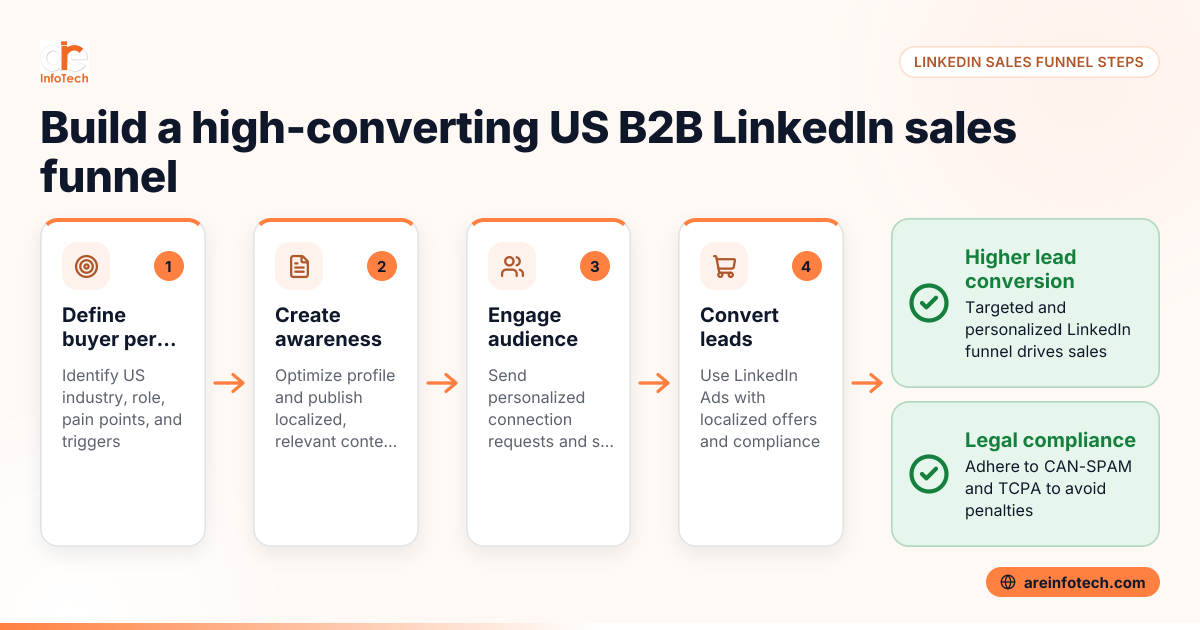
Building a high-converting LinkedIn sales funnel for B2B businesses in the United States involves strategically guiding prospects through awareness, engagement, and decision stages on the platform. By leveraging LinkedIn's professional network, you can attract, nurture, and convert quality leads into customers.
A sales funnel is a customer journey map that outlines the steps prospects take from initial awareness to becoming customers. On LinkedIn, this means using your profile, posts, outreach messages, and ads to attract targeted business buyers, engage them with valuable content, and finally guide them toward purchasing your products or services.
For US-based B2B companies, LinkedIn is especially valuable because it connects professionals directly in industries like manufacturing, technology, and services across cities such as Chicago, Detroit, and Houston. Tailoring your funnel to meet American business practices and expectations improves your chances of success.
LinkedIn hosts over 200 million professionals in the United States alone, making it a fertile ground for B2B lead generation. Unlike cold calling or generic email blasts, LinkedIn enables personalized, measured outreach with a clear professional context that US buyers expect.
Its advanced targeting filters allow you to focus on roles, companies, industries, and geographies relevant to your product. Integrating AI linkedin sales strategies automates prospect identification and scoring, letting your sales team focus on meaningful conversations.
Before building your funnel, develop a clear profile of your ideal customer. This includes their job title, company size, industry, pain points, and buying triggers.
For example, if you target manufacturing managers in Texas's industrial sector, detail the challenges they face managing supply chains or production efficiency. Knowing these specifics helps craft messages and content that resonate.
Your LinkedIn profile serves as a critical first impression for prospects. Make it professional, complete, and aligned with your brand's value proposition.
Use relevant keywords like “LinkedIn sales funnel B2B United States” in your headline and summary to improve discoverability. Publish articles and posts addressing industry pain points your target buyers face. Share insights about market trends in US cities such as Houston or Detroit to localize your content.
Begin building relationships by sending personalized connection requests highlighting shared interests or mutual connections. Avoid generic messages; instead, mention a relevant challenge or compliment their recent work.
Once connected, share value-driven content such as case studies, whitepapers, or invitations to webinars. Be mindful of TCPA guidelines when sending outreach messages and CAN-SPAM compliance if using LinkedIn InMail campaigns.
AI linkedin sales automates and optimizes lead identification, engagement, and scoring to increase funnel conversion rates.
Advanced tools analyze prospect behavior, adjust messaging timing, and prioritize leads showing buying signals. This reduces manual effort and increases personalized outreach effectiveness.
By incorporating AI tools, your sales team in Chicago or Houston can focus on nurturing high-quality leads rather than spending time qualifying prospects manually.
Use LinkedIn’s Sponsored Content and Message Ads to retarget engaged users with offers aligned to their funnel stage. For instance, after a prospect downloads an industry report, invite them to a free consultation or a product demo.
Testing ad copy that addresses US-based business pain points, such as dealing with state sales tax complexity or compliance challenges, improves response rates. Incorporate localized messaging for cities like Detroit or Chicago for higher relevance.
Remember to comply with all advertising policies and privacy laws applicable in the US during campaigns.
Lead nurturing is a continuous process through the sales funnel. Regularly share useful information, updates, and personalized messages to keep your business top-of-mind.
Integrate your LinkedIn leads with your CRM system and finance stack such as QuickBooks or Stripe to track engagement and revenue impact. This enables detailed pipeline reporting vital for adjusting strategies effectively.
Use LinkedIn analytics and tools like Google Analytics for tracking the performance of your content, ads, and outreach. Focus on conversion metrics at each funnel stage — profile visits, connection acceptance rates, content engagement, and ultimately sales closed.
Regularly audit campaigns to identify bottlenecks. For example, if message acceptance is low in Houston-based leads, tweak your approach or messaging.
Continuous optimization ensures you stay competitive in changing market dynamics within the United States.
US businesses must comply with CAN-SPAM and TCPA regulations when sending commercial messages.
This means obtaining prior consent for outreach calls or texts, including opt-out options, and respecting Do Not Call lists. Adhering to these laws protects your business reputation and prevents legal consequences.
This post provides a clear, keyword-focused approach on "LinkedIn sales funnel B2B United States," naturally integrating the term throughout headings and the body. The inclusion of "ai linkedin sales" connects with evolving tech trends in sales funnels. Reader questions as headings improve UX and relevance. The article addresses cultural and legal nuances important in US B2B marketing, enhancing topical authority.
Start by defining your ideal customer profile and optimizing your LinkedIn presence to attract them. Share valuable content and engage through personalized connections, then nurture leads with relevant messaging and targeted ads.
AI tools enhance efficiency by automating lead scoring and outreach but don’t replace human relationships. Your sales team’s role in building trust through conversations remains crucial.
Sponsored Content and Message Ads are highly effective for B2B. Sponsored Content builds brand awareness, while Message Ads enable personalized offers directly to decision-makers.
Regularly analyze funnel metrics at least monthly to quickly identify issues and opportunities. Use LinkedIn and CRM analytics to measure each stage’s conversion rates.
Adhering to laws like CAN-SPAM and TCPA is vital to avoid penalties and maintain your brand’s reputation. Always provide opt-outs and obtain consent when required.
For more insights on optimizing digital marketing strategies for US businesses, visit the ARE InfoTech blog. To learn advanced analytics techniques, read How to Use Google Analytics 4 to Improve B2B Lead Conversion for Small Businesses in United States.
Google Reviews


