
Oct 18, 2026
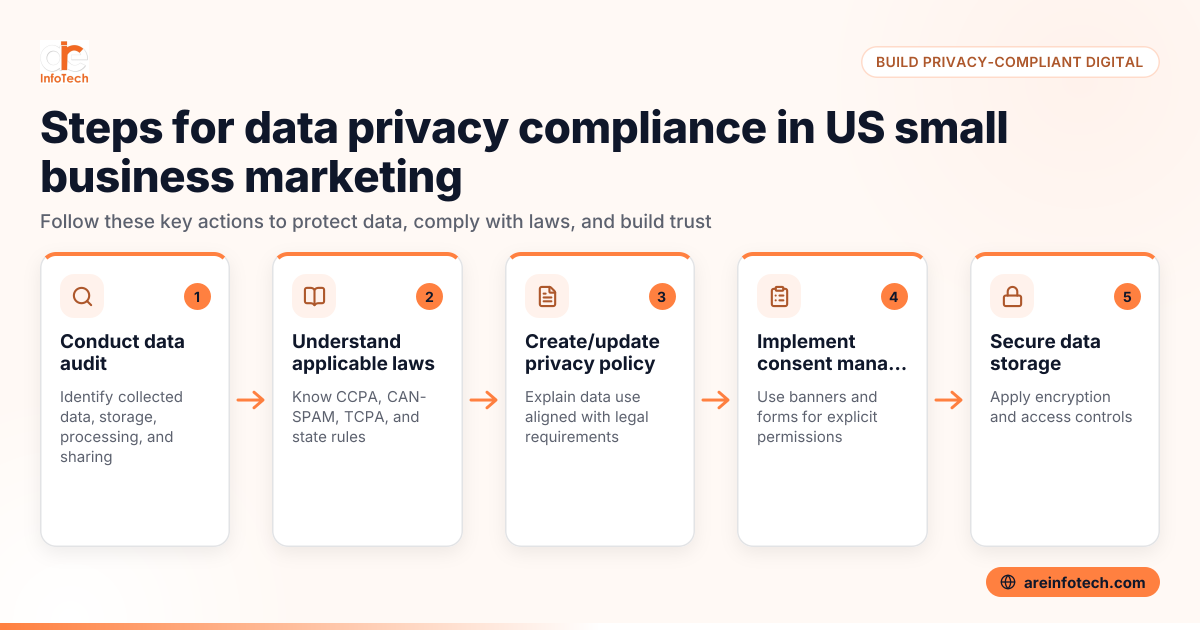
Developing a data privacy-compliant digital marketing strategy in the United States is essential for small businesses to protect customer information, comply with laws like CCPA and CAN-SPAM, and build trust. It involves carefully collecting, managing, and using customer data while respecting privacy rights and meeting regulatory standards.
Data privacy is essential because US laws regulate how businesses collect, store, and use personal information to protect consumers. Noncompliance can result in fines and lost customer trust. A balanced approach ensures marketing goals align with these legal and ethical expectations.
Protecting consumer data is not only legally required but also builds credibility. Customers expect transparency about how their information is handled, which influences their engagement and loyalty with your brand.
The primary laws affecting US digital marketing include:
Understanding these rules helps you tailor your approach to data handling and communication.
Transparency begins with clear, easy-to-find privacy policies that explain what data you collect and why. Always provide options for consumers to manage or opt out of data sharing. Openly sharing your privacy practices builds trust.
Trust grows when you actively protect data and honor user preferences promptly. Demonstrating respect for privacy strengthens customer relationships and encourages loyalty.
AI data privacy means protecting personal information processed by AI tools used in marketing automation and analytics. Ensuring compliance involves restricting data collection to what’s necessary, anonymizing sensitive info, and reviewing vendor privacy policies. Transparency about AI’s role reassures customers your data use is ethical.
AI systems handle large data volumes, so respecting ai data privacy is critical to prevent breaches and maintain regulatory compliance.
Email and phone outreach must include clear identification of your business, truthful messaging, and opt-out mechanisms. For emails, comply with CAN-SPAM by including a valid physical address and functional unsubscribe links in every message. For calls and texts, TCPA requires obtaining prior express written consent and checking state-specific Do Not Call lists.
Use reliable platforms that manage opt-ins, opt-outs, and maintain compliance records. Document consent to protect your business in case of disputes.
SOC 2 is an auditing standard focused on data security, confidentiality, and privacy controls in service organizations. While SOC 2 is more common in SaaS and technology providers than SMEs, small businesses working with vendors or handling sensitive customer info should consider its frameworks.
Adopting SOC 2 aligned practices—such as robust data access controls, incident response plans, and encryption—enhances customer confidence and helps meet expectations from partners or clients who demand high standards of data protection.
Several tools assist with managing data privacy compliance:
Choosing tools that fit your business size and sector can simplify compliance efforts and reduce risk.
US privacy laws are evolving rapidly, with more states enacting strong rules. Businesses must treat compliance as ongoing, regularly updating policies and technologies. Integrating privacy by design in marketing and data systems helps maintain legal and competitive advantage.
Adapting quickly to regulatory shifts safeguards your brand and customers while supporting sustainable marketing growth.
To maximize visibility for your data privacy digital marketing strategy in the US, an SEO audit can identify keyword opportunities, technical errors, and content improvements. An audit focuses on local SEO relevance for your target cities like Chicago or Houston, ensuring compliance-related content ranks well and attracts the right audience. Tools that assess page speed, mobile friendliness, and backlink quality also contribute to stronger search performance.
Costs vary by business size and tools needed. Basic steps include updating policies and consent systems. Investing in secure storage and AI privacy reviews increases costs but reduces the risk of costly fines.
No. All businesses must comply with laws like CAN-SPAM and TCPA. Failure leads to penalties and damages reputation.
Review policies annually or after major law changes. Update when introducing new AI or marketing channels.
AI is powerful but requires careful management. Choose vendors with strong privacy practices and limit data use to necessary purposes.
CCPA applies if your business meets thresholds, regardless of location. Many US businesses comply to serve California residents or meet criteria.
Offer clear processes for data access, correction, or deletion. Verify identities and respond quickly to comply with laws like CCPA.
For more detailed insights on digital marketing compliance, explore the ARE InfoTech blog and learn practical strategies that align your marketing with US data privacy expectations. You can also check out How to Build a Targeted Email Marketing Campaign for Small Businesses in United States for outreach tactics compliant with regulations.
Google Reviews


