
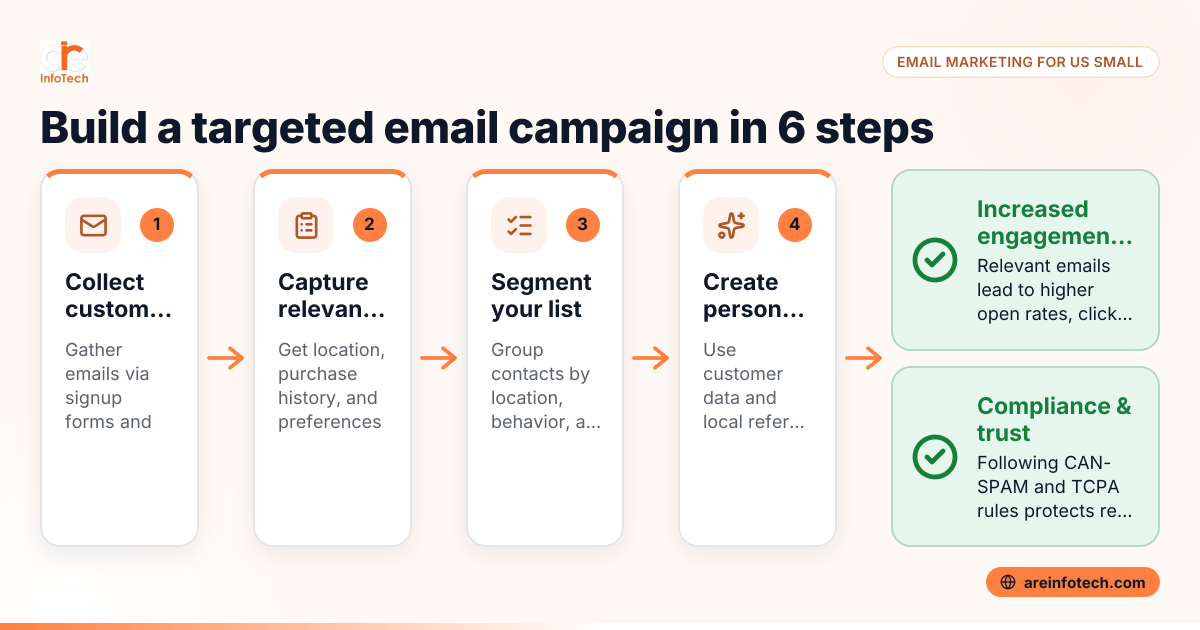
Building a targeted email marketing campaign is essential for small businesses in the United States aiming to connect with their audience, increase engagement, and boost sales. By focusing on precise customer segments and delivering personalized content, you maximize the impact of every email. This strategy not only saves marketing dollars but also fosters deeper customer relationships that drive repeat business.
Targeted email marketing allows small businesses to send relevant, personalized content directly to specific customer segments. This precision improves engagement, reduces unsubscribes, and boosts sales by addressing customer needs more effectively than generic email blasts.
Most small businesses in the US depend heavily on email because it is cost-effective, direct, and measurable. Unlike broad advertising or social media posts, targeted email marketing speaks directly to a specific group of customers with messages tailored to their interests and buying behaviors. Rather than sending the same general promotion to all customers, a targeted approach might separate previous buyers from new leads or segment users by location or product category interest.
For example, a small bakery in Chicago could send an email about new cake flavors to past customers who ordered cakes before, while also sending a welcome offer to newsletter subscribers who haven't purchased yet. This prevents customer fatigue from irrelevant emails and increases the chance that recipients will open, read, and act on your messages.
Furthermore, targeted emails build stronger loyalty and trust. Customers appreciate when businesses anticipate their needs and provide useful information instead of generic offers. This is especially important in competitive US cities like Houston and Detroit where local competition is fierce.
AI targeted email uses artificial intelligence to analyze customer data and optimize email campaigns automatically. It personalizes content, predicts the best send times, and recommends products tailored to each recipient to improve engagement and sales.
AI targeted email uses artificial intelligence to analyze large amounts of customer data and optimize every aspect of your email marketing. This includes:
For US small businesses, AI can be a game changer because it automates tasks that would otherwise require significant manpower, while increasing effectiveness. For example, a retailer in Detroit selling winter gear might use AI to prioritize emails to customers likely to purchase cold-weather items soon or create special offers for heavy buyers just ahead of the holiday season.
Building a high-quality targeted email list is the foundation of a successful campaign. Here’s a step-by-step process tailored for US small businesses:
Start by gathering emails with clear user consent, following US legal guidelines. Use website signup forms, social media campaigns, and in-store events to ask customers to join your mailing list. Offering incentives like discount coupons or free guides works well. For example, a Detroit-based auto parts store can offer a 10% discount to customers who subscribe online or in-store.
Besides emails, collect information that helps segment, such as location (city or ZIP code), purchase history, age, or interest preferences. For instance, if you run a boutique in Houston, knowing customers’ preferred product categories or genders helps create specific campaigns.
Tools like Mailchimp or Constant Contact integrate well with financial apps popular in the US like QuickBooks or Stripe. Syncing sales and payment data helps you understand buying behavior and segment email lists accordingly. For example, QuickBooks data shows which customers bought high-ticket items, so you can target them with premium product offers.
Divide your email list into meaningful groups. Common segments include:
Regularly clean your list by removing bounced or inactive emails. This improves deliverability and prevents your campaign from being flagged as spam under CAN-SPAM regulations.
Personalization goes beyond names. Use customer data to craft emails that speak directly to individual needs, preferences, and past interactions. This makes your emails more relevant and compelling.
If segmenting by location, mention regional events or weather. For a Houston restaurant, an email promoting refreshing summer drinks during a heat wave connects with local life.
Recommend complementary products or services. If a Chicago customer bought running shoes, an email suggesting quality running socks or apparel is more effective.
Use AI-powered email tools to display items based on browsing history or cart abandonment behaviors.
Share testimonials or success stories from local customers in Detroit or Houston, helping recipients relate emotionally.
Each segment’s email should have a CTA that fits their journey stage, such as “Shop Now,” “Learn More,” or “Claim Your Local Discount.”
A boutique in Houston sends two different emails:
This custom messaging shows thoughtfulness and relevance.
US small businesses must comply with laws like CAN-SPAM and TCPA to stay legal and maintain customer trust. Failure to comply can lead to expensive fines and damage to reputation.
The CAN-SPAM Act applies to any US business sending commercial emails. Key requirements include:
Violations can incur fines up to $43,792 per email, so it’s critical that your email marketing tools automatically manage unsubscribe requests and maintain accurate records.
While TCPA mostly regulates phone calls and SMS, it also restricts certain automated marketing communications. Ensure you have consent before contacting customers via phone or text about promotions.
Start with clear, measurable objectives, such as increasing repeat sales by 10%, boosting website visits, or promoting a new service launch. For example, a Chicago home services firm might aim for a 20% uplift in booked consultations from email.
Based on your collected data, create well-defined groups. For a Houston florist, segments could include:
Segmentation enhances relevance and maximizes ROI.
Develop unique subject lines and bodies for each segment. Use persuasive language, focused benefits, and personalization tokens based on the data you have.
Deploy AI-powered platforms to A/B test subject lines, automate send times, and intelligently vary content. This reduces guesswork and improves results.
Test on smaller subsets, measuring open rates, clicks, and conversions. Use A/B testing to find the best-performing variants.
Review campaign analytics weekly or monthly. Use insights to optimize segmentation, messaging, sending frequency, and design for future emails.
Deliverability depends on list quality and message relevance. Use clean lists, avoid spam triggers, authenticate your domain, and personalize subject lines for better opens.
Following these practices helps your emails land in inboxes rather than spam folders.
Yes. Many affordable platforms offer AI tools tailored for small budgets. Entry-level plans from providers like Mailchimp and Constant Contact start around $10–$20 per month, providing powerful segmentation and personalization options.
Integration with QuickBooks or Stripe helps automate data syncing for smarter emails. Small businesses in Detroit and Chicago benefit from these tools without needing large marketing teams.
Track these KPIs regularly to improve your campaigns:
Fine-tuning your approach based on these helps increase ROI.
Localizing your emails boosts connection and response rates. Mention city events like the Houston Livestock Show or Detroit Jazz Festival. Highlight customer stories from your community. Promote local store events and charity involvement. Customize images and references to reflect each city’s unique vibe.
This strategy helps your emails stand out in crowded inboxes and build loyal local customers.
Targeted email marketing small business United States campaigns are vital for strengthening customer relationships and driving sales. Leveraging AI-targeted email tools can streamline personalization and improve results. Always ensure compliance with US laws like CAN-SPAM and TCPA, and regularly optimize your campaigns based on data insights. For practical guidance on building effective digital marketing strategies, visit the ARE InfoTech blog.
Effective segmentation often includes dividing your list by customer location, purchase history, engagement levels, and demographics. These groups allow you to deliver content and offers that meet customers’ specific needs and interests.
AI analyzes customer behavior to tailor emails, optimize sending times, generate subject lines, and recommend products automatically. This reduces manual effort while increasing open and conversion rates.
Yes. CAN-SPAM compliance is mandatory for any US business sending commercial emails. It ensures transparency, user control, and helps avoid costly penalties by requiring a clear opt-out process and truthful messaging.
Generally, 1–4 emails per month strike a balance between maintaining visibility and avoiding overloading your contacts. Adjust frequency based on customer feedback and engagement metrics.
Absolutely. Personalization and relevance encourage repeat purchases and help promote time-sensitive local offers, building stronger ties with customers in your city.
Look for solutions with powerful segmentation, AI-driven personalization, and integration with common US financial tools like QuickBooks and Stripe. Popular choices include Mailchimp, Constant Contact, and Sendinblue.
For detailed guides on developing digital marketing strategies and ensuring compliance in the United States, explore How to Build a HIPAA-Compliant Digital Marketing Strategy for Healthcare Providers in United States and How to Build an Effective Google Ads Strategy for Local Service Businesses in the United States.
Google Reviews


