
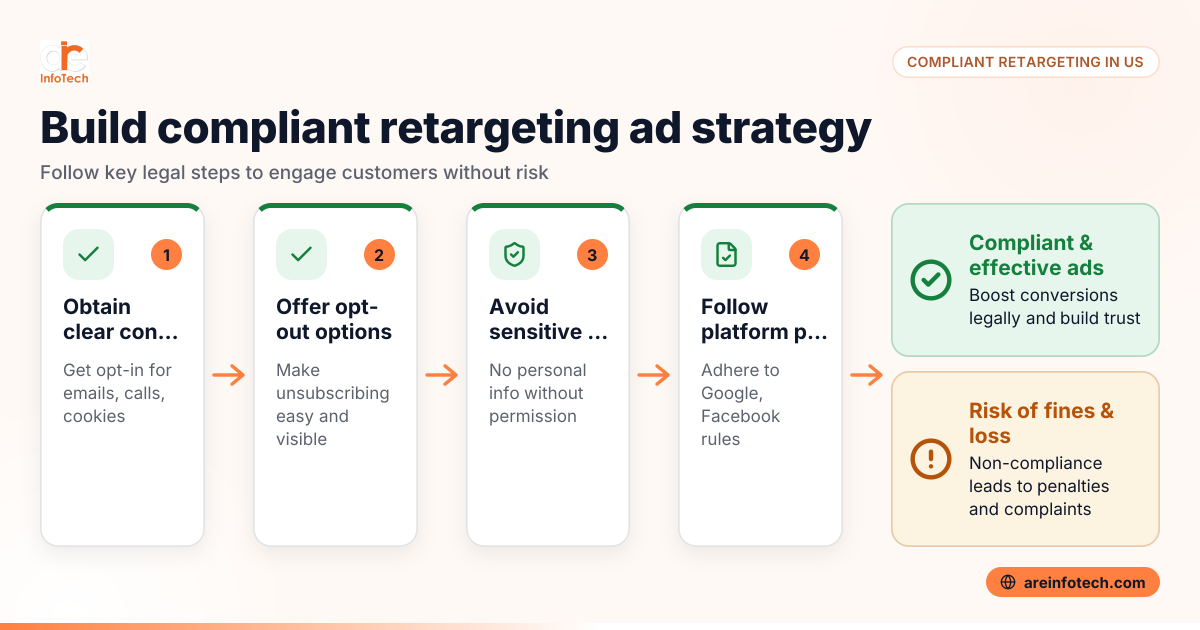
Building a compliant retargeting ad strategy in the United States means targeting potential customers who have interacted with your business online while following laws like the CAN-SPAM Act and TCPA. This approach helps increase conversions without risking fines or damaging customer trust.
Compliant retargeting ads show marketing messages to users who visited your website or used your services while following U.S. laws on privacy and data use. They require clear user consent, proper disclosures, and easy opt-out options under regulations like CAN-SPAM and TCPA.
These ads can greatly boost conversions for small businesses in cities such as Chicago and Houston. However, compliance is essential to avoid fines and maintain customer trust.
Retargeting ads must not use sensitive personal information without explicit permission. They should also respect platform policies from Google, Facebook, and others, which have built-in compliance features. Proper disclosures about how data is used and providing opt-out mechanisms are important aspects of compliant campaigns.
Follow these main steps for compliance:
Taking these steps protects your business from legal risks and builds customer confidence in cities like Detroit and Houston.
AI compliant retargeting uses advanced algorithms to personalize ads while respecting privacy and legal limits. AI segments audiences efficiently, optimizing ad delivery to meet data use policies without overwhelming users.
It can automate compliance checks by tracking regulations like CAN-SPAM and TCPA in real time. AI also adjusts ad frequency to reduce user frustration, a key compliance factor.
Small businesses in markets like Chicago benefit by using AI tools to boost campaign ROI responsibly while adhering to U.S. laws.
Ignoring opt-out requests or making opt-outs hard to find damages customer trust and violates rules. Using phone numbers without prior consent can breach the TCPA, leading to fines. Bombarding users with excessive ads causes ad fatigue and complaints.
Failing to update your privacy policy or not keeping records of consent puts you at regulatory risk. Also, assuming platform ad policies cover all legal compliance is a mistake; you must meet all U.S. laws independently.
Avoiding these pitfalls keeps your campaigns effective and legally sound.
ARE InfoTech helps U.S. small businesses craft retargeting ad campaigns that follow privacy laws and industry best practices. We integrate AI compliant retargeting tools that respect CAN-SPAM and TCPA rules.
Our experts ensure campaigns use compliant opt-in and opt-out processes and align with platform-specific policies. We also perform regular audits to keep your strategy up-to-date with legal changes.
Partnering with ARE InfoTech gives you confidence that your retargeting ads are both efficient and compliant with U.S. regulations.
Retargeting ads must comply with laws like the CAN-SPAM Act for emails, the Telephone Consumer Protection Act (TCPA) for phone contacts, and FTC advertising guidelines. These ensure you obtain proper consent, provide disclosures, and respect opt-out requests.
Obtain consent through clear cookie banners, opt-in forms, or privacy policy acknowledgments. The consent language should be straightforward, specific to retargeting, and easy for users to understand before sharing their data.
AI can assist by monitoring legal updates, optimizing ad delivery, and segmenting audiences responsibly. However, businesses must maintain manual oversight to ensure full legal compliance and handle complex cases.
Non-compliance risks include hefty fines from the FTC, lost customer trust, lawsuits, and suspension of ad accounts. Poor compliance can also damage your brand reputation permanently.
Review privacy policies and compliance measures at least once a year or when new laws or platform rules emerge. Regular updates prevent fines and keep your campaigns running smoothly.
Yes, compliant retargeting ads improve conversions by re-engaging potential customers. Businesses in competitive markets like Houston or Detroit see better ROI by targeting interested users respectfully.
Retargeting ads done responsibly and compliantly are a powerful tool for U.S. small businesses. Using AI compliant retargeting technology and following legal rules ensures success without risk. For professional help building compliant strategies, consider ARE InfoTech. Learn more insights at the ARE InfoTech blog or try How to Build a Targeted Email Marketing Campaign for Small Businesses in United States.
Google Reviews


