
Oct 19, 2026
Creating a successful digital marketing plan tailored to California's unique business environment involves understanding local consumer behavior, regulations, and competitive dynamics. A state specific digital marketing plan California businesses can leverage focuses on compliance with state laws, utilizes targeted local outreach, and employs technology like AI to identify and connect with potential customers effectively.
California’s strict privacy laws, diverse population, and dynamic economy require tailored marketing strategies. A state specific digital marketing plan helps businesses comply with regulations like CCPA and connect authentically with local audiences.
A digital marketing plan tailored for California must consider the state’s distinct regulations, customer diversity, and business landscape. California enforces its own stringent data privacy laws like the CCPA that affect marketing tactics, especially around data collection and outreach. Moreover, California’s urban centers such as San Francisco and Los Angeles have unique cultural and economic characteristics influencing customer behavior. This requires customized messaging and channel choice that resonates locally.
For example, consumers in Silicon Valley may respond well to tech-forward, innovation-themed content, whereas Southern California’s entertainment industry influence might call for a more lifestyle-oriented approach. Besides, state tax policies impacting e-commerce and digital sales should be factored in, as they can affect pricing, promotions, and compliance statements made in marketing materials.
Compliance with California's CCPA requires clear data transparency, opt-out options, and honoring consumer rights. Use AI state specific tools to automate monitoring and adjust privacy policies accordingly.
California’s CCPA gives residents greater control over their personal information, imposing strict rules on businesses marketing to them. To comply:
Using AI state specific tools can help monitor compliance by automatically scanning marketing content and data handling processes. Make sure your email campaigns follow CAN-SPAM rules, while telemarketing complies with TCPA restrictions, especially given California’s active enforcement environment.
Localized SEO boosts visibility through targeted keywords, Google My Business, and local backlinks. Mobile optimization and review management also help capture California customers.
Localized SEO is critical for visibility amidst California’s competitive markets. Here are essential tactics:
Combining these with mobile-optimized sites benefits California consumers who predominantly search on smartphones.
AI state specific marketing tools analyze California market data to finely tune customer targeting and campaign efficiency. They enhance personalization while ensuring legal compliance and boosting ROI.
AI state specific marketing tools use machine learning to analyze California market data, customer behavior, and competitor actions. They help small businesses with:
These technologies increase relevance and engagement in your campaigns while maintaining compliance with stringent California laws.
Allocate budget across SEO, paid ads, content, and AI tools with a focus on California’s major markets and compliance demands. Regular reviews ensure optimal spend and adaptability.
Start by allocating funds across channels based on California-specific opportunities. Key considerations:
Regularly review your spending and performance metrics to optimize ROI within California's dynamic market.
California audiences value sustainability, diversity, innovation, and lifestyle content. Align messages with these themes for higher engagement and brand loyalty.
California’s consumers value innovation, sustainability, and cultural diversity. Tailor content to include:
Aligning messaging with these values helps build brand affinity and loyalty.
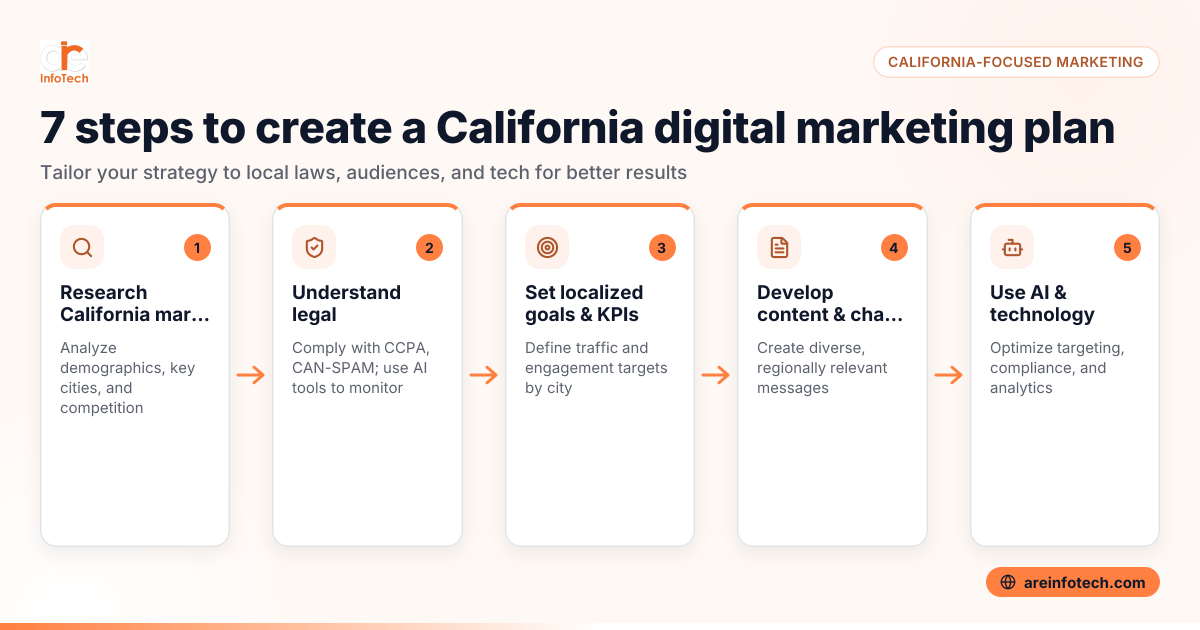
Start with a detailed analysis of local demographics and economic sectors using US Census data and competitor research. Identify key cities and audience segments.
Learn compliance specifics for CCPA and federal laws like CAN-SPAM. Use AI state specific tools to monitor your practices continuously.
Set measurable goals focused on California cities, including traffic, leads, and engagement benchmarks specific to those markets.
Craft content that reflects California’s diverse culture and economy. Choose channels that best reach your targeted local segments.
Leverage AI state specific software for optimizing ad targeting, compliance tracking, and campaign analytics tailored to California dynamics.
Deploy campaigns with geo-targeting and stay vigilant about legal adherence. Use analytics to track success against your KPIs.
Regularly update your strategy based on real-time data and customer input to maximize effectiveness and ROI.
An SEO audit is essential to uncover local ranking opportunities and compliance with Google’s best practices. For California businesses, assess your website's mobile performance, local citation accuracy, and content relevance to state-specific searches. Identifying gaps helps prioritize technical fixes and content improvements. You can request a tailored SEO audit from the ARE InfoTech blog.
California’s CCPA requires stricter consumer privacy protections than federal laws, emphasizing transparency and user control over personal data. Businesses must comply with both to avoid penalties.
Mobile optimization is crucial since many Californians use smartphones to search and shop. A mobile-friendly site enhances user experience and improves search rankings.
Yes, numerous AI marketing tools offer scalable pricing suited for small businesses, enabling efficient targeting and reducing manual workload within budget.
Social media is vital for engaging diverse California audiences. Platforms like Instagram, Facebook, and TikTok support localized community building and brand awareness.
Update your plan at least annually, but more frequent reviews help address regulatory updates, competitive shifts, and evolving consumer preferences.
For deeper insights on compliance and targeting strategies, see How to Build a Compliant Retargeting Ad Strategy for Small Businesses in United States and How to Develop a Data Privacy-Compliant Digital Marketing Strategy for US Small Businesses. Planning your marketing with a clear focus on California’s specifics will build trust and drive growth.
Google Reviews


