
Oct 19, 2026
SMS marketing is a direct communication channel that allows United States small businesses to reach customers instantly on their mobile devices. A compliant and well-crafted SMS strategy can drive engagement, loyalty, and sales while respecting regulations like TCPA and CAN-SPAM.
SMS marketing reaches customers directly on their phones, where messages are typically read within minutes. In a country with over 270 million smartphone users, this channel offers unmatched immediacy. US businesses in cities like Chicago, Houston, and Detroit can send timely offers, appointment reminders, and updates to nurture relationships and accelerate sales.
Its openness and directness make SMS uniquely effective compared to email or social media. However, careful adherence to US privacy and anti-spam laws is mandatory to protect your brand and avoid fines.
You must get explicit, verifiable consent before sending promotional texts, include a clear method to opt out, and honor opt-out requests promptly. Your messages need to identify your business clearly and avoid deceptive content, as required under TCPA and CAN-SPAM.
Consent can be collected via online forms, checkboxes, or keyword opt-ins (e.g., “Text JOIN to 12345”). Keep documentation to disclose proof if needed. Limit texts to reasonable hours—8 a.m. to 9 p.m. local time is best practice. Each message must provide opt-out instructions like “Reply STOP.”
Penalties for violations may reach $1,500 per unsolicited message, so compliance is a business imperative.
A high-performing SMS marketing strategy delivers personalized, relevant messages respecting customer preferences. It optimizes message timing and content to maximize engagement.
Segment your audience by location, behavior, or purchase history to tailor messages that resonate. Write clear, concise calls to action—e.g., “Show this text for 20% off your next visit.” Use AI SMS marketing tools that analyze customer patterns and optimize timing, boosting open and response rates.
Combining SMS with email or social promotions strengthens your overall marketing efforts.
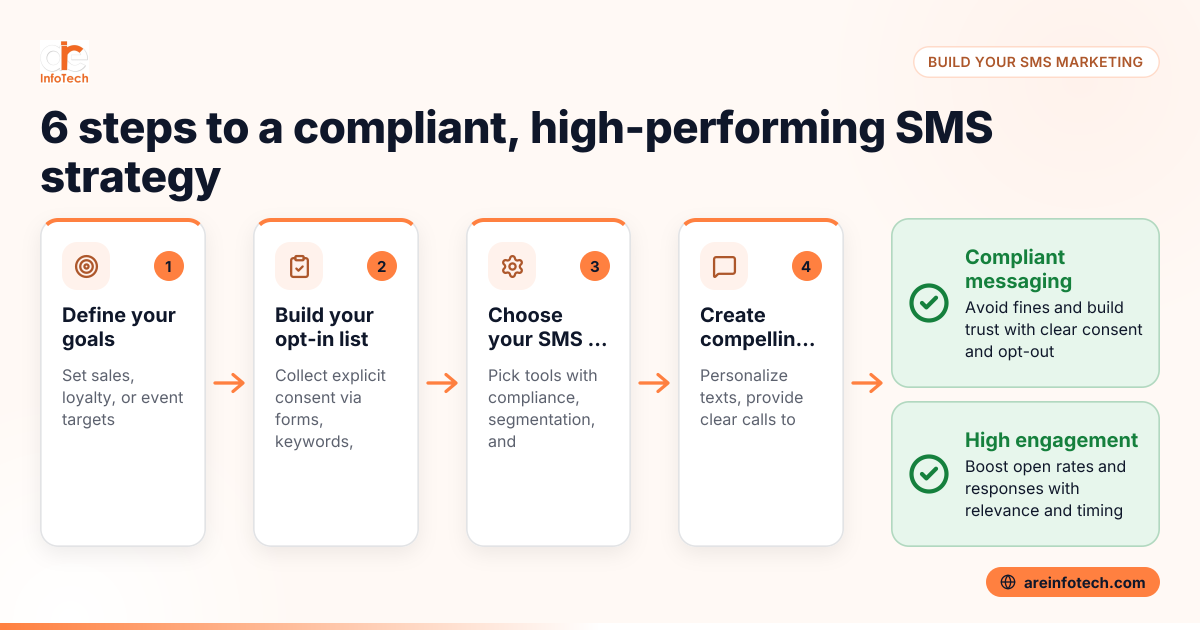
Clarify whether you want to increase sales, boost event attendance, or improve customer loyalty. Defined goals guide your messaging and targeting.
Collect consent via website sign-ups, in-store prompts, or email campaigns. For example, a Detroit boutique could ask customers to text a keyword to join a VIP list.
Pick platforms offering compliance management, segmentation, automation, and AI SMS marketing features to elevate campaign success.
Keep texts short and relevant with clear incentives or reminders. Personalize using customer names or store locations to increase appeal.
Leverage AI analytics to identify optimal send times. Automate welcome texts, follow-ups, and re-engagements to save time and maintain consistency.
Track delivery, engagement, conversions, and opt-out rates. Use insights to refine your messaging, timing, and audience segments.
AI SMS marketing uses machine learning to tailor message content, timing, and targeting for better engagement and ROI.
AI tools analyze customer data to send texts when recipients are most responsive and test message variants for effectiveness. For instance, a Houston restaurant might use AI to identify peak lunch hours for sending promotional offers, maximizing redemptions.
Dynamic segmentation powered by AI ensures customers receive personalized messages reflecting preferences and purchase history. This automation reduces manual effort and makes SMS marketing scalable.
A cross-channel approach boosts campaign impact. Use SMS to complement emails and social media by:
For example, a Detroit retailer could send SMS coupons during a coordinated Black Friday email and social campaign to drive store visits.
Track key performance indicators (KPIs) including:
Use your platform’s analytics for real-time tracking. Continuous testing of message copy, frequency, and send times will improve outcomes.
Maintaining compliance requires ongoing audit of consent records and staying informed on changing TCPA and CAN-SPAM guidelines. Working with expert partners like ARE InfoTech helps ensure your SMS campaigns remain lawful and effective, aligning with US digital marketing regulations.
US small businesses committed to consent-driven, AI-enhanced SMS marketing will gain customer loyalty and boost revenue. Prioritize transparency, leverage AI SMS marketing tools to optimize campaigns, and continually refine strategy with data. This approach builds a powerful and compliant SMS presence that drives growth.
For more guidance, visit the ARE InfoTech blog and see resources like How to Build a Compliant Retargeting Ad Strategy for Small Businesses in United States.
You need express written consent, clear and simple opt-out instructions, and must follow TCPA and CAN-SPAM regulations. Messages should truthfully represent your business and avoid spamming. Regularly maintaining records of consent is crucial.
AI tools optimize when and what you send by analyzing customer behavior and preferences. This improves personalization and engagement while reducing manual effort and guesswork in campaign management.
Direct integration is uncommon, but SMS can be used within your broader workflow to send payment reminders or confirmations. Integrations usually occur through CRM or marketing automation tools connected to these finance platforms.
Generally, 2-4 messages per month are ideal to maintain interest without causing fatigue. Monitor response and opt-out rates to adjust frequency based on your audience’s preferences.
Yes. Manufacturers can use SMS for order updates and compliance alerts. Service businesses benefit from appointment reminders and personalized promotions. Relevant, timely messages are key in all sectors.
Most platforms charge per message sent plus a monthly fee. Prices vary by message volume and platform features, including AI SMS marketing capabilities. Choose platforms that align with your budget and goals.
Google Reviews


