
Oct 09, 2026
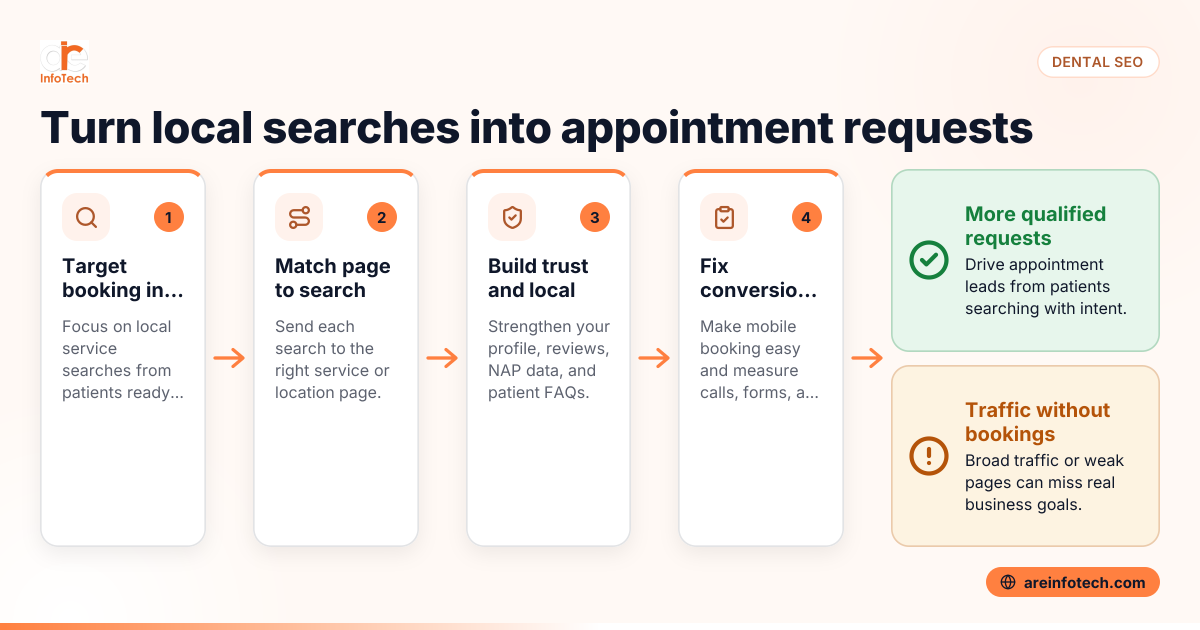
SEO for dental practices in United States means making your practice easy to find when people are ready to book care. The goal is not just more traffic. It is more high-intent appointment requests from people searching for services like emergency dentistry, dental implants, Invisalign, family dentistry, and new patient exams in your city.
Most dental searches are local and urgent. A patient in Chicago looking for “emergency dentist near me” does not want to browse for an hour. They want a trustworthy provider, clear next steps, and an easy way to call or request an appointment.
That is why seo for dental practices united states should focus on commercial intent. You are not trying to win every dental keyword. You are trying to show up when someone is ready to act.
This matters for several common practice goals:
A practice in Houston may want more implant consults. A family dentist in Detroit may want more new patient bookings and same-week emergency calls. The SEO plan should match the revenue model.
High-intent dental SEO means targeting searches from people who are close to booking. Examples include “dentist in downtown Chicago,” “same day dental crown Houston,” or “Invisalign consultation near me.”
That differs from general informational content. Educational content still helps, but the core of your strategy should support action.
These terms usually signal stronger booking intent:
These searches often convert better than broad terms like “oral health tips” or “how to brush properly.”
A common mistake is sending every search to the home page. That weakens relevance. Instead:
This page-to-keyword match improves rankings and conversion rates.
Start with your Google Business Profile, home page, main service pages, and each location page. Then build trust pages like reviews, insurance, financing, and new patient information.
For local dental SEO, this is often the most important asset after your website. Make sure it includes:
Your Google Business Profile strongly influences map pack visibility. For many practices, map pack leads can outperform standard organic listings.
Your home page should explain:
Use plain language. A visitor should know within seconds whether your office is right for them.
Create dedicated pages for your highest-value services, such as:
Each page should answer practical patient questions and include a clear call to action.
If you have multiple offices, each office needs its own unique location page. Do not duplicate the same copy and swap city names.
A strong location page includes:
Local rankings improve when your practice sends strong relevance, proximity, and trust signals. Build accurate business data, strong service pages, real reviews, and a fast site that converts visitors into calls and form fills.
After that foundation, expand your local authority with supporting content and citations.
Google needs clear local signals. Add your city and service naturally in:
Do not overdo it. If your copy sounds forced, it will not help patients or search engines.
Reviews are one of the strongest trust signals for dental practices. They affect both rankings and conversion.
Use a consistent process:
Do not post fake reviews or pressure patients into specific wording.
Your practice name, address, and phone number should match across your website, listings, and directories. Inconsistent local data can weaken trust signals.
Check:
Service pages, location pages, review content, and patient FAQ content drive the best appointment intent. Blog content helps when it supports real patient decisions, such as cost, treatment options, recovery, or urgency.
Then connect those pages with strong internal links and clear booking calls to action.
Patients often hesitate because they are unsure about pain, cost, timing, or candidacy. Your pages should address those concerns directly.
For example, an implant page can answer:
The goal is not academic depth. The goal is reducing friction before the call.
Good FAQ content helps with both SEO and AI search. Many people now ask assistants questions before they visit a site. This is where ai seo becomes practical. Clear, direct answers can improve visibility when search tools summarize results.
Useful topics include:
Internal links help users and search engines move through your site. For example, your emergency dentistry page can link to financing, your location page, and your appointment request page.
If you want a broader foundation, the ARE InfoTech blog has useful reading on SEO structure and lead generation.
Strong on-page SEO makes your pages easier to rank and easier to convert.
For every important page, review:
Your title tag should be specific. “Dental Implants in Houston, TX | [Practice Name]” is better than “Home.”
A dental website should sound clear and calm. Many visitors are anxious. Avoid jargon when simple words work better.
Good copy does three things:
Healthcare decisions involve risk and emotion. Trust signals matter.
Useful trust elements include:
Technical SEO does not replace content or local work, but it supports both.
Review these areas regularly:
A slow, confusing mobile site can waste strong rankings. Many dental searches happen on phones, often during moments of urgency.
If you redesign or migrate your website, preserve rankings and conversions carefully. Keep page URLs stable where possible. Preserve title tags, content intent, local pages, forms, and call tracking.
If you are planning a rebuild, this guide on WordPress SEO Migration Checklist in United States: How to Preserve Rankings, Forms, and Lead Tracking is a helpful reference.
Do not measure success by traffic alone. A dental practice should track business outcomes.
Focus on:
If your traffic rises but booked appointments do not, something is off. It may be the wrong keywords, weak page intent, poor calls to action, or bad mobile experience.
Use tools that show where leads came from. At minimum, track:
Many US businesses already rely on common systems like QuickBooks and Stripe for operations and payments. Your marketing reporting should be just as practical and organized, even if it lives in different tools.
Many practices invest in SEO but still struggle because the basics are weak.
Ranking for general dental information is not the same as generating appointments. Focus first on local service demand.
A short page with two paragraphs will rarely compete well. It also fails to answer patient concerns.
Missing city references, poor location pages, and inconsistent contact data can hold you back.
If visitors cannot quickly call, request an appointment, or find your office, rankings alone will not help.
Reviews influence trust and map visibility. This is not optional for dental practices.
AI tools can speed up research and drafts, but generic pages often sound the same. In ai seo, the winning content is still the content that reflects your practice, your location, your doctors, and your actual patient questions.
If your practice wants traction, start with a simple sequence.
Hire help when your team lacks time, strategy, or technical ability to execute consistently. A good agency should improve local visibility, content quality, tracking, and conversion performance, not just send ranking reports.
Ask practical questions:
If you are comparing platforms before investing in SEO, HubSpot vs WordPress for Small Business Websites in United States: Which Is Better for SEO, Leads, and Ownership? can help frame the decision.
If your dental practice wants more qualified appointment requests, start with an SEO audit focused on local intent, service pages, technical issues, and conversion paths. ARE InfoTech can help you identify where rankings, map visibility, and lead flow are being lost so you can focus on the fixes that matter.
Small improvements can happen in a few weeks, especially with Google Business Profile updates and on-page fixes. Bigger gains usually take longer because local competition, review strength, and site authority all matter.
They do different jobs. Ads can produce faster visibility, while SEO builds a longer-term flow of organic leads. Many practices use both, but SEO often improves efficiency over time because you are not paying for every click.
Usually yes, especially for important services like implants, emergency care, Invisalign, cosmetic dentistry, and family dentistry. Separate pages help search engines understand relevance and help patients land on the exact service they need.
They are very important for both local rankings and patient trust. Strong reviews can improve map visibility and increase the chance that a searcher chooses your practice over another nearby office.
Yes, but each office should have its own unique location page with accurate contact details, office-specific content, and local proof. Shared service pages can still work, but location intent must be clear.
Start by improving the pages and profiles closest to revenue. That usually means your Google Business Profile, home page, top service pages, location pages, and appointment conversion paths.
Google Reviews


