
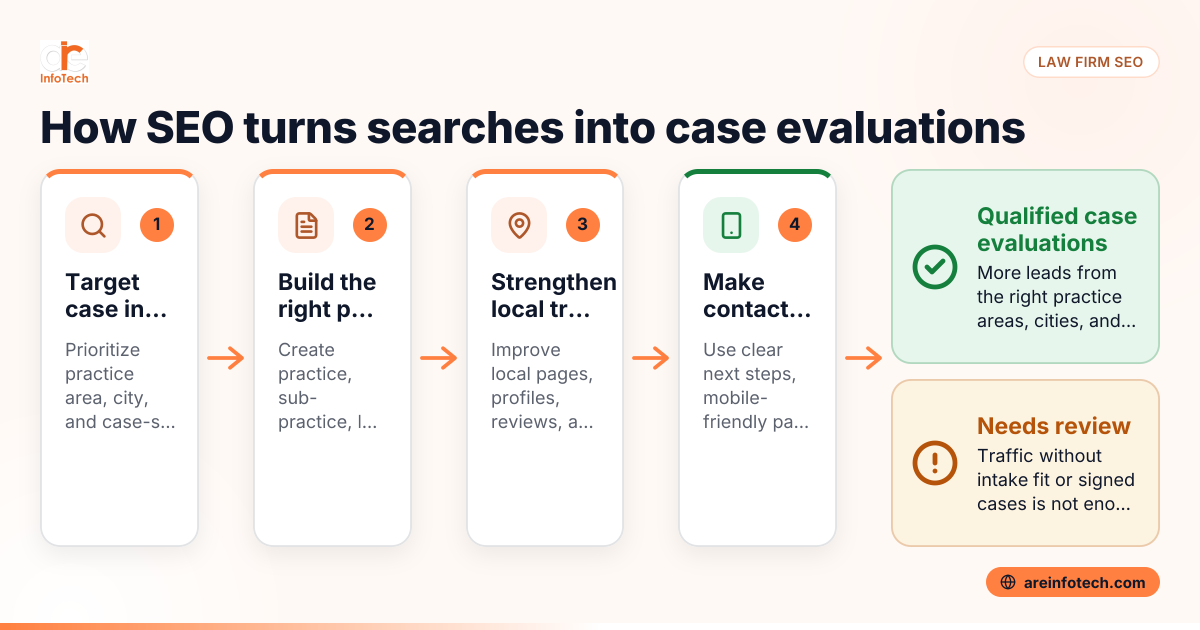
SEO for law firms in United States means building your website, local presence, and content so potential clients find you when they need legal help. The goal is not just more traffic. It is more qualified case evaluation leads from the right practice areas, cities, and case types.
Legal services are high intent. People search when they need help with a specific problem. That could be a personal injury claim in Chicago, a divorce case in Houston, or an employment dispute in Detroit. If your firm does not appear when that search happens, a competitor gets the call.
Paid search can help, but SEO creates long-term visibility. A well-built law firm website can rank for practice area terms, local searches, and informational questions that bring in future case evaluation leads. It also supports trust. People compare attorneys online before they contact anyone.
For most firms, SEO should support three business goals:
That means your strategy should focus on lead quality, not vanity metrics. Ranking for a broad term is less useful than ranking for a case-specific local term that drives real consultations.
Qualified SEO traffic comes from people searching with a legal problem, a location, and a service need. Examples include “car accident lawyer Chicago” or “employment attorney for wrongful termination Houston.” These searches often convert better because the intent is clear.
A law firm should prioritize traffic that matches its intake criteria. If your firm handles plaintiff-side employment cases, traffic for “how to sue employer for unpaid overtime” in your service area is more useful than broad traffic for “what is labor law.”
Many firms publish broad legal content that brings visitors but not leads. The better approach is to map keywords to intake stages:
Each stage matters. But your site should always move the reader toward a case evaluation. That means every page needs a clear next step, such as a consultation form or click-to-call option.
Focus on the searches closest to hiring intent, build pages for each practice area and location, and make contact easy. Then track which pages produce signed cases, not just form fills.
The short answer is useful, but execution matters. Law firm SEO works when content, local SEO, technical health, and intake systems all support each other.
Most law firms need a simple keyword framework:
This structure helps search engines understand your authority. It also helps users find the right page faster.
Not every firm should target the same terms. Your SEO strategy should reflect:
For example, a family law practice may need local service pages and trust content. A plaintiff-side injury firm may need urgent, mobile-first pages built for calls. A business law firm may need service pages that speak to decision-makers, contracts, and ongoing counsel needs.
A strong law firm SEO strategy includes practice area pages, local SEO, technical fixes, authority-building content, and lead tracking. It should help both search engines and potential clients understand what you do, where you work, and why they should contact you.
Your main service pages should target terms people actually search. Each page should cover:
Avoid thin pages with only a few paragraphs. Also avoid stuffing city names into every sentence. Write naturally and clearly.
Local SEO is essential for law firms because geography drives legal searches. Most firms should optimize:
If you have offices in multiple cities, create distinct pages with useful local details. Do not publish dozens of near-duplicate pages for places where you have no real relevance.
Informational content helps you earn trust before a lead is ready to contact you. It can also support visibility in AI search results and traditional search results. This is where ai seo matters. Search engines and AI assistants favor content that answers the question directly, then explains it with clarity.
Use clear article structures. Answer the question in the first paragraph. Then explain:
This format can improve usability and visibility.
Many law firm websites lose leads because they are slow, hard to use on mobile, or confusing to navigate. Technical SEO should cover:
If your firm is redesigning or moving platforms, protect rankings and lead attribution during the transition. This is where a process like the one in WordPress SEO Migration Checklist in United States: How to Preserve Rankings, Forms, and Lead Tracking can help.
Make each location page useful for a client in that city. Explain the services offered, the office or service area relevance, common case issues, and how to contact your firm. If every page says the same thing with a different city name, it will likely perform poorly.
A strong city or metro page should contain:
For example, a personal injury page for Chicago should focus on the actual case types and service model for that market. It should not be a generic page copied from another city.
Avoid these common mistakes:
Search engines can detect thin local content. So can users.
The best legal SEO content often sits between education and action. It should answer the search, but also help the reader decide whether to contact your firm.
Consider these topic groups:
These topics let you reach people earlier, then guide them toward a consultation.
Your intake team hears the same concerns every week. Turn those into content. Good sources include:
This creates content grounded in actual lead behavior. It also improves ai seo performance because the wording reflects how people really ask questions.
On-page SEO is not just about rankings. It also shapes whether visitors trust your firm and take action.
The top section of a page should quickly answer:
For example, a family law page should not start with a long mission statement. It should start with the service, location, and a clear consultation path.
Potential clients want confidence before they share a legal issue. Strong pages often include:
Keep the copy plain. Legal jargon usually hurts conversion.
Internal links help users and search engines navigate your site. Link from broad practice pages to specific subtopics and local pages. Link from informational articles back to consultation-focused service pages.
If you want more ideas on practical SEO planning, the ARE InfoTech blog has related resources for service businesses and growth-focused websites.
Local visibility can drive some of the highest-value leads. But it depends on consistency and credibility.
Your profile should have:
Make sure the information matches your website. Inconsistent contact information can create confusion for users and search platforms.
Reviews can influence both visibility and conversion. Ask for reviews in a compliant, thoughtful way after positive client experiences. Do not script claims you cannot support. Focus on authenticity and consistency.
Citations still matter, especially when they reinforce your local presence. Keep listings accurate across major platforms and legal directories. Wrong phone numbers or old office addresses can waste leads.
Measure qualified calls, completed consultation forms, and signed cases by page and keyword theme. Rankings matter, but lead quality and cost per retained matter more.
Track these metrics monthly:
If possible, connect intake outcomes back to source pages. This helps you see which pages drive the best cases, not just the most traffic.
SEO data without intake data is incomplete. Your team should know:
Even a basic process using forms, call tracking, and CRM notes can improve decisions. Many firms already use systems that connect with email, phone, and lead source tagging.
Many firms invest in SEO but miss the basics that create qualified leads.
Ranking for a broad term may look good in a report. But if it does not produce consultations, it is not helping the business.
A long list of low-value city pages can dilute quality. Fewer, stronger pages usually work better.
A large share of legal leads come from phones. If your mobile form is hard to complete, you lose cases.
Traffic and leads are only part of the picture. Real ROI comes from retained matters.
Search behavior changes. Competitors improve. Practice focus shifts. SEO needs ongoing review and updates.
If your firm wants a realistic starting point, use a phased approach.
This kind of structure keeps the work tied to business outcomes.
The best platform is the one that gives you full control over content, technical SEO, forms, speed, and analytics. For most law firms, ease of publishing and ownership matter more than trendy features.
That short answer matters because platform choices shape daily SEO work. Your team needs to update attorney bios, publish city pages, edit title tags, improve internal links, and track consultation forms without waiting on a developer for every change.
A strong platform should support:
Many firms compare common options during a redesign. If that is your situation, this guide on HubSpot vs WordPress for Small Business Websites in United States: Which Is Better for SEO, Leads, and Ownership? can help frame the decision.
Google Reviews


