
Oct 14, 2026
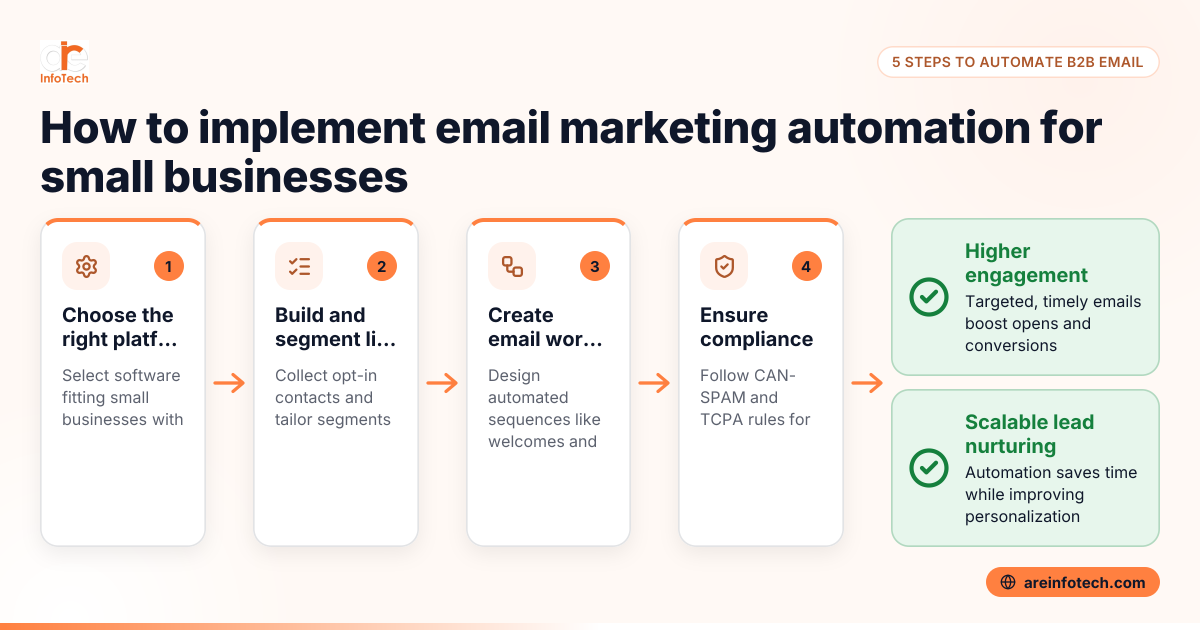
Email marketing automation for B2B small businesses in the United States uses software to send timely, targeted emails based on user behavior. This approach personalizes outreach, nurtures leads efficiently, and saves time—all helping to convert prospects into customers and grow sales.
Email marketing automation involves software that sends emails automatically based on specific triggers such as user actions, timing, or customer segments. For B2B small businesses in the United States, it lets you deliver personalized messages to prospects and customers without manual effort.
Automation tools help with welcoming new leads, following up after downloads or demos, and re-engaging inactive contacts. This technology maintains consistent communication tailored to prospect interests and sales funnel stages. Common uses include drip campaigns, lead nurturing, and onboarding sequences.
Businesses in competitive cities like Chicago and Houston need efficient marketing to stand out. Email automation allows small B2B firms to:
Automated campaigns make sure prospects get relevant content at the best times, significantly boosting engagement and conversions.
AI email marketing tools analyze recipient behavior and campaign data to optimize elements like subject lines, send times, and content automatically. They dynamically segment audiences and personalize content for each customer’s journey. This increases engagement and conversions without extra manual work.
By adding AI, your campaigns become smarter, adjusting in real time to responses and improving effectiveness continuously.
AI email marketing uses machine learning to analyze subscriber data and automate decisions such as the best send times and subject line wording. It predicts which prospects are likely to engage and personalizes content accordingly, raising campaign success.
These tools integrate with your marketing stack and track metrics like open and click rates, automatically fine-tuning emails to maximize ROI.
Email marketing automation implementation starts with selecting the right software and ends with ongoing optimization and compliance. Here’s how to begin:
Pick a platform that fits small businesses and integrates well with your CRM, QuickBooks, or Stripe. It should comply with U.S. laws, support dynamic segmentation, and ideally include AI capabilities. Popular options for U.S. B2B small businesses are Mailchimp, HubSpot, ActiveCampaign, and Drip.
Collect opt-in contacts in compliance with CAN-SPAM rules. Segment lists by industry, role, company size, or past behavior to tailor messaging effectively.
Understanding your audience segments helps deliver relevant value and boosts engagement.
Develop automated workflows for actions like lead nurturing triggered by website visits or form fills. For example:
Use personalization tokens like first name and company name. Keep emails clear and useful.
Include unsubscribe links, your business address, and clear sender identification in every email per CAN-SPAM. Avoid misleading subject lines. For phone outreach tied to campaigns, follow TCPA’s consent rules to avoid penalties.
Compliance protects your reputation and keeps your campaigns lawful.
Run A/B tests on subject lines, send times, and calls to action. Track open rates, click-throughs, and conversions regularly.
Use insights to refine workflows and boost ROI. Integrate Google Analytics for deeper lead tracking (How to Use Advanced Google Analytics for B2B Lead Tracking in United States).
Common issues include:
Expert help from agencies like ARE InfoTech can simplify these challenges for U.S. small businesses.
Investment in automation platforms is typically tiered by contacts or email volume. The ROI from improved lead conversion and saved manual effort makes it cost-effective for most small businesses.
Automation reduces the need for large outreach teams and prevents errors. Many platforms offer free trials or affordable entry plans.
Integrate automation with CRM and payment tools like QuickBooks or Stripe to keep data synced. This connection tracks leads from first contact to sale, improving ROI insights.
For manufacturers using ERPs, emails can trigger on orders, shipments, or renewals, enhancing customer engagement.
AI in email marketing enables deep personalization, predictive analytics, and dynamic content creation. This levels the playing field for small B2B firms competing with larger companies.
Leveraging AI email marketing tools boosts efficiency and ensures your messages reach the right prospects at the optimal time.
To boost your email marketing automation’s visibility for U.S. B2B small businesses, ensure your website:
ARE InfoTech offers expert SEO audits to help your site perform at its best.
Manual email marketing means sending emails individually or in batches without automation. Email marketing automation uses software to trigger targeted emails based on user actions, saving time and increasing relevance.
Always include an unsubscribe link, your physical address, and truthful subject lines. Respect unsubscribe requests promptly and avoid misleading content or headers.
Yes, many AI-enabled platforms provide pricing plans suitable for small businesses. The improved efficiency often justifies the investment.
Review campaign performance monthly or quarterly. Use data and A/B tests to refresh workflows and email content regularly.
Integration with CRM, accounting, and payment systems ensures data consistency. It enables personalized campaigns based on real-time customer behavior.
Personalize emails, segment your list carefully, time sends strategically, and offer valuable content paired with strong calls to action.
To grow sales in competitive U.S. markets like Detroit and Houston, mastering email marketing automation is essential. Combining AI email marketing tools with compliant, well-planned campaigns helps small B2B businesses nurture leads effectively and increase revenue.
Learn more on the ARE InfoTech blog or explore strategies like How to Develop a Local SEO Strategy for Small Businesses in Chicago United States.
Google Reviews


