
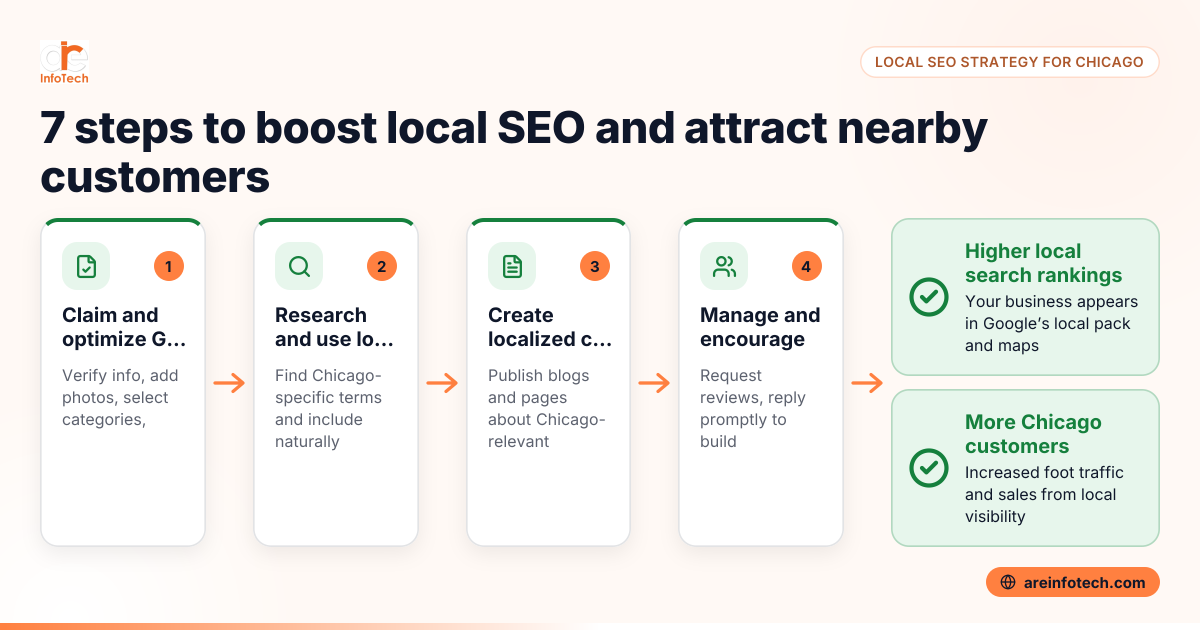
Developing a local SEO strategy for small businesses in Chicago means optimizing your online presence to appear in search results relevant to Chicago customers. This helps your business attract more local visitors through Google Maps, local searches, and directories, boosting sales and brand visibility within your community.
A local SEO strategy helps small businesses rank higher for searches made by Chicago residents. It involves optimizing your website, Google Business Profile, and online citations with local keywords and location-specific content. This approach ensures your business connects with nearby customers looking for your products or services.
By focusing on proximity, relevance, and credibility in local search, your business stands out when Chicago consumers type queries like “best pizza in Chicago” or “auto repair near me.” Local SEO helps you become the top choice in your neighborhood and drives real foot traffic.
Local SEO brings customers directly to your location by improving your ranking in local search results. In Chicago’s competitive market, appearing in Google’s “local pack” can greatly increase your visibility and revenue. Since nearly half of Google searches have local intent, neglecting local SEO means losing potential customers to competitors.
Local SEO makes your business easier to find and builds trust with Chicago shoppers who rely on reviews and accurate business info. It’s a cost-effective way to stand out in a crowded urban marketplace.
Creating a local SEO strategy starts with understanding your city’s search behavior and optimizing key digital assets to capture those searches. Follow these steps to build a targeted local SEO plan:
Claim and verify your Google Business Profile to control essential info: address, phone number, hours, and website link. Add clear photos, choose relevant business categories, and write a local keyword-rich description. Stay active by responding to reviews and posting updates.
Identify phrases Chicago customers use, such as “Chicago HVAC repair” or “best Chicago coffee shop.” Tools like Google Keyword Planner help find these terms. Incorporate them naturally into your website’s titles, headers, meta descriptions, and content, including “near me” searches with location references.
Produce blog posts or landing pages about topics relevant to Chicago and your industry. For example, a landscaping company might write “Preparing Your Chicago Lawn for Winter.” This boosts local relevance and positions you as a trusted local expert.
Ask satisfied customers to leave reviews on Google and Yelp. Promptly reply to all reviews, demonstrating excellent customer care. Positive reviews build trust for Chicago shoppers and can improve your search rankings.
List your business consistently on local directories like Yelp, Yellow Pages, and Chicago-specific sites. Ensure name, address, and phone number (NAP) details are identical everywhere. Consistency helps Google trust your business information.
Since many local searches happen on smartphones, your website should load quickly and display properly on mobile devices. Use clear calls to action like “Call Now” or “Get Directions” to convert visitors into customers.
AI local SEO tools analyze data to recommend keywords, optimize content, and manage listings automatically. They help Chicago small businesses quickly adapt to search trends and maintain consistent online profiles, saving time and improving results.
AI local SEO uses machine learning to analyze customer searches and competitor data, automating tasks like keyword research and citation management. This optimizes your local presence faster and more accurately, helping your Chicago business rank higher and attract more nearby customers.
By leveraging AI, you can efficiently track changes in search algorithms and customer behavior, ensuring your local SEO remains effective without constant manual effort.
The best approach is to consistently ask customers for feedback and respond quickly to all reviews. Provide direct Google review links via email or text to make it easier. Thank customers for positive reviews and professionally address any complaints, showing excellent service and building your business reputation.
Effective review management increases trust among Chicago consumers and improves search ranking signals.
Measure success by tracking your Google Business Profile metrics like views, clicks, and calls. Use Google Analytics to monitor organic traffic from Chicago and conversion rates. Also, track keyword rankings and review growth.
Analyze this data regularly to adjust your strategy towards actions that increase customer engagement and sales locally.
By following these steps and employing AI local SEO technologies, your Chicago small business can grow a strong online presence that drives more customers and builds lasting community trust.
For more on digital marketing tailored to U.S. businesses, explore the ARE InfoTech blog, including topics like How to Create a Winning Google Ads Campaign for B2B Manufacturing Companies in United States and How to Build a B2B Lead Generation Strategy with LinkedIn Ads in United States.
Claiming and optimizing your Google Business Profile is the most immediate local SEO boost. Complete your info accurately, add photos, and engage with reviews to quickly improve your visibility on Google Maps and local search.
If you have time, you can handle basic local SEO with free tools. However, hiring experts like ARE InfoTech ensures efficient implementation and tailored strategies specific to Chicago’s market dynamics.
Review and update listings at least quarterly or when business info changes, such as a move or phone number update. Keeping listings current supports higher rankings and avoids customer confusion.
Yes. Local SEO focuses on geographic relevance and local reputation, enabling smaller businesses to outrank larger rivals for neighborhood searches and build loyal customer bases.
Social media does not directly affect local SEO rankings but boosts brand visibility and drives potential customers to your website, supporting your local SEO efforts indirectly.
Very important. Google favors fast, mobile-friendly websites, especially since many local searches occur on smartphones. A smooth mobile experience leads to better rankings and happier customers.
Google Reviews


