
Oct 16, 2026
How to Optimize Your Small Business Email Marketing for CAN-SPAM and TCPA Compliance in United States
Email marketing is a powerful tool for small businesses, but it must comply with specific laws to avoid penalties. In the United States, the CAN-SPAM Act and the Telephone Consumer Protection Act (TCPA) govern commercial email and text message marketing. Optimizing your email marketing strategy with compliance in mind protects your brand and builds trust with your customers.
The CAN-SPAM Act is a US law passed in 2003 that sets rules for commercial email marketing. It applies to any email message that promotes a product or service. Compliance is mandatory for business owners engaging in email marketing anywhere in the United States.
To comply, your emails must include:
Failure to meet these requirements can lead to Federal Trade Commission (FTC) enforcement and fines.
Unlike some other countries, the US CAN-SPAM Act does not require prior consent (opt-in) before sending marketing emails. However, recipients must be able to easily unsubscribe, and you must promptly honor those requests. This opt-out mechanism reduces spam complaints and keeps your list clean.
Emails that purely provide information about an existing transaction or relationship are exempt from some CAN-SPAM provisions. However, promotional content embedded in these emails may trigger compliance requirements.
The Telephone Consumer Protection Act (TCPA) primarily governs telephone calls and text messages to consumers. It requires that businesses obtain prior express written consent before sending automated marketing texts or prerecorded calls. While TCPA is less about email, it directly impacts SMS campaigns integrated with your email marketing strategy.
Short answer: TCPA requires prior consent for automated marketing calls or texts, so ensure customers opt-in explicitly before messaging them via SMS.
When your small business uses SMS marketing alongside emails, TCPA compliance is mandatory. This law restricts automated calls or texts without clear consent. Violations can lead to significant fines per unsolicited message received.
Consent must be clear, unambiguous, and documented. The customer should opt-in voluntarily through a written agreement or online form specifying that they agree to receive marketing messages.
Some AI-driven marketing solutions include compliance features. These tools automate opt-in tracking and can flag risky contacts, reducing error. Integrating such tools is especially helpful for campaigns that combine emails and texts.
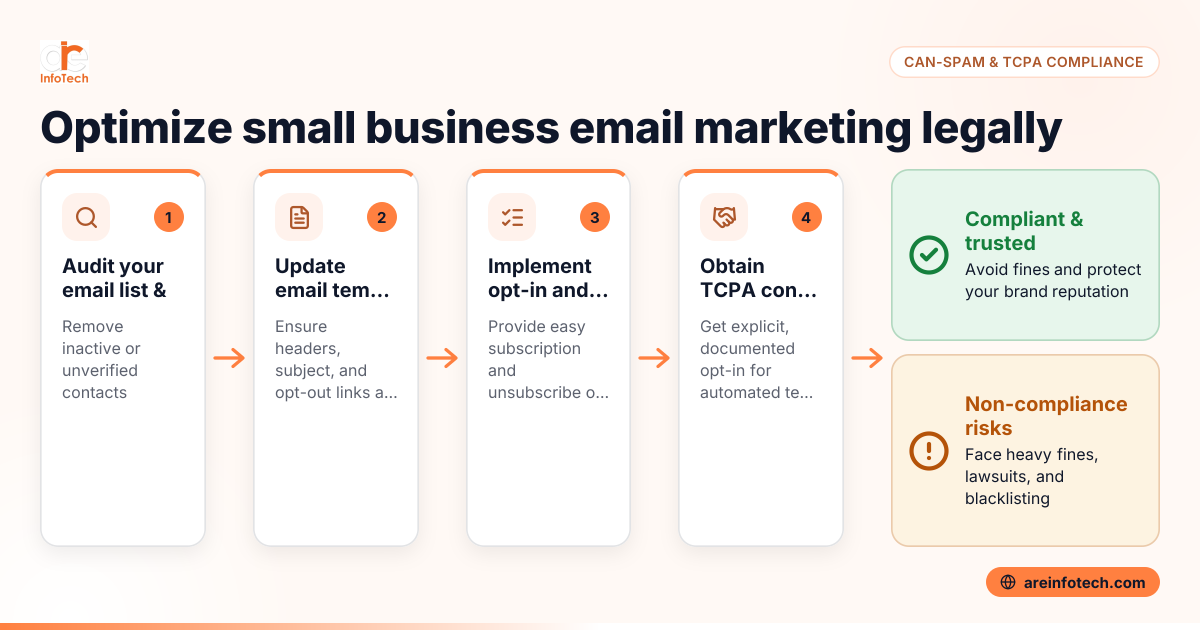
Creating a compliant email marketing program involves coordinated steps. Here is a straightforward process for small businesses:
AI-powered email marketing tools analyze subscribers’ engagement and preferences, enhancing personalization while automatically tracking consent levels. They can detect suspicious patterns that may violate CAN-SPAM or TCPA rules and suggest corrections. Using these insights helps small businesses maximize campaign effectiveness without sacrificing compliance.
Integrating ai email marketing platforms can save time on manual compliance checks and reduce risk. They also offer scalable solutions as your US-based business grows.
Non-compliance can lead to:
These risks highlight why every US small business must prioritize compliance.
Following these SEO best practices increases your blog post’s visibility for American small business owners in need of email marketing compliance guidance.
The CAN-SPAM Act regulates commercial email marketing in the US to protect consumers from spam. Compliance ensures your business emails have accurate headers, honest subject lines, opt-out mechanisms, and your physical address. This avoids fines and maintains your brand’s credibility.
You must obtain prior express written consent from recipients before sending marketing texts or automated calls. Always document this consent and allow easy opt-out. Using secure opt-in forms and keeping detailed records helps maintain compliance.
Yes. AI-powered email marketing tools can automate consent tracking, optimize send times, and personalize content while minimizing compliance errors. These tools reduce manual work and keep campaigns aligned with CAN-SPAM and TCPA rules.
Violations can result in heavy fines per message, lawsuits, and damage to your reputation. Email providers may block your campaigns, severely limiting your marketing ability. Prompt compliance is critical to avoid these consequences.
Transactional emails that deliver essential information related to existing transactions or relationships are exempt from some CAN-SPAM provisions. However, if promotional content is included, full compliance is required.
Regular updates are necessary. Removing invalid, unengaged, or unsubscribed contacts at least quarterly keeps your lists clean. This reduces bounce rates, spam complaints, and supports legal compliance.
Effective email marketing in the United States means following CAN-SPAM and TCPA regulations carefully. By integrating ai email marketing tools, maintaining clear opt-in and opt-out practices, and working with trusted partners like ARE InfoTech, small businesses can protect themselves from legal risk while growing their customer base. For more detailed strategies, visit the ARE InfoTech blog.
Google Reviews


