
Oct 16, 2026
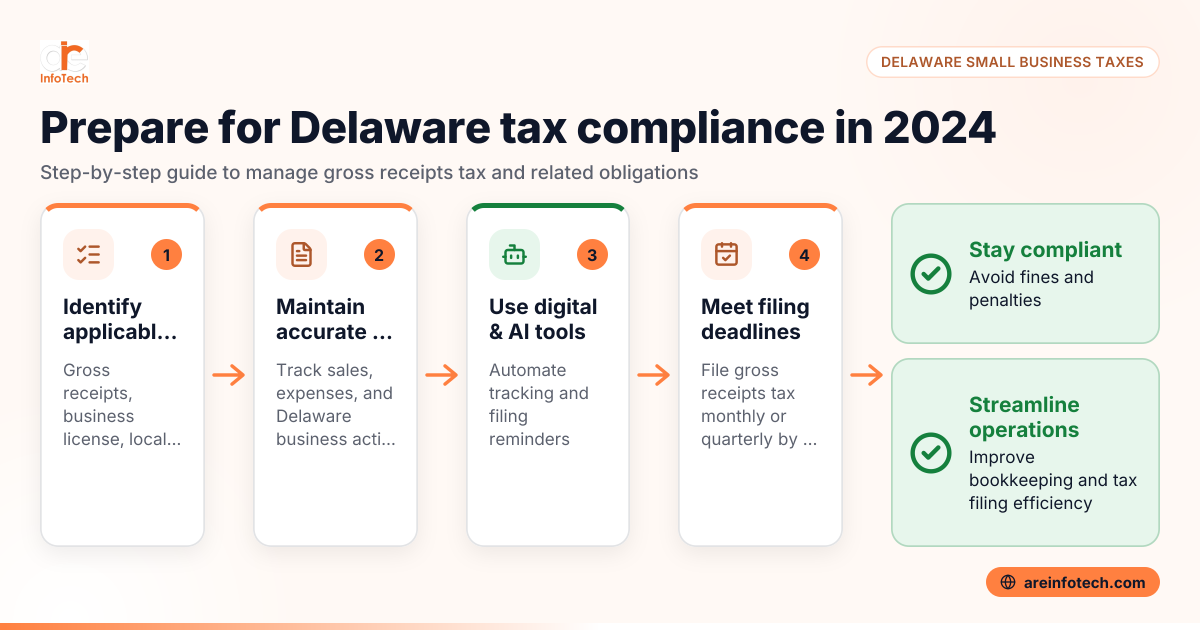
Delaware small businesses do not pay a state sales tax, but they must prepare for complex compliance around other taxes and fees applicable in 2024, such as gross receipts tax and local levies. Understanding your obligations and record-keeping needs is vital to avoid fines and ensure smooth operations.
Delaware is unique among U.S. states because it does not charge a state sales tax. Instead, Delaware relies heavily on other revenue sources, chiefly the Gross Receipts Tax (GRT), which small businesses must pay on the total receipts from goods and services sold in Delaware.
This means that while you won’t have to collect and remit sales tax like in neighboring states such as New Jersey or Pennsylvania, your Delaware small business must still comply with obligations to report and pay the correct gross receipts tax amounts. These rules are governed by the Delaware Division of Revenue and will see updates in 2024 that impact small businesses.
The Delaware gross receipts tax is a critical compliance point for your business. Unlike sales tax, GRT applies even if you do not have a physical storefront in Delaware, including online sales, making it important to know your tax nexus and how Delaware laws apply.
Delaware small businesses should be prepared for:
Keeping meticulous records aligned with these tax responsibilities is critical to avoid penalties.
Delaware’s gross receipts tax applies to all business revenue generated in the state, regardless of whether the income is from product sales, services, or other business activities.
This tax is calculated as a percentage of your total gross receipts and rates vary by business type. In 2024, some rate adjustments may occur. Small business owners in Delaware should:
Failing to adhere to these filing requirements can lead to fines, so staying up to date is essential for compliance.
Although Delaware businesses do not handle sales tax, managing gross receipts tax and related filings can be complex. Here’s how to stay on top of compliance efficiently:
Employ accounting software designed to capture Delaware-specific tax categories, including gross receipts tax. This helps automatically organize transactions by tax type and tracks filing deadlines.
AI-based tools can automate data collection, analyze patterns, and remind you of filing deadlines. They can also help calculate tax obligations based on current Delaware tax laws, reducing human error.
Maintain clear sales records, receipts, and invoices. Staying organized makes tax filing faster and simpler and prepares you for any potential audits.
Ensure that you and your employees understand Delaware's unique tax environment. Consistent training reduces the risk of errors in customer billing or tax reporting.
Delaware business taxes can be nuanced. Consulting with experts, such as ARE InfoTech, can help you navigate complex regulations and updates in 2024.
Short answer: Most Delaware small businesses must file gross receipts tax returns monthly by the 20th of the following month. Specific deadlines vary by business type and filing frequency assigned.
In more detail, Delaware Division of Revenue requires that businesses file:
Keep in mind renewal deadlines for Delaware business licenses, often yearly. Mark these dates on your calendar early to ensure timely submissions and payments.
Effective communication is part of managing tax compliance. ARE InfoTech specializes in supporting Delaware small businesses not just with marketing but with compliance-related customer outreach.
For example, after understanding your tax filing deadlines and updated policies, you may need clear email communications to vendors or customers about tax changes or billing adjustments. ARE InfoTech can help:
Clear communication reduces confusion and strengthens trust as you prepare your business for 2024 compliance.
Delaware’s tax framework, focused on gross receipts tax instead of sales tax, continues to evolve. As e-commerce and digital transactions grow, Delaware may adjust regulations or introduce new reporting requirements that impact your business.
Expect advances in AI and software tools to increasingly assist small businesses in staying compliant with less manual effort. Tracking legislation changes and leveraging digital tools early can keep your Delaware small business ahead.
Follow these steps:
Taking systematic steps now protects your business integrity and cash flow.
No. Delaware does not impose a state sales tax on purchases or services. Instead, Delaware small businesses pay a gross receipts tax on their total revenue from Delaware operations.
If your small business earns revenue from sales or services delivered in Delaware, you generally owe gross receipts tax. Check Delaware Division of Revenue guidelines or consult a tax professional for specific thresholds.
Some small businesses with low tax liability may qualify to file quarterly but must get approval from Delaware tax authorities. Most businesses file monthly by the 20th day after the tax period.
Currently, Delaware has no plans to implement a state sales tax. The focus remains on gross receipts and business license taxes. However, staying informed about legislative changes is advised.
ARE InfoTech offers digital marketing and compliance communication services tailored to Delaware businesses. They can support automated customer outreach, compliance reminders, and digital tool integration to streamline your tax-related workflows.
Yes, late filing or payment can result in penalties and interest. Timely compliance avoids unnecessary fees and helps maintain good standing with Delaware tax authorities.
Google Reviews


