
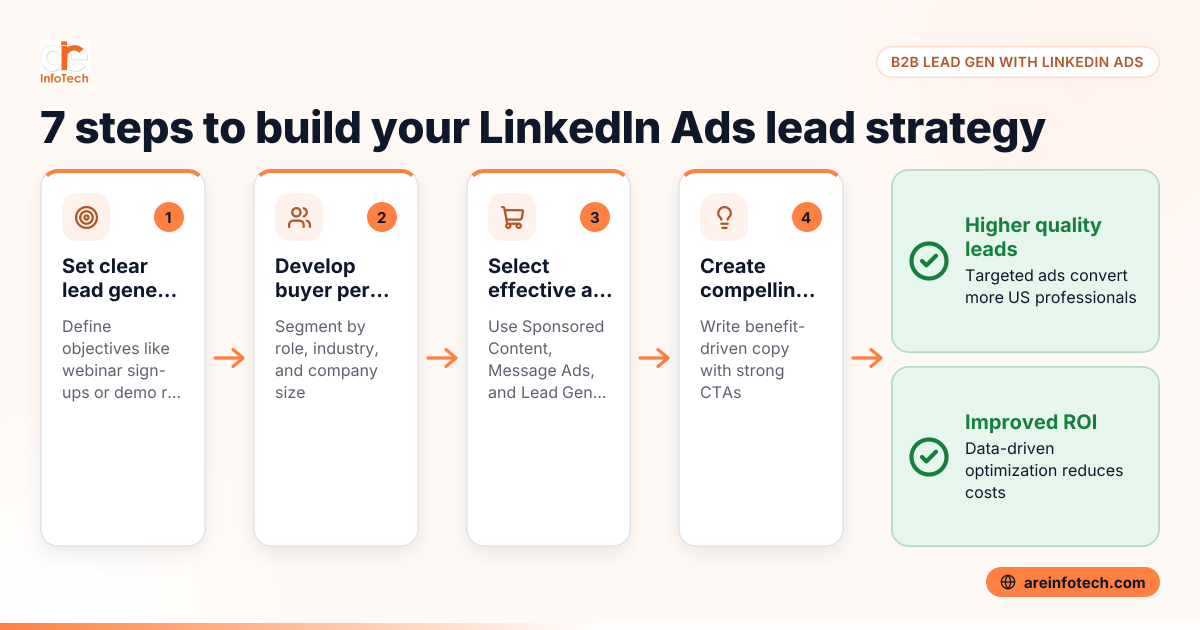
LinkedIn Ads offer a powerful platform for B2B lead generation in the United States, enabling businesses to target professionals based on industry, role, and company size. By creating a precise strategy, companies can attract high-quality leads and nurture them through the sales funnel with measurable results.
LinkedIn has become the top platform for B2B marketers aiming at US businesses due to its professional audience and precise targeting options. Unlike other social media, LinkedIn allows you to segment your audience by job title, company industry, company size, and even skills, helping generate qualified leads capable of converting into customers.
In the US market, where decision-makers value relationships and trust, LinkedIn Ads allow companies to share educational content, product demos, webinars, and event invitations that resonate with specific industries, such as manufacturing in Detroit or technology companies in Chicago. This specificity makes LinkedIn Ads B2B lead generation United States-centric and highly effective for growing your pipeline.
LinkedIn offers multiple ad formats, and selecting the right one depends on your goals. Sponsored Content, Message Ads, and Lead Gen Forms are popular for B2B lead generation.
Sponsored Content appears in the feed and allows sharing educational articles or videos. Message Ads send direct, personalized messages to prospects, ideal for invitations or promotions. Lead Gen Forms auto-fill prospects’ information, streamlining data capture. A blend of these depending on your funnel stage can increase conversions.
The key to successful LinkedIn ads is precise audience targeting. Start by defining buyer personas based on job functions, seniority, company size, and industry. For example, a manufacturing software provider might target operations managers and IT directors in Midwest factories.
Use LinkedIn’s Audience Manager to layer multiple filters. Combine job titles with company types (e.g., mid-sized manufacturing firms in Ohio). This ensures you spend your budget only on the most promising prospects, improving ROI.
AI LinkedIn Ads uses machine learning algorithms to analyze past campaign data and optimize targeting, bidding, and creative elements for better lead generation outcomes. By automating these adjustments, ads reach the right audience at the right time with messages resonating with their pain points.
This technology reduces manual campaign management, allowing marketers to focus on strategy. Using AI-powered tools helps US businesses stay competitive, ensuring LinkedIn Ads deliver measurable returns without excessive trial and error.
Establish your primary goal such as increasing webinar sign-ups, demo requests, or whitepaper downloads. Clear goals guide everything from messaging to budgeting and KPIs. For instance, a SaaS company in Houston might want to generate 100 qualified leads for its software demo over 3 months.
Measurable goals enable you to track progress and adjust campaigns quickly if required.
Identify your ideal customer profiles. Segment prospects by role, industry, company size, and challenges. Creating personas helps craft relevant ad copy and choose LinkedIn targeting filters.
For example, an industrial supply company targeting procurement managers in Detroit factories must craft messages emphasizing cost savings and supply chain reliability.
Evaluate which LinkedIn ad types best support your objectives:
Combining formats based on funnel stage improves conversion rates.
Write clear, benefit-focused headlines and descriptions. Use US English spelling and language that reflects your target audience’s business pain points and goals. Include strong calls to action (CTAs) such as “Request a Demo” or “Download Whitepaper.”
Using high-quality images or videos relevant to your industry (e.g., machinery, office teams) helps capture attention.
Leverage LinkedIn’s AI capabilities to automatically adjust bids and identify promising audience segments. Consider third-party AI tools that analyze campaign data to advise on budget allocation or creative tweaks.
This data-driven approach maximizes your ad spend efficiency, essential for budget-conscious US SMBs and enterprises alike.
Connect your campaigns to systems like Salesforce or HubSpot to capture leads automatically. Follow up through personalized email sequences. This integration accelerates lead nurturing and qualification, shortening your sales cycle.
Ensure your process complies with CAN-SPAM and TCPA rules when contacting leads.
Track key metrics such as CTR (Click-Through Rate), CPL (Cost Per Lead), and conversion rates. Use LinkedIn Campaign Manager reporting and your CRM insights.
Regular analysis allows you to identify top-performing ads, adjust poorly performing creatives, and refine audience targeting. Continual improvement sustains lead quality and ROI.
ROI measurement starts with setting clear goals and KPIs. Track conversions attributed to LinkedIn campaigns using UTM parameters linked to Google Analytics and CRM data. Calculate the cost per lead and compare it with lead value to justify advertising spend.
Don’t overlook long-term metrics such as customer lifetime value and pipeline velocity. US companies often want transparency in marketing investments, so a detailed ROI report builds trust with leadership.
LinkedIn Ads are ideal if your sales cycle involves decision-makers using LinkedIn professionally, such as tech firms in Silicon Valley or financial services in New York. However, it may be less effective for B2B companies targeting industries with limited LinkedIn presence or highly price-sensitive markets.
Consider your buyer’s behavior and preferences. Sometimes combining LinkedIn Ads with targeted email campaigns or Google Ads yields the best results.
Get started on building a winning LinkedIn Ads B2B lead generation campaign tailored for your US business by following the outlined steps. For more guidance, explore the ARE InfoTech blog or dive into related topics like How to Use LinkedIn Advertising to Generate B2B Leads for Manufacturing Companies in United States.
Sponsored Content appears in users’ feeds as native posts promoting your content, ideal for awareness and engagement. Message Ads send direct, personalized messages to prospects, great for invitations or calls to action requiring immediate attention.
Budgets vary widely based on industry and campaign goals, but starting with $2,000–$5,000 per month provides enough spend for testing and optimization in larger markets like Chicago or Houston. Scale up based on performance and ROI.
Yes, AI-based tools can help small US businesses optimize even limited budgets by focusing spend on high-potential targets and reducing waste, especially in competitive B2B sectors.
Follow CAN-SPAM and TCPA guidelines for any follow-up outreach. Avoid misleading claims. Maintain opt-out options in email follow-ups. Using compliant marketing practices protects your reputation and avoids fines.
Typically, initial results appear within 2–4 weeks, but significant lead volume and conversion usually improve after 2–3 months of continuous optimization and nurturing.
Yes, LinkedIn Lead Gen Forms integrate with popular CRMs like Salesforce and HubSpot, enabling automatic transfer of lead data for efficient follow-up and sales pipeline management.
For an expert approach to LinkedIn Ads B2B lead generation United States, leveraging AI tools and compliance know-how, ARE InfoTech offers tailored digital marketing services that deliver measurable growth. Discover more insights on the ARE InfoTech blog.
Google Reviews


