
Oct 20, 2026
Creating a digital marketing strategy that complies with state sales tax regulations in the United States is essential for businesses selling goods or services online. State sales tax compliance involves integrating varied state tax rules into your marketing offers, pricing, and data collection. This ensures campaigns comply with legal requirements across different states, reducing risks of audits, fines, and damaged reputation.
The United States has a complex system of state and local sales taxes. Because digital marketing campaigns often target customers across multiple states, businesses must navigate varying tax requirements accurately. Sales tax compliance in marketing helps avoid costly penalties, audits, and potential reputational damage.
For example, a Detroit-based manufacturer running online promotions across Michigan and Ohio must consider Michigan’s statewide 6% sales tax and any local add-ons, as well as Ohio’s differing state and local rates. Without incorporating these differences into pricing and promotions, customers may be misled, or the business may be undercharging taxes.
Marketing offers such as discounts, bundles, or tax-inclusive pricing need careful integration with tax requirements. A Houston retailer advertising a flat price must specify if it includes Texas state and local sales tax (Houston’s combined rate can be around 8.25%) or if it will be added at checkout. Failure to clarify this may frustrate customers, violate advertising regulations, or cause refund disputes.
Digital marketing crosses state boundaries quickly through emails, social media ads, and ecommerce stores. Being proactive on tax compliance creates stable, scalable marketing campaigns that minimize legal risk while creating clear communication with customers.
AI-powered state sales tax solutions use machine learning and updated tax databases to provide real-time tax rate calculations based on customer location and product categories. These tools automate tax tracking and flag potential compliance issues within marketing offers.
For example, a Chicago retailer running a Black Friday email campaign can use AI to automatically calculate Cook County’s 10.25% combined sales tax on any product discount prices displayed in the email or on their website. This prevents situations where customers see misleading prices that don't factor in tax.
Businesses face several key challenges when ensuring state sales tax compliance in digital marketing.
Nexus means having sufficient connection to a state that requires you to collect sales tax there. This can occur through:
For digital marketers, knowing where your business has nexus is critical to determine where sales tax applies. Many businesses struggle to stay updated on nexus rules, as thresholds and definitions vary by state and can change annually.
States and local jurisdictions impose different tax rates and sometimes exempt certain product categories. For example:
Failing to factor these rates and exemptions into marketing prices results in under- or overcharging customers, risking compliance and trust.
Applying sales tax on discounted prices or promotional bundles poses accounting challenges. Should tax be charged on the full retail price or the discounted amount? How do you allocate tax across bundled products with different tax categories?
Without clear policies, businesses risk inconsistent tax collection or misreporting, complicating audits.
Sales tax authorities can audit businesses to verify reported sales and tax collected. Companies must track:
Digital marketing campaigns complicate this, as multiple promotions and channels contribute to sales. Many businesses struggle to link sales tax data with campaign performance for compliance and analysis.
Developing a compliant digital marketing strategy for state sales tax requires detailed planning and tools.
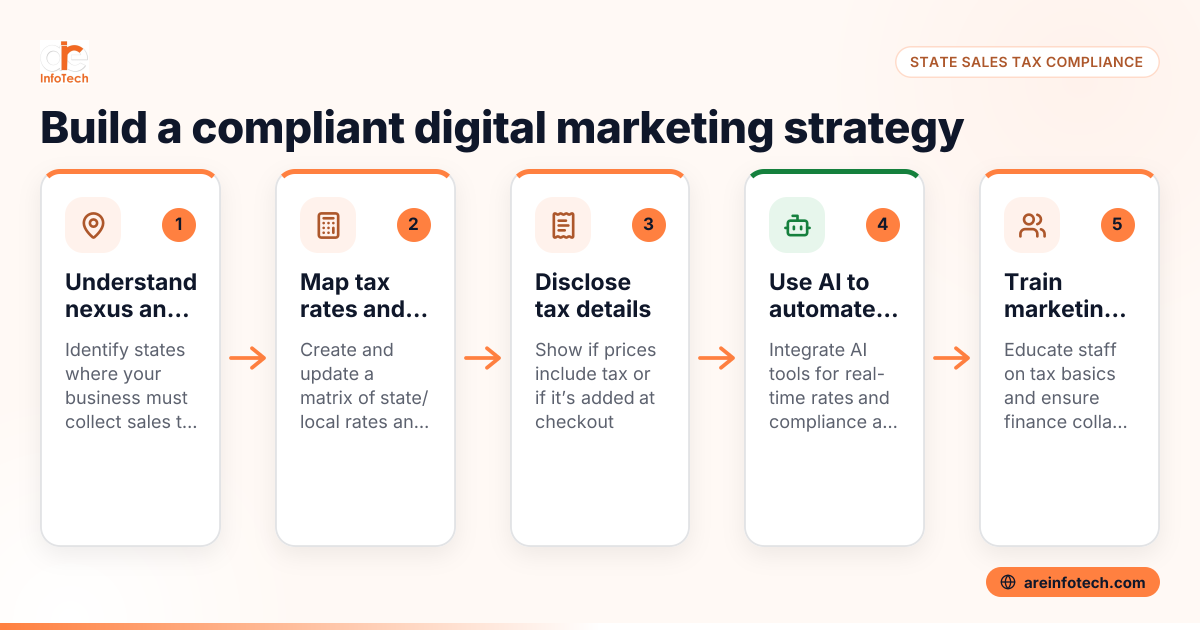
Begin by identifying nexus states and your sales tax responsibilities. Map applicable sales tax rates and exemptions by state and product category. Ensure marketing communications clearly disclose whether prices include sales tax or if it’s added at checkout. Use AI-powered tools to automate real-time tax calculations and updates, reducing errors.
For example, a Detroit-based manufacturer shipping nationwide but with a warehouse in Indiana may have nexus obligations in both states as well as economic nexus in states where sales exceed $100,000 annually.
Example: A Houston furniture store’s website banner reads, “All prices include Texas sales tax of 6.25%, plus applicable local taxes,” reducing surprise fees for customers at checkout.
For instance, QuickBooks combined with AI tax tools can provide an end-to-end automated workflow: from marketing promotion and pricing, to order processing, tax calculation, collection, and filing preparation.
Manufacturers using ERP systems in Detroit benefit from integrated tax modules that update tax rates automatically and generate accurate tax reports by location and product.
Businesses must proactively track changes in state sales tax laws to maintain compliance in digital marketing.
Stay current by subscribing to newsletters and alerts from state tax departments. Use AI state sales tax compliance platforms that provide real-time notifications on law changes impacting your market. Joining local industry groups in cities like Chicago or Houston offers networking to exchange tax updates. Collaborate with digital marketing agencies experienced in tax law integration to adjust campaigns swiftly.
State sales tax nexus is the legal connection between your business and a state that obligates you to collect and remit sales tax for sales made there. Understanding nexus ensures marketing campaigns apply correct sales tax collection and pricing for customers in those states, avoiding compliance violations.
Not all content requires explicit tax information, but pricing displayed in ads, product listings, or emails should clearly state whether sales tax is included or added at checkout. Transparency helps customers understand their final cost and prevents trust issues caused by hidden fees.
Sales tax laws can change multiple times yearly. States sometimes adjust rates, redefine nexus thresholds, or change taxable product categories. Continuous monitoring via official state portals or AI compliance tools is essential for up-to-date marketing practices.
AI significantly automates tax rate processing, calculations, and compliance monitoring. However, human oversight remains crucial for interpreting complex tax laws, managing exemptions, and handling audit responses. Combining AI efficiency with expert guidance yields the best results.
Keep detailed records of all sales transactions including customer locations, tax amounts charged, marketing campaign sources, and product details. Digital records should be backed up regularly and organized for easy retrieval during tax audits or reporting.
For businesses aiming to integrate state sales tax compliance into digital marketing strategies, consulting with trusted partners like ARE InfoTech can streamline this process. Our experts help design compliant campaigns while maximizing marketing effectiveness.
Explore more insights on taxation and marketing strategy on the ARE InfoTech blog to stay informed and competitive in the dynamic US market. Consider reading about How United States Small Businesses Can Use AI-Driven Digital Marketing Strategies to Increase Local Customer Engagement for deeper tips on leveraging technology in marketing compliance.
Google Reviews


