
AI digital marketing strategies for small businesses in the United States use intelligent technology to optimize marketing tasks and target local customers more precisely. By leveraging ai-powered tools and automation, businesses can personalize outreach, improve customer engagement, and boost marketing ROI efficiently.
AI digital marketing strategies combine data-driven artificial intelligence with traditional marketing to enhance outreach, personalize content, and automate workflows. For US small businesses, these strategies involve using AI software to analyze local customer data, predict purchase intent, and create targeted campaigns via email, social media, and online ads.
These ai-powered strategies help optimize budgets by focusing marketing efforts on receptive local audiences in cities such as Houston or Detroit. AI tools automate tasks such as content scheduling and performance tracking, freeing small business owners to focus on growth.
AI automation means using AI technology to automate marketing tasks like segmenting customers, sending personalized emails, and managing social media. Small businesses benefit from faster, consistent outreach that adapts to customer behavior.
By deploying automated with AI campaigns, companies can send triggered messages—like special offers after website visits or cart abandonment reminders. This timely, personalized approach improves engagement and loyalty without extra staff effort.
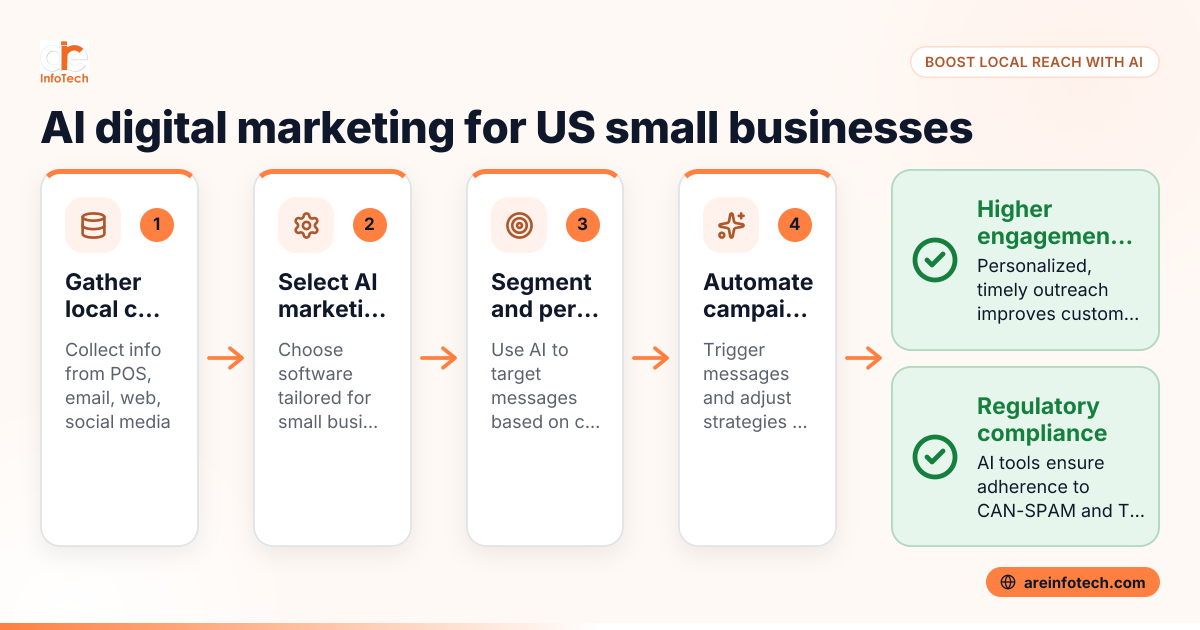
Collect customer details from POS systems, email lists, website analytics, and social media. This data is essential for AI tools to analyze and segment customers by location, interests, and purchase history.
Many small businesses use QuickBooks for accounting and Stripe for payments. These often integrate with marketing software, enabling seamless data flow for AI-driven campaigns.
Select AI-powered marketing platforms that fit small business needs. Features typically include automated emails, social media management, and ad optimization. Ensure your software complies with US regulations like CAN-SPAM and TCPA.
Look for geo-targeting to focus campaigns on local markets—whether customers in Chicago or surrounding suburbs. Integration with finance and CRM systems eases execution and tracking.
Segmentation targets messages to specific customer groups. AI software analyzes behavior and preferences to create segments automatically, making ads and emails relevant.
Personalized content drives engagement. AI-powered content generators help create emails or social posts tailored to local culture or city-specific promotions. For example, Detroit retailers can highlight local events or partnerships in messaging.
Set up AI automation to send campaigns triggered by actions like birthdays or post-purchase follow-ups. The AI tool monitors results in real time, adjusting targeting or ads to improve engagement.
This iterative process maximizes ROI by focusing on best-performing strategies. Analytics dashboards help business owners see which local channels work best.
Automated marketing must follow US laws such as CAN-SPAM and TCPA. AI software often includes compliance features like opt-out management, message frequency control, and required disclaimers.
Before launching campaigns, verify your AI tool handles consent properly and respects Do Not Call or Do Not Email lists. Compliance avoids fines and builds customer trust.
Start by using AI automation in one area, such as email marketing or social media scheduling. Many AI-powered tools offer free or affordable tiers for small businesses. Use local customer data already available to avoid extra costs.
Track results and reinvest savings from automation to expand AI functions, like ad spend optimization or AI chatbots. Working with a digital agency like ARE InfoTech can help tailor AI strategies for your goals while ensuring compliance.
Retailers, restaurants, service providers, and manufacturers with direct customers gain the most from ai automation and AI-powered personalization. For example, Chicago manufacturers with ERP systems can integrate AI marketing data to connect better with local B2B buyers.
Houston retailers can automate SMS and email promotions around in-store events to increase foot traffic. Detroit service businesses might use AI chatbots on websites to capture leads instantly.
Track key metrics like email opens, clicks, conversions, and sales growth locally. Use AI software dashboards to find effective segments, messages, and channels.
Calculate ROI by comparing sales gains and cost savings from automation versus manual marketing. Customer feedback and repeat business rates also show if AI-driven strategies improved engagement.
For small businesses in the United States aiming to boost local customer engagement, AI digital marketing strategies offer efficient, targeted outreach combined with necessary legal compliance.
Visit the ARE InfoTech blog for more practical marketing insights tailored to your business.
Email marketing platforms with AI features like segmentation and automated scheduling are easiest to adopt. They require minimal setup and integrate smoothly with existing customer data.
AI automation handles repetitive tasks and data analysis but cannot fully replace human creativity or relationship-building. It is best used to augment your team’s efforts.
Reputable AI software complies with US privacy laws by securing data, managing consent, and providing opt-out options to customers, ensuring responsible use.
Many AI marketing tools offer scalable pricing—some have free tiers—making it affordable. The efficiency gains often reduce overall marketing costs.
Results vary, but you can often see improvements in engagement and conversions within weeks after launching AI-enhanced campaigns, especially with local targeting.
Google Reviews


