
Oct 17, 2026
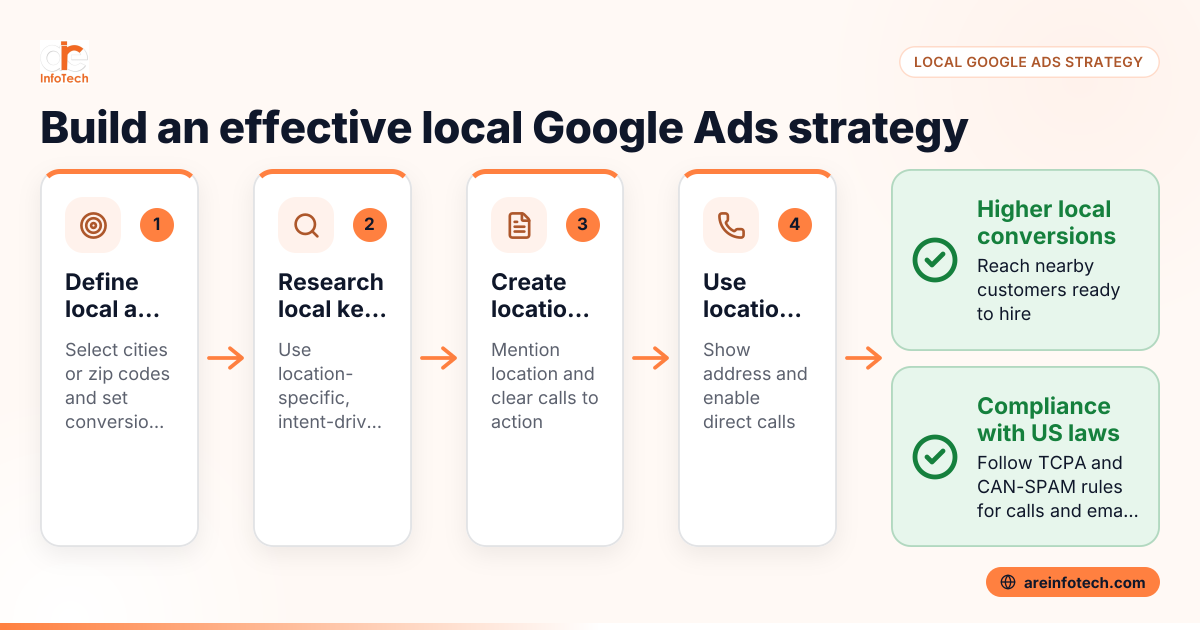
Building an effective Google Ads strategy for local service businesses in the United States involves targeting the right audience, crafting compelling ads, and optimizing campaigns to maximize return on investment. Local service providers must focus on location-specific targeting and keywords while using Google's advanced tools, including AI-powered ad suggestions, for the best results.
Local service businesses depend heavily on customers within a specific geographic area. Unlike e-commerce brands selling nationwide, local businesses in cities like Chicago, Houston, or Detroit benefit from targeting users based on proximity and local intent. Google Ads offers advanced location-targeting options such as radius targeting, zip code targeting, and even exclusions.
Optimizing your campaigns for local searches means your ads show up when people search for services “near me” or “in [City].” This makes your ad spend more efficient and increases the likelihood of converting clicks into booked appointments or inquiries.
AI Google Ads tools automate bidding and suggest ad copy to maximize performance, adjusting to real-time user behavior.
Google’s AI-powered automated bidding strategies help allocate your budget for local campaigns by predicting which clicks are most likely to convert. Additionally, machine learning aids in dynamic ad copy generation, improving relevance for diverse local audiences. Regularly reviewing AI suggestions and combining them with local insights ensures your ads remain effective over time.
Identify the cities, neighborhoods, or zip codes you want to target. For example, a plumbing company in Detroit might focus on the Detroit metro area and suburb zip codes. Define your conversion goals, such as phone calls, form submissions, or booking appointments, as these goals will guide your bidding and tracking.
Use Google Keyword Planner or third-party tools to find keywords combining your service with location terms: "emergency plumber Houston," "roof repair near me," "Detroit HVAC service." Focus on long-tail, specific keywords with commercial intent. This ensures you're reaching users ready to hire a service.
Your ad text should mention your city or neighborhood to increase relevancy. Use clear calls to action such as “Call now for same-day service in Chicago.” Highlight USPs like licensed, insured, or 24/7 availability. Customize ads for call-only campaigns, ideal for users on mobile devices calling directly.
Location extensions show your address and highlight proximity on mobile and desktop searches, boosting trust and click-through rates. Call extensions let customers call you without clicking through your website, ideal for urgent services. Make sure your business phone number is trackable for accurate conversion data.
Link Google Ads with Google Analytics and set up conversion actions for calls, form fills, or appointment bookings. Integrate data with QuickBooks or Stripe to measure revenue generated from ads accurately. For contractors or freelancers paying 1099 contractors, tracking ad ROI ensures compliance and profitability.
Choose between Search campaigns, Display campaigns, or Local Service Ads (LSAs). LSAs are unique for local services but require Google screening and background checks. Search campaigns are excellent for capturing intent-driven traffic, while Display campaigns can raise brand awareness locally.
Start with daily budgets that fit your business size and scale as you see results. Consider using Target CPA (cost per acquisition) or Maximize Conversions bidding strategies powered by AI Google Ads features to efficiently use your budget. Adjust bids higher for top-performing zip codes or high-intent keywords.
Review click-through rates, conversion rates, and cost per lead to identify underperforming keywords or ads. Use negative keywords to eliminate irrelevant searches (e.g., “free,” “DIY”). Test different ad variations and landing pages to improve quality score and reduce cost per conversion.
Google Ads campaigns using phone calls must follow the Telephone Consumer Protection Act (TCPA) rules regarding consent for calls and texts. Similarly, email outreach initiated from ad leads must comply with CAN-SPAM rules, including providing opt-out mechanisms.
For instance, when running call-only ads for your local service, make sure you have prior consent if using automated dialing or prerecorded messages. If you collect emails via lead gen forms, include clear opt-out instructions with every message. Compliance protects your business from fines and builds customer trust.
Your Google Ads efforts will drive traffic, but your landing pages close the deal. Ensure your pages have:
For a roofing company in Houston, for example, highlighting Hurricane-proof roofing expertise can resonate deeply with local prospects.
LSAs appear at the very top of Google search results and offer an exclusive channel for service providers like plumbers, electricians, and locksmiths. They focus on verified customer reviews and require you to pass Google’s screening.
Since LSAs require a monthly budget and pay-per-lead pricing, they can deliver highly qualified leads but need careful monitoring to ensure ROI. Businesses in markets like Chicago or Detroit with high competition often benefit from combining LSAs with traditional Search Ads.
Analyze which zip codes, devices, or times of day yield the best conversion rates. For example, a HVAC company in Detroit might find evenings generate more calls and adjust ad schedules accordingly. Use Google Ads report segmentation for geographical performance and user demographics.
Integrate these learnings into your ongoing bids and budget allocation. Regularly update keywords and negative keywords based on shifting seasonal demand or competitor trends to stay competitive and cost-effective.
Building a Google Ads strategy for local service businesses in the United States requires a focused approach on location targeting, compliant outreach practices, and smart use of AI-powered tools. Prioritize keyword research with location terms, use call and location extensions, and integrate conversion data with your financial stack for real ROI measurement.
With consistent testing, analysis, and optimization, your ads will reach nearby customers ready to hire. For those looking for expert help, the ARE InfoTech blog offers practical guides and insights tailored to US local service providers.
Use location targeting by city, zip code, or radius around your business. Pair this with keywords containing location terms and use location extensions to show your address. This ensures your ads reach users physically close and relevant to your service.
AI automates bid adjustments and ad copy optimization based on user behavior patterns, improving conversion rates. It can predict when local customers are most likely to convert and allocate budget efficiently, saving time and increasing performance.
Call-only ads are great when you want direct phone calls from mobile users, ideal for urgent services like locksmiths or plumbing. Standard search ads provide more information options and work well when customers seek detailed service comparisons.
Set up conversion tracking within Google Ads to measure phone calls, website form submissions, or bookings. Integrate Google Ads data with QuickBooks or Stripe to analyze return on ad spend against actual revenue generated.
Yes, but you must pass Google’s screening process including license verification and background checks. It’s especially useful for certain service categories and can deliver highly targeted leads, but requires managing pay-per-lead budgets.
Review campaign data weekly or biweekly to spot trends or underperforming ads. Adjust bids, keywords, and budgets accordingly. Periodic A/B testing of ad copy and landing pages helps refine message relevance and increase conversions.
Google Reviews


