
Oct 17, 2026
How to Build a HIPAA-Compliant Digital Marketing Strategy for Healthcare Providers in United States
Healthcare providers in the United States face unique challenges when marketing digitally due to strict HIPAA regulations protecting patient privacy. Building a HIPAA compliant digital marketing United States strategy means carefully managing Protected Health Information (PHI), securing data, and communicating responsibly without risking violations. This guide helps healthcare businesses navigate these complex rules and develop effective, compliant marketing plans.
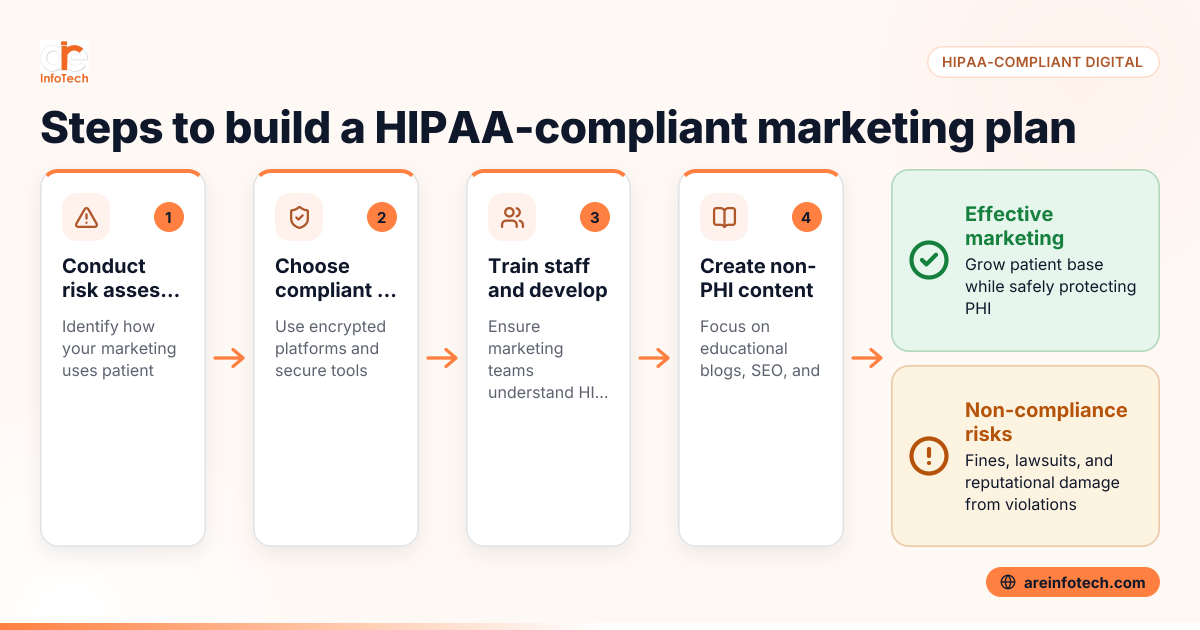
A HIPAA-compliant digital marketing strategy ensures all marketing efforts involving patient data meet the federal law’s privacy and security standards. It requires understanding what constitutes Protected Health Information (PHI) and implementing technical, administrative, and physical safeguards across your marketing channels.
This often means carefully choosing technology platforms that support encryption and access controls, training marketing staff on privacy rules, and working closely with legal teams. The goal is to promote your healthcare services effectively without risking a data breach or regulatory penalties.
Not all marketing channels carry the same risk for HIPAA violations. Commonly used safe channels include:
Channels requiring extra caution are those involving direct patient communication—phone calls, SMS, apps, and emails can expose PHI if not properly secured.
AI HIPAA compliant tools can analyze large datasets while maintaining adherence to privacy standards. They allow for more precise targeting and personalized campaigns without directly exposing PHI.
Using AI in HIPAA-compliant digital marketing United States scenarios means selecting solutions with built-in encryption and compliance certifications. The AI can help optimize search keywords, forecast ad performance, and segment audiences safely.
For example, an AI-powered CRM integrated with your electronic health record (EHR) system can tailor reminders or health tips without sharing sensitive data externally.
Protecting patient data means:
Healthcare providers must implement Business Associate Agreements (BAA) with any third-party vendors handling PHI during marketing.
Content marketing is effective and low risk when you avoid including PHI. Strategies include:
Consistent, informative content builds trust and drives traffic without entering privacy violations.
Email marketing under HIPAA regulations requires:
Offering general health tips and clinic updates without patient data is a safer approach.
Measuring ROI involves tracking metrics that do not expose PHI, such as:
Analytics tools should be HIPAA compliant and configured to anonymize individual visitor data.
Non-compliance risks include hefty fines, reputational damage, and lawsuits. The U.S. Department of Health and Human Services Office for Civil Rights (OCR) enforces HIPAA strictly. Violations from improper use of digital marketing channels can expose your organization to investigations.
Failing to secure marketing data or mishandling PHI in outreach campaigns can lead to loss of patient trust in competitive healthcare markets like Chicago, Houston, or Detroit.
Healthcare digital marketers in U.S. cities like Detroit, Houston, and Chicago can benefit from consulting experienced agencies like ARE InfoTech, which understands the intersection of HIPAA rules and marketing tactics. Proper guidance helps avoid costly compliance mistakes while growing your patient base.
PHI includes any health-related information that can identify a patient, such as names, addresses, medical records, photos, or appointment details. Digital marketing must avoid disclosing PHI publicly or during outreach without proper consent.
SMS marketing is risky under HIPAA because text messages are often not encrypted. If used, providers must obtain patient consent, use secure texting platforms, and restrict PHI in messages.
AI supports analysis and personalization without revealing PHI by working on anonymized datasets or encrypted information. AI HIPAA compliant solutions improve targeting, budgeting, and content recommendations while protecting data privacy.
Yes. Any vendor that might access PHI, such as email providers or social media managers, must sign a BAA to ensure they comply with HIPAA regulations and protect patient information.
Regular audits at least annually are recommended, with additional checks after any new tool implementation or marketing campaign launch. This ensures ongoing compliance and addresses any vulnerabilities promptly.
Penalties range from fines of $100 to $50,000 per violation, with annual maximums reaching $1.5 million for willful neglect. HIPAA violations can also lead to legal action and damage your healthcare provider’s reputation.
To build a reliable and compliant digital marketing plan tailored for U.S. healthcare providers, understanding HIPAA’s boundaries is essential. Use secure technology, avoid PHI exposure, and create valuable content that resonates with potential patients. Explore practical tips and expert guidance at the ARE InfoTech blog for deeper insights on digital marketing success in regulated industries.
Google Reviews


