
Oct 17, 2026
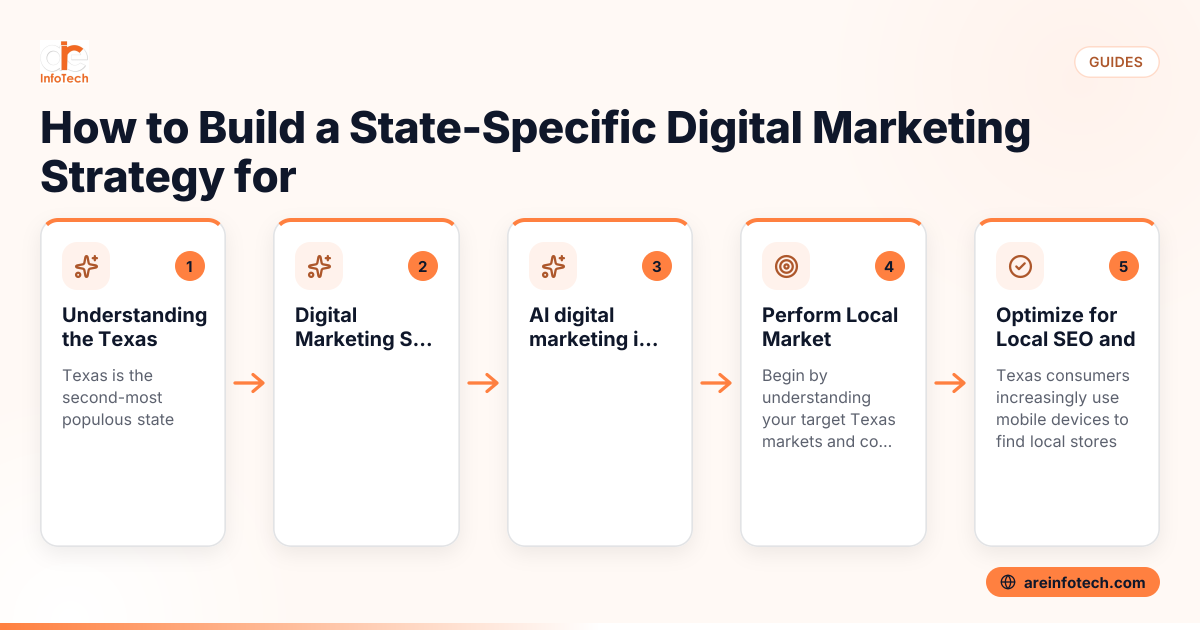
Texas retail businesses need a digital marketing strategy tailored specifically to local customers and market conditions. This involves focusing on local SEO, social media engagement, compliance with Texas sales tax rules, and leveraging AI digital marketing tools to optimize outreach and personalization.
Texas is the second-most populous state, home to large metro areas like Houston, Dallas, Austin, and San Antonio. Retailers serve a culturally diverse population ranging from tech-savvy urbanites to rural consumers. Key considerations include:
Successful digital marketing incorporates these factors to build customer trust and engagement statewide.
A digital marketing strategy for Texas retail businesses is a localized plan to attract and convert customers via online channels like search engines, social media, email, and paid ads. It includes local SEO to appear in city-specific searches, integrates state sales tax compliance in e-commerce pricing, and delivers culturally relevant content.
AI digital marketing automates and personalizes campaigns by analyzing customer data and predicting buying behaviors. For Texas retailers, it refines ad targeting, optimizes spend on channels like Facebook and Google, and tailors messaging to regional preferences, resulting in higher engagement and conversion rates.
AI tools can also optimize email timing and content while ensuring compliance with regulations like CAN-SPAM and TCPA, reducing wasted marketing budget.
Begin by understanding your target Texas markets and competitors:
Use insights to focus messaging, select keywords, and allocate budgets efficiently.
Texas consumers increasingly use mobile devices to find local stores. Improve local SEO by:
This ensures your business appears in “near me” searches critical for in-store or curbside visits.
Produce content tailored to Texan shoppers, such as:
Content that respects local culture and interests builds strong customer loyalty.
Texas sales tax of up to 8.25% must be clearly factored into your online pricing. Ads and website displays should show prices inclusive of tax or transparently explain how tax is calculated at checkout.
Failing to do so risks customer dissatisfaction and compliance issues, especially during promotions where discounts and taxes affect final costs.
Leverage popular platforms such as Facebook, Instagram, and TikTok with Texas-focused strategies:
This direct interaction drives both first-time purchases and repeat visits.
Texas retail marketers must follow CAN-SPAM and TCPA laws, including:
Legal compliance protects your brand and avoids costly penalties.
Track KPIs such as:
Leverage AI digital marketing dashboards to analyze data and adjust strategies in real time.
Partnering with a US-based digital agency like ARE InfoTech offers benefits:
Such agencies help retail owners focus on operations while expanding their digital footprint.
An effective Texas retail digital marketing strategy hinges on local SEO, cultural alignment, sales tax transparency, and AI-powered campaign optimization. Adhering to US laws like CAN-SPAM ensures trustworthy communication. Continual measurement and expert partnerships, such as with ARE InfoTech, keep your business competitive in Texas’s dynamic retail environment.
Digital marketing tailored for Texas enables retailers to connect authentically and grow sustainably.
Conducting a focused SEO audit helps optimize your Texas retail website and digital presence. Review local keyword targeting, mobile usability, and Google My Business profile health regularly. These audits identify technical issues and improve content relevance to Texas shoppers’ search behaviors.
Local SEO, Google My Business, social media platforms like Facebook and TikTok, compliant email marketing, and paid search ads focusing on Texas consumers are essential digital channels.
Display prices inclusive of Texas sales tax or provide clear calculation details at checkout. Use e-commerce platforms with integrated Texas tax automation to maintain compliance.
Yes. AI tools automate personalization, improve ad targeting, and deliver actionable insights, making campaigns more efficient and enhancing engagement with local customers.
It is critical. Texas has diverse communities, including Hispanic and rural populations. Relevant messaging fosters trust and increases customer loyalty.
Retailers must comply with CAN-SPAM and TCPA by securing explicit consent, offering opt-outs, and respecting communication restrictions to protect their brand and avoid penalties.
A US-focused agency like ARE InfoTech offers expertise in Texas-specific marketing nuances, legal compliance, and AI digital marketing that can accelerate retail growth.
For more insights, visit the ARE InfoTech blog and explore guides on integration, compliance, and advanced marketing tactics.
Google Reviews


