
Local SEO strategy for SMEs in India focuses on optimising online visibility to attract nearby customers. For tier-2 and tier-3 cities, this means understanding local consumer behaviour, leveraging regional platforms, and using cost-effective, targeted methods to grow your business footprint.
Local SEO ensures your small or medium business is found by customers nearby who are ready to buy. Unlike metro areas, tier-2 and tier-3 cities often have unique languages, online habits, and trust issues around digital channels. Tailoring your online presence to local conditions helps build credibility and generates targeted leads at lower marketing costs.
For instance, a manufacturing firm in Pune’s outskirts might get bulk orders by appearing in searches related to “industrial suppliers near me” or “Pune manufacturing vendors.” Local SEO also helps you compete with regional competitors found on platforms like IndiaMART or JustDial while enhancing visibility on Google Search and Maps.
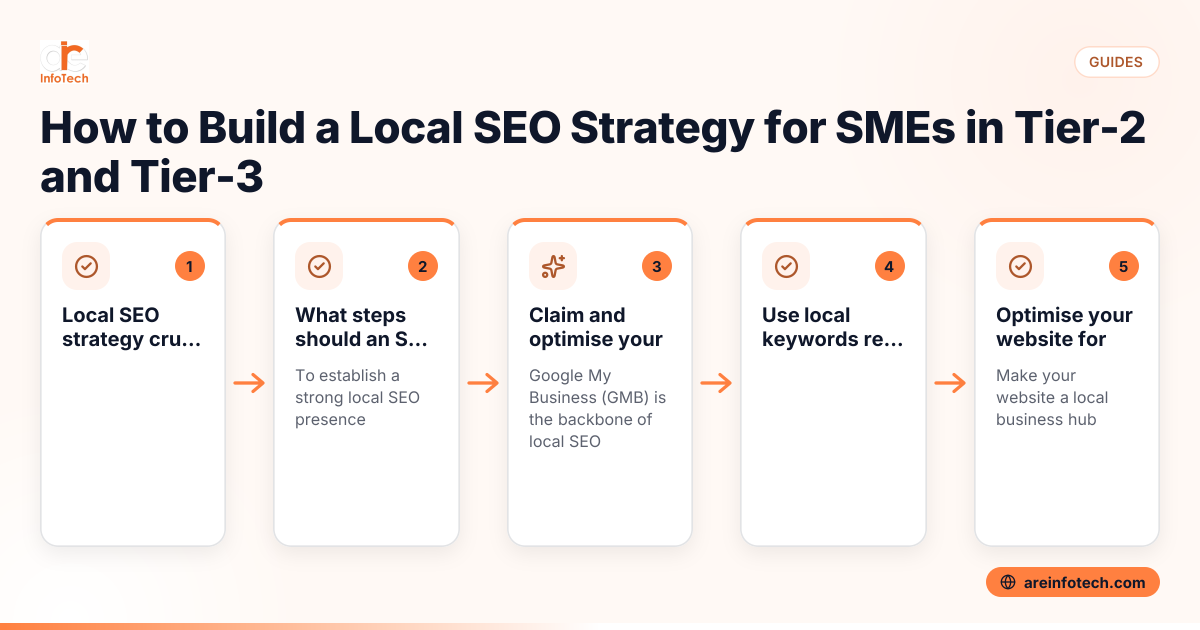
To establish a strong local SEO presence, follow these game-changing steps:
Google My Business (GMB) is the backbone of local SEO. Claim your listing with correct business name, address, and phone number (NAP). Make sure to:
This helps your business show up on Google Maps and local pack results, critical for driving foot traffic and calls from within your city.
Identify and incorporate keywords that reflect how local customers search. Use Hindi, Marathi, Tamil, or local dialect variants where applicable. For example, a grocery shop in Jaipur may target “vegetables in Jaipur market,” while a fashion store in Kochi opts for “Kerala saree shop.”
Tools that leverage ai local seo can provide insights about trending regional keywords, giving you an edge in competing local searches.
Make your website a local business hub:
Apart from GMB, register your SME on IndiaMART, JustDial, Sulekha, and other trusted local portals. These platforms offer valuable listing traffic and authoritative backlinks which boost SEO rankings.
Ensure your information is consistent across all directories to avoid confusion and maintain trust with customers and search engines.
Positive reviews play a vital role in Indian buying decisions. Encourage satisfied customers to leave reviews on Google, WhatsApp groups, or IndiaMART profiles. Always respond professionally to feedback, showing strong customer service even in smaller markets.
AI-powered local SEO tools can analyse search trends, identify keyword opportunities, and benchmark your performance in your city. This technology helps you keep up with evolving user behaviours in tier-2 and tier-3 cities, offering actionable recommendations to refine your local SEO strategy continuously.
AI local SEO tools provide deep insights into regional search trends and competitor strategies, helping SMEs fine-tune their presence for better local engagement and higher search rankings.
AI-powered software analyses data from Google Searches, Maps, and directories to identify which keywords, directories, and content types resonate with local customers the most. For Indian SMEs, especially in non-metro cities, this means focusing your marketing budget more effectively and targeting regional audiences better. AI can also optimise your Google My Business posts and customer responses to maximise impact with minimal manual effort.
Using AI tools alongside traditional methods can boost your results and save time, allowing you to focus more on serving customers and less on guesswork.
Local backlinks from credible regional websites, local news outlets, and partner businesses improve your SME’s domain authority and boost rankings in local search results.
Start by:
Backlinks act as endorsements, signalling to search engines that your business is a trusted part of the community. For businesses in tier-2 and tier-3 cities, these links help build local trust and stand out from competitors.
Local SEO can be budget-friendly, especially for SMEs aiming for high ROI within modest marketing spends. Initial Google My Business setup and website optimisation often require only your time or a few thousand rupees if outsourced.
Investments increase with website content creation, listing fees (some directories charge a nominal fee), AI local seo tools subscriptions, and professional services that manage reviews and link-building.
Typically, an Indian SME can expect to spend ?20,000-?80,000 annually on essential local SEO efforts. The cost is well worth it considering the volume of local leads and revenue generated through improved visibility.
Local SEO is the foundation for building online visibility that drives footfall, calls, and inquiries from your city or region. When combined with digital marketing strategies such as targeted Facebook ads, WhatsApp communications, and UPI-enabled payments, your SME can create a seamless local sales funnel.
For example, after capturing leads via Google Maps listing or IndiaMART, follow up with WhatsApp campaigns to nurture customers and close sales. Use local SEO data to guide ad targeting and messaging in tier-2 and tier-3 cities where users prefer vernacular content and familiar payment options.
Together, these integrated strategies help SMEs build brand trust, increase customer loyalty, and expand market share sustainably.
Are you unsure about your current local SEO effectiveness? Use an SEO audit to gain insights on your website’s optimisation, Google My Business standing, backlink profile, and keyword rankings. An audit will highlight gaps specific to tier-2 and tier-3 city markets, helping you prioritise improvements.
ARE InfoTech offers expert SEO audits tailored for Indian SMEs focused on local growth. Visit the ARE InfoTech blog to learn more about how audits can guide your digital marketing investments.
You can typically see initial improvements within 2–3 months. However, lasting benefits may take 6–12 months as your Google rankings, local listings, and review profiles strengthen.
Yes, small business owners can start with Google My Business, update website basics, and gather reviews. However, professional help can speed up progress and introduce AI tools for better results.
GMB is foundational but not sufficient alone. You also need keyword-optimised website content, local backlinks, reviews, and directory listings to rank well consistently.
Reviews improve trust and signal business relevance to Google. Frequent positive reviews increase click-through rates and lead conversions, especially important in Indian tier-2 and tier-3 cities.
Yes, local keywords attract customers in your service area who are ready to buy. Generic keywords bring broader traffic, often less targeted and harder to convert at small scales.
The DPDP Act 2023 requires SMEs to handle customer data responsibly. Ensure any online forms, reviews, or WhatsApp marketing comply with consent and data privacy rules to build trust and avoid legal issues.
Building a local SEO strategy tailored for SMEs in India’s tier-2 and tier-3 cities takes focus but offers strong returns. Prioritising Google My Business, localised content, appropriate keywords, customer reviews, and AI insights enables your business to stand out. For tailored expert support, explore digital marketing services at ARE InfoTech to grow your business in India’s diverse markets.
Google Reviews


