
Oct 17, 2026
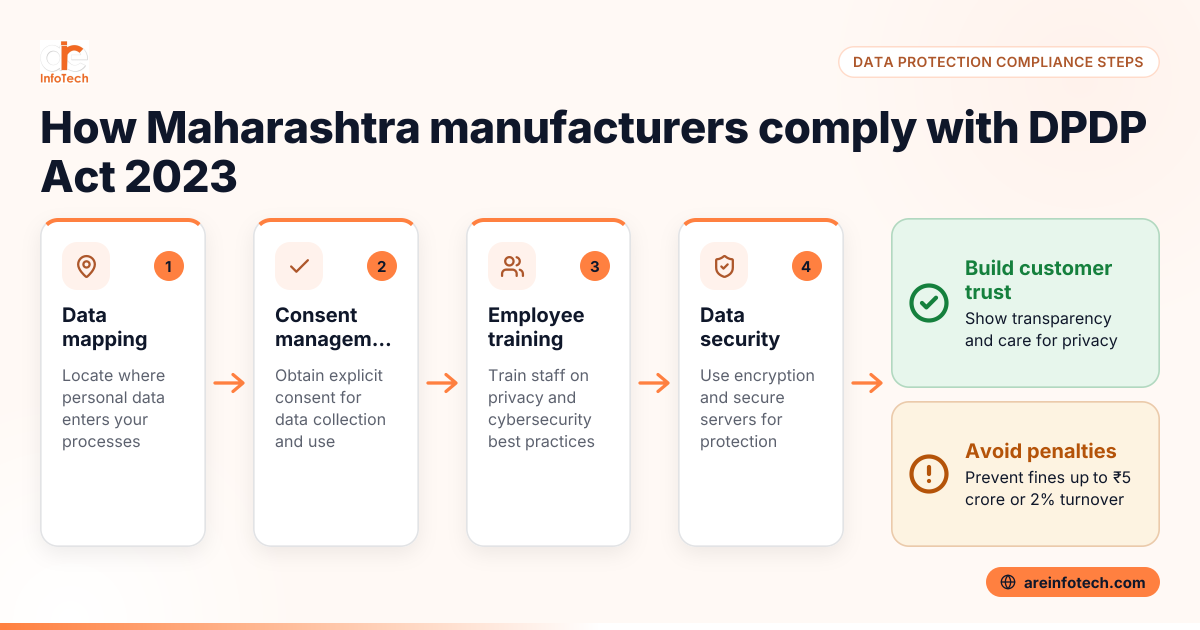
Data protection compliance for manufacturers in Maharashtra means following legal rules like the DPDP Act 2023 to protect customer data. It builds trust, avoids penalties, and helps your manufacturing business stand out in 2024 by showing customers you care about their privacy and data security.
In Maharashtra, hubs like Mumbai and Pune have a dense manufacturing ecosystem. Your customers expect their personal and business data to be handled securely. The Indian government’s DPDP Act 2023 sets strict guidelines requiring manufacturers to process personal data lawfully and transparently.
By following data protection compliance, you reduce risks of data breaches that can cause financial loss and legal penalties. It also enhances your business image, leading to stronger customer relationships and better opportunities with partners and suppliers.
AI data protection means safeguarding personal data when using AI in manufacturing processes. Smart systems analyse large datasets like customer info, supplier contacts, and employee records.
Manufacturers must ensure AI tools anonymise personal data, have strong access controls, and are regularly audited for privacy risks. These steps protect sensitive data while letting you benefit from AI in production and supply chain improvements.
Compliance requires clear steps to meet legal requirements:
Compliance costs depend on your business size and digital setup. Typical expenses cover security software, staff training, legal help, and possibly a DPO. For instance, a mid-size Pune manufacturer might spend ?2-5 lakh yearly on compliance tools and activities. This investment protects you from fines and reputational damage far costlier than compliance.
Being transparent about data handling reassures customers you value their privacy. Maharashtra manufacturers promoting compliance can:
Customers confident their data is safe are more likely to recommend your firm and maintain long-term business ties.
Violating the DPDP Act 2023 risks penalties up to ?5 crore or 2% of your turnover, whichever is higher. Maharashtra manufacturers may face actions from the Data Protection Authority of India.
Besides fines, breaches cause loss of trust and customer base. Rebuilding reputation in competitive cities often takes years, making compliance cost-effective.
To benefit from AI without privacy risks:
This protects your manufacturing data ecosystem while leveraging AI innovation.
Yes. Using WhatsApp for customer chats or platforms like IndiaMART and JustDial for leads requires protecting customer data. Demonstrated compliance increases credibility and trust, leading to more inquiries and higher sales conversions.
Choose partners like ARE InfoTech who understand India’s data laws and follow stringent data security. Ensure they handle customer data discreetly and support your compliance needs in marketing and IT functions.
Data protection rules will grow stricter as manufacturing embraces digital. Manufacturers should stay ahead of expected updates to the DPDP Act or Maharashtra-specific regulations, ensuring smooth operations and resilience.
It means following laws like the DPDP Act 2023 to secure personal data of customers, suppliers, and employees in your manufacturing business. Compliance involves safeguarding data, getting consent, and handling information transparently.
AI data protection ensures AI applications used in manufacturing do not misuse or expose personal data. Manufacturers must implement privacy safeguards, limit access, and anonymise data to meet compliance.
Penalties include legal fines reaching up to ?5 crore or 2% of turnover. There can also be reputational damage, loss of business opportunities, and regulatory restrictions.
Yes. Customers trust manufacturers who protect their data. This trust improves customer loyalty, enhances brand reputation, and can increase sales conversions through digital channels.
At least once a year, or more frequently if there are changes in operations, technology, or legal requirements. Regular audits help identify gaps and keep compliance strong.
Not all. It depends on the size of your manufacturing business and the volume of personal data processed. Larger manufacturers often must appoint a DPO or designate responsible personnel.
For manufacturers in Maharashtra aiming to lead their markets in 2024, data protection compliance is not just a regulatory hurdle. It is a strategic tool to build trust, improve operational security, and enhance business growth. For expert advice on implementing these measures safely and effectively, visit the ARE InfoTech blog.
Google Reviews


