
Oct 21, 2026
Preparing for 1099 tax season means gathering all payment information for contractors and filing IRS Form 1099-NEC on time. For U.S. small businesses, it’s vital to collect accurate data, communicate deadlines clearly, and use digital tools to streamline the process and avoid costly penalties.
1099 tax season preparation involves collecting payment records for freelancers, contractors, and vendors to file IRS Form 1099-NEC by the January 31 deadline. Small businesses must report payments of $600 or more to non-employees annually. Proper preparation reduces stress, ensures compliance, and helps avoid IRS penalties.
Preparing for 1099 tax season is crucial because late or inaccurate filings can trigger IRS penalties and damage relationships with contractors. Many U.S. small businesses in cities like Houston, Chicago, and Detroit rely on numerous contractors, making precise reporting vital to maintaining compliance and trust.
AI 1099 tax software automates form preparation by extracting payment data from platforms like QuickBooks or Stripe and pre-filling IRS forms. This reduces manual errors, saves time, and helps small businesses meet IRS deadlines with confidence.
AI-powered 1099 tax solutions link financial records directly to tax filing workflows. This integration minimizes manual data entry and adapts to changing IRS requirements, making tax season easier for small businesses focused on contractors.
Digital marketing goes beyond sales; it enables effective communication, education, and organization during tax season. Here’s how:
Using CAN-SPAM and TCPA-compliant email campaigns, businesses can remind contractors to submit W-9 forms and other required info. Social media channels like LinkedIn provide platforms to share updates and answer questions about 1099 deadlines.
Creating blogs, videos, and FAQs helps demystify 1099 regulations for contractors and clients. Clear content builds trust and reduces confusion about tax obligations.
Marketing automation tools schedule consistent reminders to contractors for missing forms or payment verifications. Automation reduces manual follow-up and improves response rates.
AI-driven software extracts data automatically from accounting systems and pre-fills forms, enhancing accuracy and efficiency. These tools streamline compliance within digital workflows.
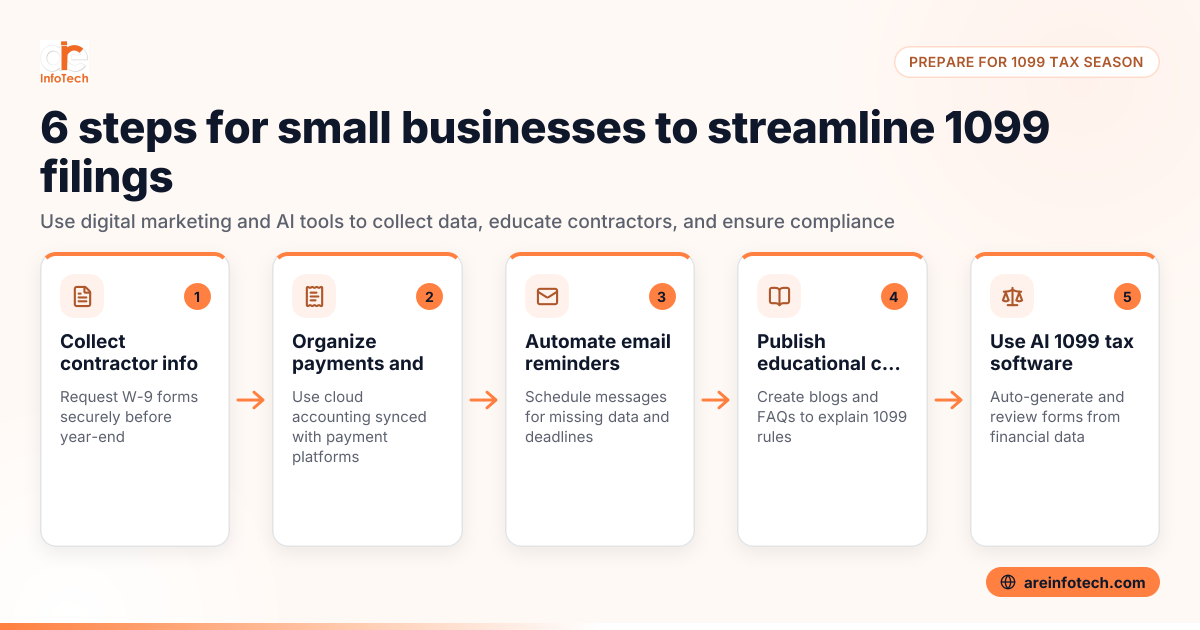
Request W-9 forms from all contractors well before year-end using secure digital forms and email outreach.
Use cloud-based accounting software like QuickBooks synced with Stripe to maintain clear payment records, simplifying 1099 reporting.
Send scheduled reminders to contractors about missing data or approaching deadlines using marketing automation platforms.
Provide easy-to-understand explanations of 1099 requirements, penalties, and deadlines on your website and social media.
Leverage AI-powered tax preparation solutions that integrate with your financial data to auto-generate and review 1099 forms efficiently.
Carefully verify all forms before filing. Notify contractors digitally once forms are sent and encourage them to keep copies for their records.
Incomplete contractor data, last-minute submissions, tracking payments across platforms, and confusion over deadlines often create difficulties. Managing multiple contractors requires organized communication and reliable data collection to prevent mistakes.
Clear record-keeping, proactive digital communication, and AI-assisted tax preparation tools minimize errors and ensure filings meet IRS deadlines, reducing the risk of costly fines.
While 1099 preparation itself doesn’t impact cash flow directly, avoiding penalties prevents unexpected expenses. Clear communication with contractors helps maintain goodwill and smooth payment relations.
Digital marketing supports preparation through education and communication but does not handle filing. However, combining marketing strategies with AI 1099 tax filing software creates a streamlined tax season workflow.
Local regulations and industry specifics affect tax requirements. For instance, Houston businesses may focus on energy sector contractors, while Detroit firms address automotive suppliers. Tailored digital campaigns improve local contractor engagement and compliance.
Integrating digital marketing with AI-driven tax tools lets U.S. small businesses prepare efficiently for 1099 tax season and maintain full compliance.
For more on compliant outreach, see How to Create a CAN-SPAM and TCPA Compliant Email and Phone Outreach Strategy for US Small Businesses.
Contractors must get their 1099-NEC forms by January 31. The IRS filing deadline is February 28 for paper and February 29 for electronic submissions, with electronic filing recommended.
Businesses must file 1099-NEC for contractors paid $600 or more annually. Certain payments and corporations are exempt; always verify IRS guidelines.
AI automates payment matching and form filling, reducing manual errors and helping meet filing deadlines more reliably.
Yes, many digital marketing platforms integrate secure, compliant form collection tools that protect contractor data.
Yes. The IRS charges $50 to $290 per form depending on how late the submission is, with higher fines for intentional neglect.
Consolidate records into one accounting system or use AI tax solutions that sync data from various platforms to ensure accuracy.
A proactive 1099 tax season approach using digital marketing and AI tools simplifies compliance for U.S. small businesses. Discover more strategies on the ARE InfoTech blog.
Google Reviews


