
Oct 21, 2026
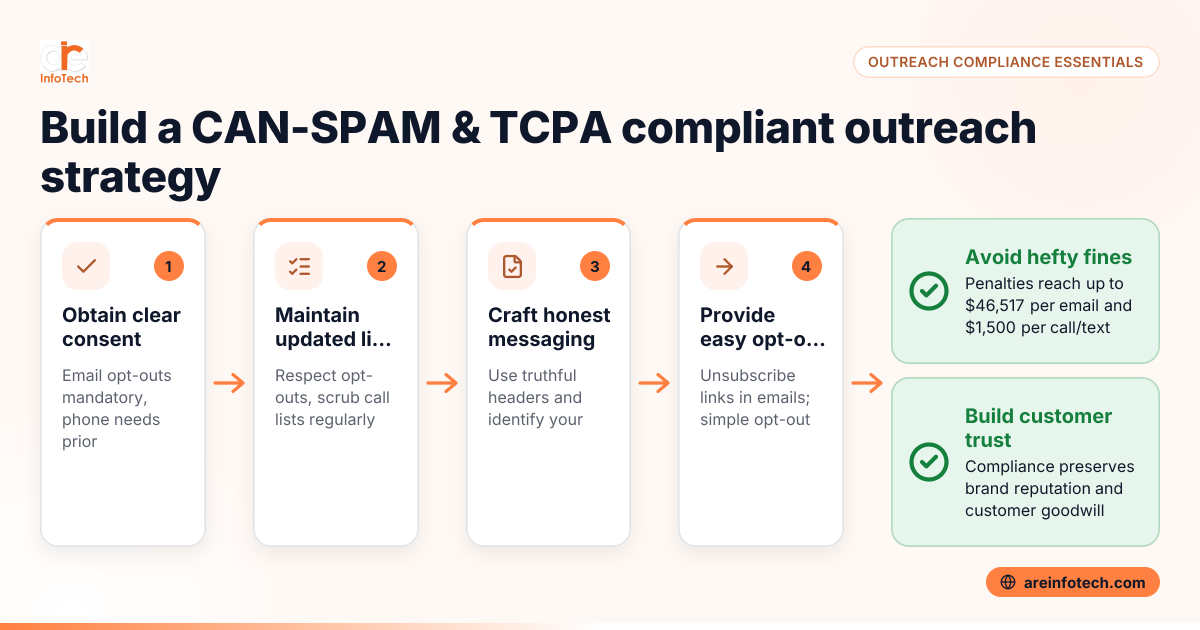
How to Create a CAN-SPAM and TCPA Compliant Email and Phone Outreach Strategy for US Small Businesses
Creating an outreach strategy that complies with CAN-SPAM and TCPA regulations is essential for US small businesses to avoid hefty fines and maintain customer trust. This involves understanding the legal requirements for email and phone communications, obtaining proper consent, and following best practices in message content and frequency.
The CAN-SPAM Act governs commercial email messages sent to US recipients, ensuring senders include accurate header information, subject lines, and a clear opt-out option. The Telephone Consumer Protection Act (TCPA) restricts telemarketing calls, prerecorded messages, and texts, requiring prior express written consent for many outreach types.
CAN-SPAM applies to any “commercial electronic mail message,” including promotions or offers. It mandates that emails must contain:
TCPA regulates calls and messages to mobile and residential numbers, emphasizing consent, adhering to the National Do Not Call Registry, and restricting autodialers and prerecorded calls. For example, if your small business in Chicago uses automated calling for marketing, TCPA compliance is crucial.
Penalties for CAN-SPAM violations can reach up to $46,517 per email, while TCPA fines vary up to $1,500 per unsolicited call or text, depending on willfulness. State Attorneys General can also pursue actions beyond federal penalties. For a small business in Houston, these fines can quickly add up and affect your bottom line.
Crafting a compliant outreach strategy involves systematic planning and execution:
Businesses in Detroit, for instance, using platforms like QuickBooks and integrating with marketing tools can automate compliance workflows seamlessly.
AI can assist in managing CAN-SPAM TCPA compliant outreach United States by automating consent tracking, analyzing message content for compliance, and handling unsubscribe requests efficiently. Such AI-driven solutions minimize human error and help maintain audit trails.
Using AI tools, small businesses can analyze outgoing emails for potentially misleading subject lines or flagged language that may breach regulations. Additionally, AI can flag phone outreach that lacks proper consent or is risk-prone, helping businesses avoid violations before they happen.
Email outreach under CAN-SPAM does not require prior consent but mandates an opt-out. Phone outreach under TCPA typically requires prior express written consent before autodialing or sending prerecorded marketing calls or texts.
Specifically, for marketing calls with prerecorded messages or texts, written consent must clearly state the consumer agrees to receive calls or texts using automated systems. Business-to-business calls may have different standards, but best practice is to obtain clear authorization.
Beyond avoiding fines, compliance builds trust with your customers and preserves your brand reputation. Non-compliance risks blocking your messages, complaints to the FCC, and loss of customer goodwill. In competitive markets like Chicago or Houston, respecting consumer preferences can differentiate your business positively.
Many US small businesses use QuickBooks or Stripe for payments and ERP systems in manufacturing industries. Combining these with compliant outreach tools ensures that your customer communications stay aligned with orders, billing, and support. This integration also aids in maintaining accurate contact records for compliance.
Following these steps will help your business succeed in marketing without risking penalties or customer backlash.
CAN-SPAM primarily applies to commercial email messages, focusing on honest identification and opt-out options without needing prior consent. TCPA governs phone outreach, requiring prior express written consent for many marketing calls and texts, with stricter rules on autodialing and prerecorded messages.
No. Under TCPA, most automated marketing texts require prior express written consent from the recipient. Exception applies for informational texts or texts sent to existing customers with transactional content, but it’s best to obtain clear authorization to avoid penalties.
For emails under CAN-SPAM, opt-out requests must be honored within 10 business days. For phone or text opt-outs under TCPA, opt-out must be processed promptly, often immediately upon request to avoid contacting again.
AI tools can significantly assist by automating consent management, content analysis, and opt-out handling but cannot fully replace human oversight. Legal interpretation and contextual judgment remain essential, so AI should be part of a broader compliance program.
Yes. TCPA has special protections for calls and texts to wireless numbers, requiring additional consent and restrictions on prerecorded messages and autodialing. Calling a mobile phone without proper consent can lead to severe penalties.
It is wise to conduct compliance audits at least quarterly, reviewing consent records, message templates, and opt-out processes. Regular audits help catch issues early and adapt to any regulatory changes.
For more insights on digital marketing compliance and AI-driven strategies, visit the ARE InfoTech blog and explore related posts like How United States Small Businesses Can Use AI-Driven Digital Marketing Strategies to Increase Local Customer Engagement. Staying informed helps you stay compliant and competitive.
Google Reviews


