
Oct 15, 2026
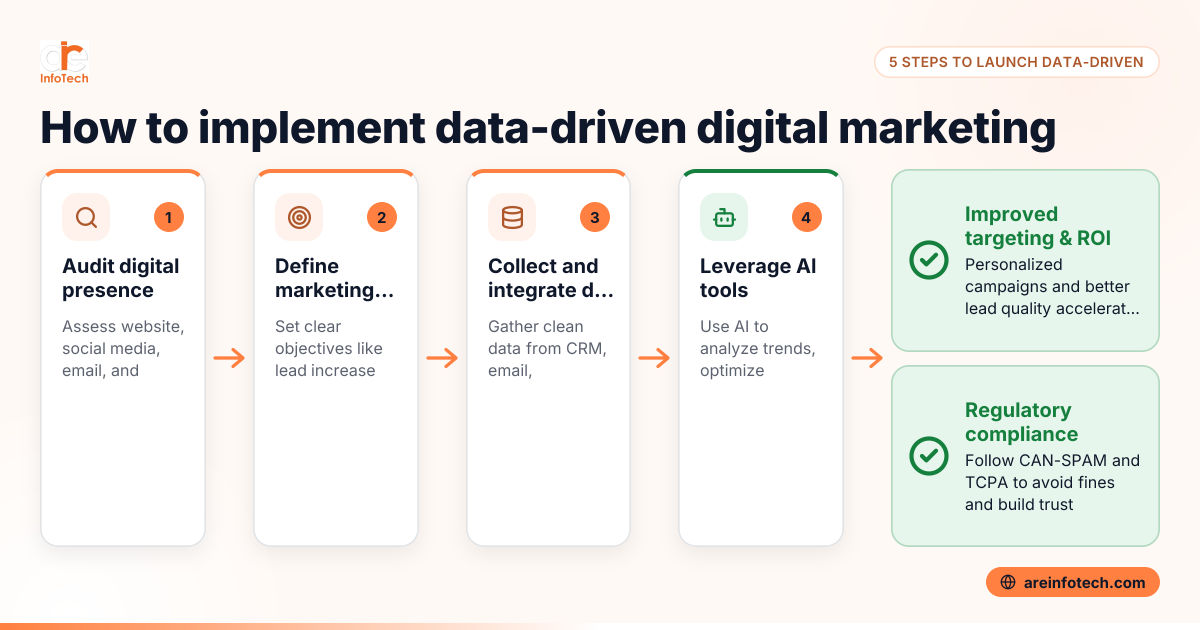
Data-driven digital marketing uses concrete data insights to tailor marketing efforts, maximizing reach and ROI. For manufacturing businesses in the United States, leveraging these strategies helps target the right audience, optimize campaigns, and accelerate growth in a competitive market.
Data-driven digital marketing uses data analytics and consumer insights to design, implement, and measure marketing campaigns. It helps manufacturers understand client behavior, industrial trends, and sales funnel performance to attract qualified business buyers in the U.S.
By tapping into data from website traffic, social media, email campaigns, and systems like QuickBooks or Stripe, manufacturers segment their market and personalize messaging. For example, a Detroit-based manufacturer targeting automotive parts buyers can identify responsive sectors and tailor digital ads accordingly.
AI data-driven digital platforms analyze complex data quickly and automate marketing tasks. They optimize ad bidding, predict buyer trends, and personalize content to increase engagement and improve ROI.
AI data-driven digital tools automate data analysis and deliver insights faster than manual methods. They identify patterns in customer behavior, forecast buying trends, and optimize ad spend in real time. For example, AI-powered platforms can automatically adjust bids on Google Ads based on lead quality metrics.
These tools reduce wasted spend and improve targeting accuracy — critical for manufacturers with longer B2B sales cycles and niche audiences. They also help scale campaigns while maintaining precision, an essential factor for industrial firms in cities like Houston or Chicago competing nationally.
Start by gathering clean, relevant data from your existing digital channels and sales systems. This may include website analytics, email marketing stats, social media engagement, and sales CRM data. Next, define your target personas clearly — for instance, procurement managers at mid-size manufacturing plants looking for efficient suppliers.
Then, choose the right metrics to monitor, such as click-through rates, qualified leads, and conversion times. Use AI data-driven insights to segment your audience and personalize campaigns accordingly. For example, segment LinkedIn ads by job role or company size, then test different messaging to find what resonates best.
Data-driven marketing identifies promising leads by analyzing behavior like content downloads, time on site, and email engagement. It enables nurturing campaigns that focus on converting warm leads, not broad outreach.
For U.S. manufacturers selling to sophisticated buyers, quality beats quantity. Data-driven methods help generate leads through organic SEO, targeted Google Ads, and LinkedIn campaigns with precise filters, boosting sales efficiency and shortening cycle times.
Small manufacturers can track KPIs such as website traffic from paid ads, lead-to-customer conversion rates, and ROI on email campaigns. Tools like Google Analytics, LinkedIn Ads Manager, and platforms integrated with QuickBooks offer clear insights.
Additionally, monitor customer lifetime value and repeat purchase rates to evaluate long-term impact. Regular reporting helps optimize for better results over time.
Challenges include integrating disparate data sources, keeping data accurate, and complying with TCPA and CAN-SPAM regulations. B2B manufacturing audiences require technical content that is both clear and compelling.
Longer sales cycles and niche audiences make optimization vital. Partnering with a digital marketing agency familiar with U.S. manufacturing helps overcome these issues efficiently.
Assess your website, social media, email campaigns, and paid ads. Identify gaps and strengths with analytics tools.
Set specific objectives like increasing qualified leads by 20% in 6 months or boosting brand awareness within the Chicago manufacturing sector.
Gather data from CRM, email marketing, analytics, and sales systems. Keep data clean for accuracy.
Use AI-powered platforms to identify trends, optimize campaign budgets, and automate personalized outreach.
Continuously track KPIs. Adjust strategies based on data to maximize return and reach.
U.S. manufacturers must follow CAN-SPAM for email marketing, TCPA for calls and texts, and honor opt-out requests promptly. Clear consent and privacy disclosures are essential.
Meeting data security standards like SOC 2 builds buyer trust. Working with agencies knowledgeable in U.S. regulations helps avoid costly legal issues.
ARE InfoTech specializes in tailored digital marketing for manufacturing firms in the U.S. Using AI data-driven digital tools, they deliver measurable growth through custom campaigns on Google Ads, LinkedIn, and content marketing.
They ensure compliance with U.S. marketing laws while improving lead quality and optimizing budgets. Manufacturers in Detroit, Houston, Chicago, and beyond gain ongoing support from ARE InfoTech to turn data into business growth.
Learn more about ARE InfoTech’s manufacturing digital marketing services on the ARE InfoTech blog.
Data-driven marketing uses actual customer and campaign data to personalize and optimize outreach. Traditional marketing relies on assumptions or broad targeting, often causing wasted spend and lower ROI.
AI quickly analyzes data to identify patterns and predict buyer behavior. This enables automation and refinement of targeting, budget allocation, and messaging, boosting campaign efficiency and lead quality.
Top channels include LinkedIn for B2B outreach, Google Ads for targeted search, email marketing for nurturing leads, and SEO to improve organic visibility in markets like Chicago and Houston.
Monthly or quarterly reviews help spot trends and adjust campaigns promptly. Frequent checks are critical during product launches or market shifts.
Yes, failing to comply with CAN-SPAM or TCPA can lead to fines. Always secure proper consent and provide easy opt-out options. Consulting experts ensures adherence.
Yes, small firms benefit by focusing on qualified leads and measurable ROI. Scalable AI tools and expert guidance make it accessible without large budgets.
Google Reviews


