
Oct 15, 2026
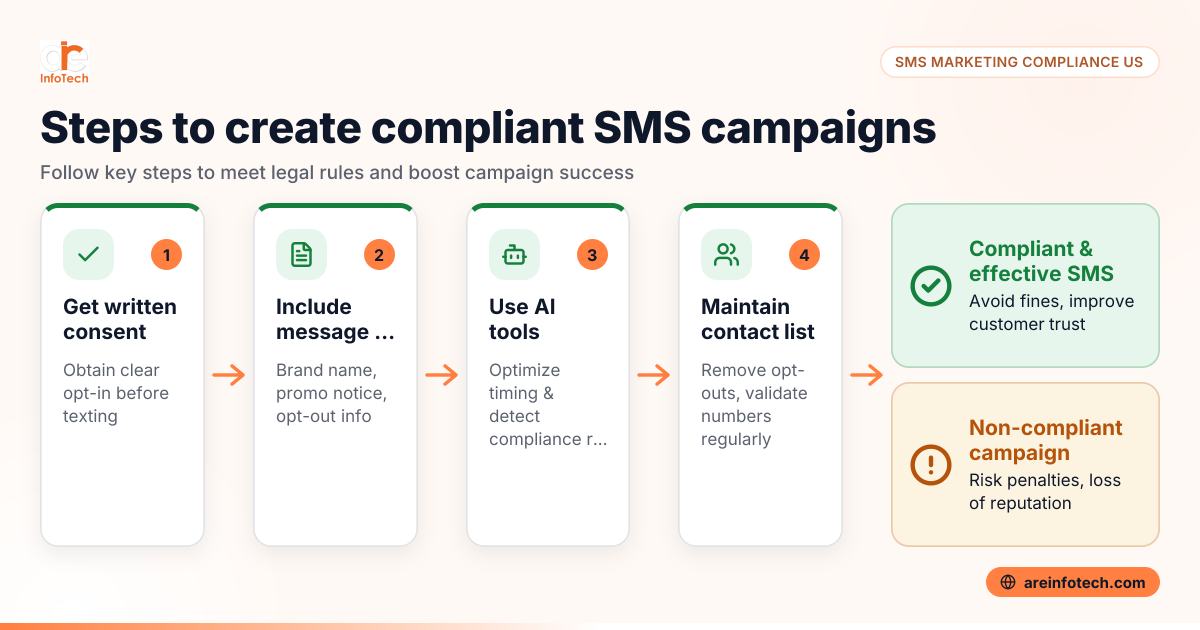
Creating a compliant and effective SMS marketing campaign in the United States requires understanding the legal framework and best practices that protect consumers while driving business growth. Small businesses must focus on permission-based messaging, respecting opt-out requests, and following guidelines from the FCC and FTC to avoid penalties and build trust.
SMS marketing compliance in the United States centers around respecting consumer rights to privacy and avoiding unwanted messages. The TCPA requires businesses to obtain prior express written consent before sending any marketing SMS to a consumer's mobile phone. This consent must be clear, specific, and documented. Any message sent without this consent risks hefty fines.
The CAN-SPAM Act also applies to SMS marketing in cases where commercial content is sent, requiring opt-out options and truthful identification of the sender. Additionally, the FCC enforces these rules and can impose penalties for violations.
Businesses must also manage their contact lists to remove numbers that have opted out or are invalid to maintain compliance and avoid negative experiences.
You must get explicit written consent from each recipient before sending marketing SMS messages.
Obtaining compliant consent means customers should knowingly agree to receive texts. This can be done through a clear opt-in checkbox on your website, mobile app, or a paper form where you specifically tell them what types of messages they will receive.
For example, a small retailer in Detroit could ask website visitors to "Sign up to receive exclusive deals and SMS alerts" with a mandatory checkbox (not pre-checked) and a link to terms. The consent record should include the date and method of opt-in.
Never assume consent from existing customers without this permission. Texts sent without prior written consent can result in fines up to $500-$1500 per violation.
Each message must clearly identify your business and provide an easy way to opt out.
Your SMS marketing texts should contain:
For example, a Houston café texting a 20% off coupon could say: "Hi from Tastify Cafe! Get 20% off your next visit. Reply STOP to opt out."
Including opt-out options is legally required and helps maintain positive customer relationships.
AI SMS marketing uses machine learning to optimize message content, delivery times, and frequency, improving engagement while respecting compliance rules.
AI tools analyze customer behavior and preferences to personalize texts, reducing spam perception. They can automatically schedule messages to avoid sending too frequently or during inconvenient hours, which improves customer experience and lowers the risk of complaints.
AI systems can detect potential compliance issues, such as sending messages to numbers without proper opt-in or missing opt-out acknowledgments, alerting marketers before violations occur.
Using AI-powered platforms helps small businesses in cities like Chicago and Detroit scale their SMS marketing efficiently while staying compliant.
Maintaining a clean, updated contact list is critical for legal compliance and campaign success.
Steps to keep your list compliant:
For example, a Detroit manufacturing supplier using ERP sales software integrated with their SMS platform should automate syncing of opt-out lists and phone validation to avoid accidental texts to unsubscribed contacts.
Maintaining hygiene reduces legal risks and boosts conversion since messages target genuinely interested recipients.
Low-frequency, timely messages improve customer satisfaction and reduce opt-outs.
For instance, a Houston boutique might find weekend morning promotions yield higher engagement, while weekday midday texts annoy recipients.
Consistent but respectful timing cultivates trust and drives higher ROI over time.
Navigating SMS marketing compliance can be complex and demanding. Partnering with a knowledgeable digital marketing agency like ARE InfoTech ensures your campaigns meet U.S. regulations and deliver measurable growth.
ARE InfoTech helps with:
By leveraging expert guidance, small businesses in cities such as Chicago, Houston, and Detroit can confidently use SMS marketing to connect with customers while avoiding costly legal risks.
The TCPA is a US federal law that regulates telemarketing calls and SMS messaging. It requires businesses to get prior written consent before sending promotional texts and mandates providing opt-out options. Violating it can lead to significant fines.
No. Even if a person has purchased from you, TCPA requires explicit written consent before sending marketing SMS. Transactional messages related to order status are exempt but not promotional ones.
You must act promptly and honor any opt-out requests. Every SMS should include a simple instruction like "Reply STOP to unsubscribe". Once a customer opts out, do not send further marketing messages to that number.
Yes. While originally for emails, CAN-SPAM’s anti-spam provisions also apply to commercial text messages, requiring truthful sender ID and opt-out mechanisms. TCPA rules are generally more strict and must be followed too.
Frequency should be limited to avoid annoying your audience—typically 2-4 per month unless the subscriber agrees to more. AI tools can help identify the ideal sending frequency based on engagement patterns.
Yes. AI SMS marketing optimizes message timing, personalization, and compliance management. It reduces human error, improves customer interaction rates, and helps small businesses maintain strong regulatory adherence in competitive markets like Chicago and Houston.
For more expert insights about digital marketing strategies tailored to US businesses, visit the ARE InfoTech blog.
Google Reviews


