
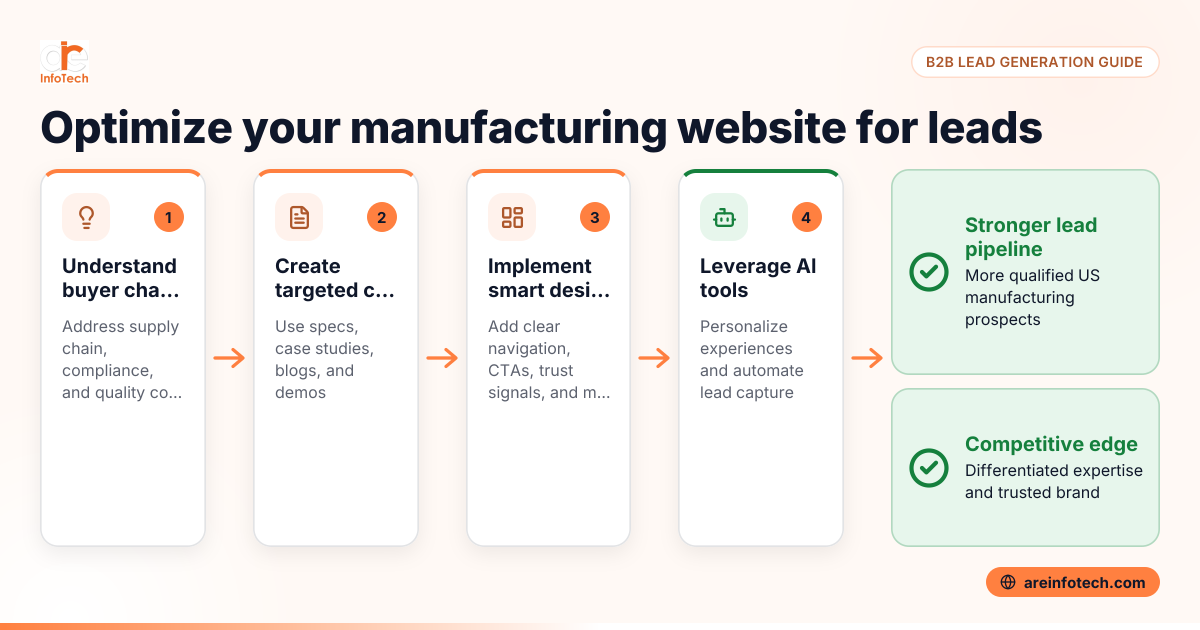
Optimizing a B2B website for lead generation in the United States manufacturing sector means tailoring your site’s content, navigation, and technology to meet industrial buyers’ needs. Clear messaging, focused SEO, and AI-powered personalization help convert visitors into qualified leads that grow your business pipeline.
Generating leads from your website is vital to building a steady pipeline of US manufacturing buyers. Your site serves as a 24/7 sales asset that educates prospects, establishes trust, and facilitates ongoing engagement amid long B2B sales cycles typical in industrial sectors like Detroit and Houston.
Lead generation kickstarts relationships and differentiates your company in a competitive market by clearly communicating your manufacturing expertise to potential clients, distributors, and partners.
Optimize your website content by deeply understanding manufacturing buyers’ challenges like supply chain reliability, compliance with US regulations, and product quality standards. Then create focused content such as:
Use clear, unambiguous technical language and avoid generic marketing filler. This builds credibility and improves search rankings for manufacturing-related queries specific to the United States.
AI b2b website solutions enhance lead generation by analyzing visitor behavior and personalizing their experience. They enable:
Using AI allows you to focus on high-potential prospects, improving lead quality and increasing conversion rates through smarter interactions.
Key design features include:
SEO is critical since most industrial buyers begin supplier searches online. Ranking for keywords like “custom sheet metal fabrication Chicago” drives qualified traffic. Focus on:
Ongoing SEO efforts ensure your site remains visible, authoritative, and attractive to potential leads.
Content marketing builds trust and educates buyers throughout the sales journey. Use blogs, whitepapers, and videos to:
Update content regularly based on visitor interests and trending industry topics to maintain relevance and boost SEO.
Combine Google Analytics with your CRM to monitor lead generation performance:
Data-driven insights allow continual website and marketing refinement for better lead quality and volume.
Local SEO ensures businesses near major manufacturing cities find you easily. Focus on:
Local visibility encourages buyers to choose suppliers close to their facilities, strengthening lead generation.
Design lead capture forms that are concise and visitor-friendly:
Ensure forms comply with US rules like CAN-SPAM for email marketing and clearly display your privacy policy.
For deeper insights on building manufacturing lead generation strategies, visit the ARE InfoTech blog. For practical tactics on digital platforms, see How to Leverage Google Business Profile for Local B2B Lead Generation in United States and How to Use LinkedIn Advertising to Generate B2B Leads for Manufacturing Companies in United States.
Results generally appear over 3 to 6 months. B2B sales cycles in manufacturing are lengthy, so steady SEO, fresh content, and UX improvements gradually increase qualified leads.
Focus on solving real manufacturing challenges like supply chain disruptions or regulatory compliance. Use clear technical language and showcase US-based manufacturing capabilities through case studies.
Yes. By targeting niche markets and optimizing local SEO, small manufacturers can effectively attract the right buyers and compete with larger firms.
Avoid cluttered sites, weak CTAs, neglecting mobile optimization, ignoring SEO, and lacking engaging, useful content. These hinder lead capture.
Email marketing must follow CAN-SPAM by including opt-out options and truthful sender info. Compliance protects your reputation and avoids legal issues.
Buyers frequently research suppliers on mobile devices at worksites or on the go. Mobile-friendly sites improve user experience, increase engagement, and help search rankings vital for lead generation.
Google Reviews


