
Oct 22, 2026
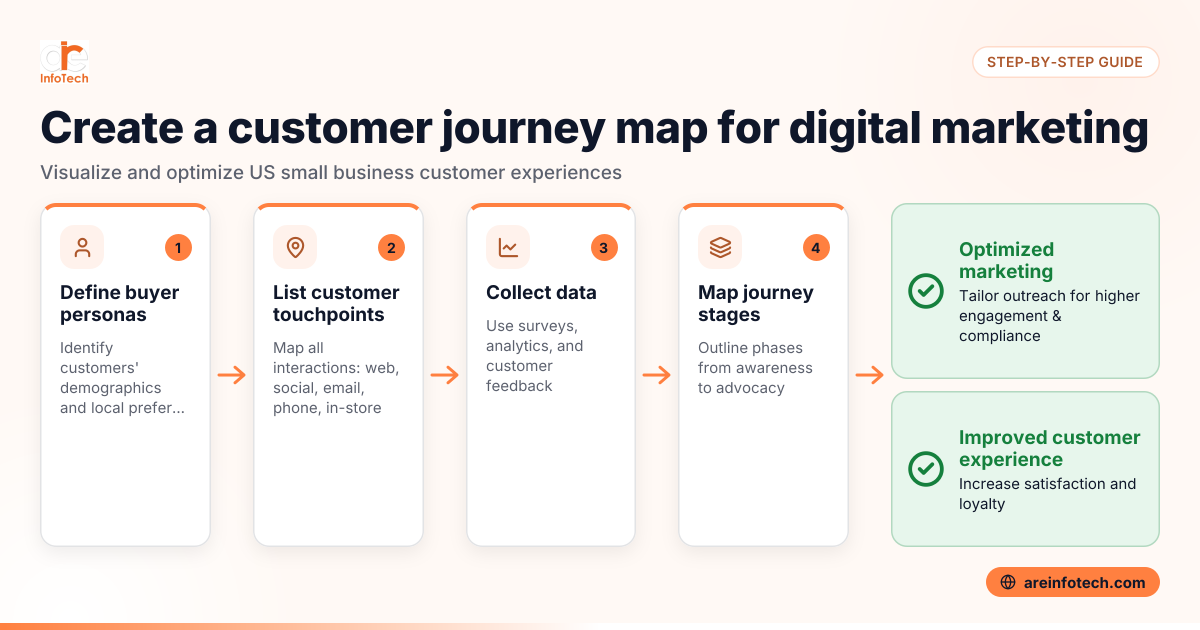
Creating a customer journey map is a powerful digital marketing tool that helps United States small businesses understand their customers' experiences. By visualizing every interaction, from discovery to purchase and beyond, businesses can tailor their marketing strategies to increase engagement and sales.
A customer journey map in digital marketing visualizes the full experience a US customer has with a business online and offline. It tracks the steps a buyer takes when interacting with your brand, including researching products, visiting your website, contacting support, and making purchases.
These maps help you see where customers engage, hesitate, or drop off so you can optimize marketing messages and touchpoints. For small businesses, especially those in cities like Chicago or Detroit, understanding these journeys is vital as local consumers often rely on trusted referrals and personalized communications.
Creating a customer journey map allows you to anticipate customer needs and tailor your marketing accordingly. It improves customer satisfaction and increases the likelihood of repeat business.
By mapping your digital marketing efforts, you can prioritize channels that deliver the best return on investment, be it email campaigns compliant with CAN-SPAM, targeted phone outreach respecting TCPA rules, or social media ads. This tailored approach is key to competing effectively in competitive markets like Houston or suburban areas.
Customer journey maps also enable tracking of key moments where offering promotions, educational content, or customer support can make a difference. Using AI customer journey data helps identify patterns you might miss otherwise, ensuring your marketing strategy evolves as your customers' behaviors change.
Start by gathering customer data and feedback to outline key touchpoints in the buying process.
Identify who your customers are, including demographics, motivations, and challenges. For US small businesses, consider local factors such as state sales tax impact on purchasing, preferred communication preferences (email vs. phone), and common payment methods like QuickBooks or Stripe.
Map every point where customers engage with your business — your website, social media, email campaigns, phone calls, in-store visits, or reviews. Consider interactions prior to the sale, during the purchase, and post-purchase customer service.
Use surveys, interviews, website analytics, social media insights, and customer support logs. This will reveal what customers think and feel at each stage, and where drop-offs occur.
Typical stages include awareness, interest, consideration, purchase, retention, and advocacy. Customize these labels to fit your business model.
Look for areas where customers face barriers or frustrations. Maybe your checkout process causes abandonment or customers are unsure how to contact you under TCPA guidelines.
Create a clear, easy-to-understand diagram of the journey, highlighting customer emotions, questions, and your business's responses at each stage.
AI customer journey tools analyze customer behavior data to predict future actions and personalize marketing outreach. AI can segment customers more precisely, automate email or retargeting campaigns, and provide insights that go beyond surface-level analysis.
For example, AI can detect which email sequences result in higher engagement while maintaining compliance with CAN-SPAM laws. It can also optimize timing for outbound calls under TCPA restrictions or suggest website changes that reduce bounce rates.
Incorporating AI-powered analysis into your customer journey map empowers your small business to be proactive rather than reactive, saving marketing dollars and increasing conversion rates.
Compliance with US digital marketing regulations like CAN-SPAM and TCPA is crucial when contacting customers digitally.
When creating your customer journey map, identify all digital outreach methods—email, phone, SMS—and ensure opt-in compliance. For emails, always include clear unsubscribe options, necessary disclosures, and accurate sender information to meet CAN-SPAM requirements.
For phone and SMS outreach, follow TCPA rules by obtaining express consent and respecting call times. Ensuring compliance builds trust and avoids costly legal issues that could damage your brand reputation.
Your map should include post-purchase touchpoints like asking for reviews or referrals. Many US small businesses rely on local reputation to attract new customers.
Consider integrating follow-up emails or phone calls encouraging satisfied customers to leave reviews on Google, Yelp, or industry-specific sites. Tailored timing and messaging based on customer behavior identified in the journey map will increase response rates.
Strong reputation management is vital for standing out in competitive US markets, and a well-crafted journey map ensures you engage customers when they’re most satisfied.
There are various tools available specifically tailored to small businesses in the US. Some popular options include:
For marketing campaigns and financial integration, tools like QuickBooks and Stripe help correlate transactions with campaign performance. Use data from these tools to refine your customer journey map regularly.
The US digital marketing landscape evolves constantly, with changes in consumer behavior, regulations, and technology. Updating your map every 6 to 12 months helps keep your strategy relevant.
Review feedback, sales data, and marketing performance metrics periodically. Adjust your map based on emerging channels such as LinkedIn video marketing or new AI customer journey insights. Small businesses that keep their maps current enjoy better customer retention and higher sales.
To maximize the impact of your customer journey map on digital marketing, ensure your website and content are optimized for search engines. Conduct periodic SEO audits focusing on:
ARE InfoTech can assist your small business with comprehensive SEO audits and strategies tailored specifically for digital marketing success in United States markets.
A sales funnel shows the buyer’s movement through stages toward a purchase, focusing on conversion rates. A customer journey map includes all customer interactions and emotions across channels, offering a broader, more detailed perspective.
Yes, many tools offer drag-and-drop interfaces and templates suitable for beginners. Start simple, focusing on key touchpoints, then expand with data and AI insights as your skills grow.
Track metrics like customer retention, conversion rates, satisfaction surveys, and digital engagement. Improvements in these areas reflect an effective journey map and marketing strategy.
Including real customer input through surveys or interviews provides the most accurate map. Their feedback highlights actual pain points and preferences missed by internal assumptions.
Mobile optimization is critical since many US consumers research and purchase via phones. A seamless mobile experience reduces drop-offs and enhances user satisfaction.
AI tools used by reputable businesses comply with US data privacy laws by anonymizing data and securing personal information, ensuring ethical marketing practices.
For small businesses across the United States seeking to refine their digital marketing tactics, creating and leveraging a customer journey map is a foundational step. Explore more digital marketing insights and strategies on the ARE InfoTech blog to stay ahead in your local market.
Google Reviews


