
B2B email marketing is a cost-effective way for United States manufacturers to connect with distributors, suppliers, and industrial clients. By using personalized content and complying with US regulations like CAN-SPAM and TCPA, manufacturers can build trust, generate qualified leads, and strengthen long-term relationships.
B2B email marketing provides a direct communication channel to reach professional buyers involved in manufacturing decisions. It supports multi-stakeholder buying processes common in cities like Chicago and Houston through personalized, relevant content that nurtures leads and informs distributors.
Investing in B2B email marketing offers measurable ROI and builds brand authority. By maintaining ongoing communication via email, manufacturers can sustain trust over typically long sales cycles and effectively promote new products or services.
AI B2B email uses artificial intelligence to tailor messages by analyzing recipient behaviors and preferences. It automates personalization, subject line optimization, and A/B testing to send the right content at optimal times.
For manufacturers, this means better-targeted campaigns that increase engagement and conversion rates. AI tools predict which leads are most promising, allowing focused follow-up and improved ROI.
Creating accurate buyer personas is the foundation of an effective B2B email marketing strategy in manufacturing.
Clear buyer personas help avoid generic emails and improve relevance, boosting open and conversion rates.
Manufacturing buyers appreciate educational and actionable emails:
Balancing promotional with helpful content establishes you as a trusted partner, not just a vendor.
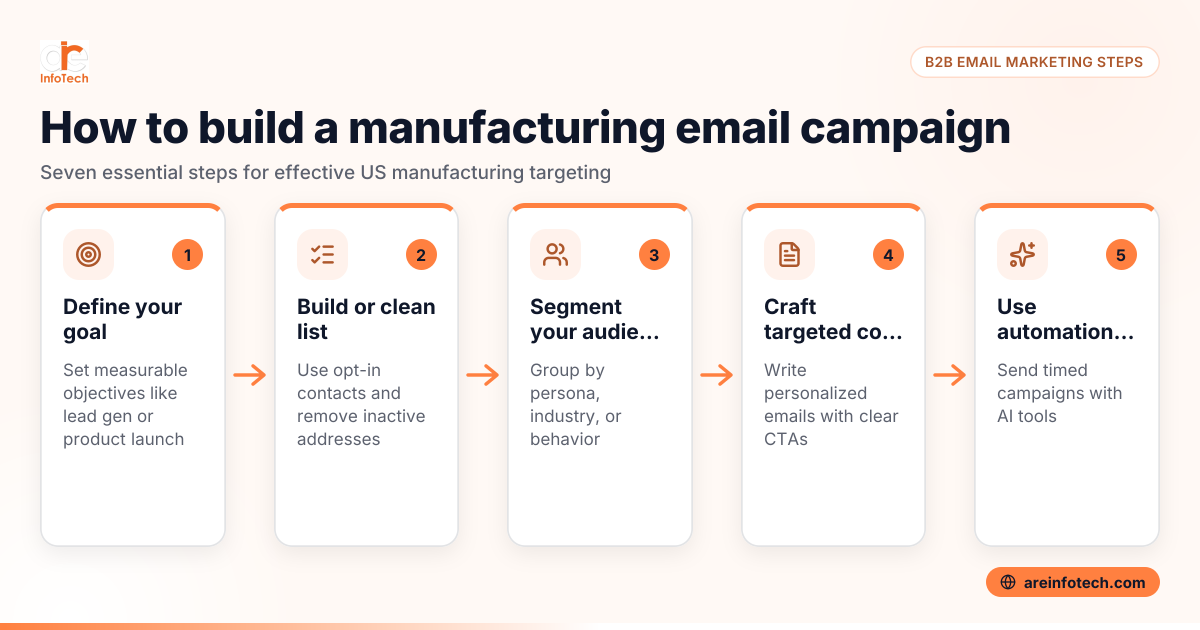
Set a measurable objective such as lead generation, product launch promotion, or event registration.
Collect opt-in contacts via your website, trade shows, and CRM. Remove bounced and inactive addresses regularly.
Group contacts by buyer persona, industry, or past behavior for tailored messaging.
Write clear subject lines and preview text. Use personalized greetings and strong calls to action.
Employ automated drip campaigns and schedule emails for local time zones like Detroit or Houston.
Include a valid business address and an unsubscribe link. Obtain prior consent for calls or texts beyond email.
Monitor open, click-through, and conversion rates to refine content and timing. Use A/B testing to improve performance.
Complying with CAN-SPAM requires clear unsubscribe options, truthful subject lines, and accurate sender info. TCPA governs automated calls and texts, so you must have prior consent for these.
Keep detailed consent records and use email tools with built-in compliance features. Staying compliant protects your reputation and avoids costly penalties.
Connecting email platforms with manufacturing ERP systems automates triggered emails based on order status and inventory. For example, notifying distributors when stock arrives or confirming shipments.
This integration reduces manual errors, keeps sales teams informed, and enhances personalized follow-up — improving distributor relationships and operational efficiency.
Track these to evaluate success:
Focus on improving these metrics through segmentation, quality content, and optimized send times.
Improve deliverability by:
High deliverability ensures your messages reach key decision-makers in industries such as automotive or aerospace.
Distributors are critical sales partners. Use segmented email campaigns to send product updates, promotional offers, training invites, and co-branded material.
Regular, valuable communication strengthens distributor loyalty and drives sales growth across regional US markets.
In competitive US manufacturing markets, B2B email marketing helps build trust, educate prospects, and nurture long-term connections. By leveraging targeted content, compliance, list segmentation, and ai b2b email tools, manufacturers stand out in major cities like Detroit and Chicago. For more insights on digital marketing growth, visit the ARE InfoTech blog.
A strong open rate for US manufacturing emails is typically 20-30%. Higher rates show effective subject lines and list quality.
Once or twice per month is ideal to stay top of mind without overwhelming recipients.
Yes, if you comply with CAN-SPAM rules including providing an unsubscribe link and valid address. Consent improves response rates.
Use personalization like addressing recipients by name and company. Avoid excessive data use or intrusive tracking.
Segmentation enables relevant messaging based on role, industry, or behavior, boosting engagement and conversions.
Automation works for lead nurturing and routine emails, but personal sales outreach remains important for complex deals. AI tools help balance both.
Google Reviews


