
Oct 22, 2026
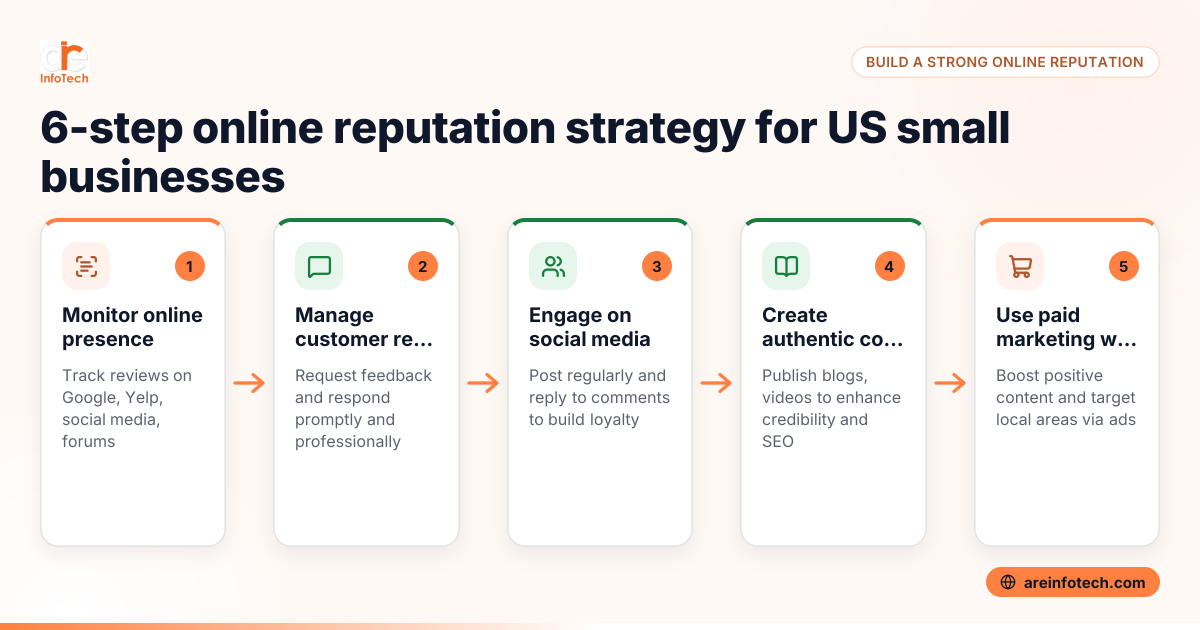
Building a strong online reputation management strategy for small businesses in the United States means actively shaping how your brand appears online. It involves monitoring reviews, engaging customers, responding to feedback, and using digital tools including AI online reputation features to maintain a positive image that drives trust and growth.
Online reputation management for small businesses United States refers to the strategies and actions you take to influence public perception of your brand on digital platforms. Unlike large corporations with dedicated teams, small businesses often need more practical, cost-effective tactics that fit their resources. This involves monitoring what customers say about your business on Google Business Profile, Yelp, social media, and other platforms relevant in US markets like Chicago or Houston.
A strong reputation helps small businesses stand out because US consumers commonly check online reviews before purchasing. It directly affects lead generation, conversion, and retention. This is why reputation management is not just about crisis control but also about proactively building your brand’s trustworthiness.
In cities like Detroit and Houston, local competition is fierce, and word-of-mouth has moved online. Your online reputation influences:
AI online reputation management uses artificial intelligence tools to monitor and analyze online brand mentions automatically. It includes sentiment analysis, alerting you to negative reviews or comments instantly so you can respond quickly.
These tools save time and add insights by identifying trends in customer sentiment. Smaller businesses can leverage affordable AI solutions integrated into CRM or social media management platforms to stay proactive about their brand image.
Building an effective online reputation management strategy involves monitoring your brand presence, engaging customers actively, and using technology including AI online reputation tools to quickly identify and address issues. It requires consistent effort across multiple channels and compliance with US regulations.
Create a habit of checking all platforms where customers may mention your business:
Consider tools that aggregate these mentions into one dashboard using AI online reputation features to spot issues early.
Request reviews from satisfied customers via email or at point of sale. Note that US laws like CAN-SPAM require compliant messaging practices.
Respond quickly to every review, positive or negative. Thank customers for positive feedback to build rapport. For negative reviews, address concerns professionally and offer solutions or offline follow-up.
Social media is where many customer conversations happen. Posting regularly and replying promptly to comments and messages shows that you care. Use platforms popular in your region—Facebook and Instagram for B2C, LinkedIn for B2B.
Consistent engagement also improves your visibility and builds a loyal following.
Publish blogs, videos, or guides relevant to your customers. Content marketing reflects your expertise and values. For US small businesses, topics can focus on local interests or practical how-tos, such as tax season prep tips or product maintenance advice.
Search engines reward fresh, quality content and it pushes down negative search results naturally.
Sometimes boosting positive content or promoting your best reviews via paid ads attracts more eyes and helps control your narrative. Tools like Google Ads can target local areas such as Chicago or Detroit to amplify your reputation locally.
Employees interacting with customers should understand your commitment to reputation management. Train them on responding to inquiries, handling complaints, and representing your brand online in a consistent manner.
Small businesses benefit from tools tailored to their size and budget. Technologies like review monitoring apps, social listening platforms, and AI online reputation assistants automate many aspects. These solutions analyze data, send instant notifications about new reviews or comments, and sometimes suggest appropriate responses.
Investing in these tools helps you stay competitive and identify reputation risks before they escalate.
Negative reviews are inevitable but manageable. The best approach includes:
Showing that you take feedback seriously and work to improve turns negatives into an asset by attracting positive attention.
When managing your reputation, avoid deceptive practices like fake reviews or misleading claims which violate Federal Trade Commission (FTC) rules. Also, outreach via email or phone must comply with CAN-SPAM and TCPA regulations.
Using a transparent approach builds authentic trust and reduces the risk of penalties or damage to credibility.
Track metrics such as:
Regular reporting helps refine your strategy and demonstrate ROI.
Starting ORM begins by assessing where you currently stand online and setting up monitoring systems.
Set up alerts and monitoring tools, preferably with AI online reputation features for real-time updates. Choose priority platforms based on your business location, such as Chicago or Detroit, and customer shopping habits. Train your team on handling reviews and customer interactions professionally. Commit to ongoing management rather than a one-time effort.
If you want to understand how your small business website can rank higher by improving your reputation footprint, consider an SEO audit. This review evaluates your online visibility, local SEO, and content strategy aligned with reputation goals. The ARE InfoTech team offers insights and next steps tailored for small businesses interested in boosting local lead generation and brand trust.
Looking for detailed guidance on related digital marketing topics? Check out the ARE InfoTech blog for expert articles on topics like How to Use AI-Powered SEO Tools to Boost Local Lead Generation for Small Businesses in United States and How to Create a CAN-SPAM and TCPA Compliant Email and Phone Outreach Strategy for US Small Businesses.
ORM is the process of monitoring, influencing, and managing how your brand is perceived online. For small businesses in the US, it matters because consumers heavily rely on online reviews and social proof before buying. Good reputation management drives trust, more customers, better local SEO, and growth.
Yes, AI tools help by automatically scanning multiple platforms, analyzing sentiment, and alerting owners to urgent issues faster than manual efforts. AI also provides data-driven insights to improve engagement strategies and monitor reputation trends continuously.
In the United States, outreach via email or calls must comply with CAN-SPAM and TCPA regulations. This means getting permission, offering opt-outs, and avoiding spammy or deceptive practices. Compliance builds customer trust and protects your business legally.
Report fake reviews to the platform where they appear, like Google or Yelp. Provide evidence if possible. Meanwhile, respond professionally indicating you are investigating the issue without engaging emotionally. This reassures other customers while protecting your brand.
Ideally, daily monitoring is best to promptly address issues, but at minimum weekly checks help you stay aware. Automated tools with AI online reputation features can send instant alerts to reduce the chance of negative reviews going unnoticed.
Paid ads can boost visibility for positive content and attract a local audience, especially in competitive markets like Chicago or Detroit. Use ads strategically to highlight testimonials, promotions, or brand stories that reinforce your positive reputation.
Building and maintaining a strong online reputation takes effort but offers significant rewards for small businesses across the United States. By combining monitoring, engagement, authentic content, and smart use of technology, your business will not only defend its brand but also attract loyal customers and grow sustainably.
Google Reviews


