
Oct 15, 2026
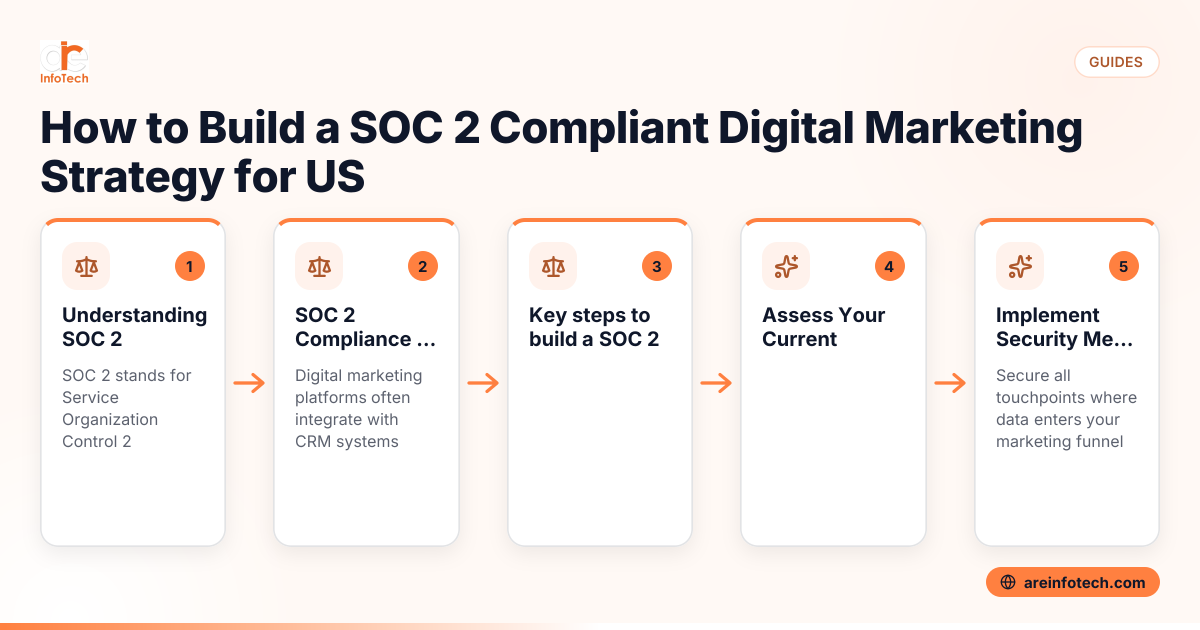
Building a SOC 2 compliant digital marketing strategy is essential for US manufacturing businesses aiming to protect customer data and strengthen trust. SOC 2 compliance ensures your marketing operations meet strict security, availability, processing integrity, confidentiality, and privacy standards.
SOC 2 stands for Service Organization Control 2, a framework developed by the American Institute of CPAs (AICPA). It governs how service organizations manage customer data based on five “trust service criteria”: security, availability, processing integrity, confidentiality, and privacy. For US manufacturing businesses, this means every digital marketing activity touching personal or sensitive data must comply with these principles to ensure data isn’t misused or exposed.
Digital marketing involves collecting, storing, and processing a variety of digital information—from customer contact details to behavioral data. With rising cybersecurity concerns and regulations, manufacturers in Chicago, Houston, Detroit, and beyond need to align their marketing strategies with SOC 2 controls to prevent data breaches and meet increasing buyer expectations around vendor compliance, especially in B2B contexts.
Digital marketing platforms often integrate with CRM systems, email marketing tools, and analytics software — all handling personal or proprietary data. If your marketing is not SOC 2 compliant, you risk data leaks, regulatory scrutiny, and losing client trust when competing for manufacturing contracts.
Many manufacturing buyers require vendors to pass SOC 2 audits to qualify for partnership. Meeting SOC 2 standards can be a competitive advantage, showing your commitment to data security from lead generation to post-sale engagement. It also safeguards against financial losses and legal liabilities triggered by data mishandling.
Our step-by-step guide helps you align digital marketing practices with SOC 2 requirements.
Begin with a gap analysis comparing your existing marketing technology and workflows against SOC 2 trust criteria. Examine:
For example, if using QuickBooks and Stripe data integration for promotions or invoices, verify those systems’ compliance and data security policies.
Secure all touchpoints where data enters your marketing funnel. This includes:
In manufacturing ERP integrations used for targeted marketing, ensure secure API connections comply with SOC 2 encryption standards.
Many digital marketing teams rely on third-party SaaS providers for email marketing, analytics, and CRM. It’s essential to:
For example, if you outsource retargeting ads to agencies that use consumer data, confirm their adherence to SOC 2 security controls.
AI SOC 2 tools are designed to help companies automate and monitor compliance controls, reducing the manual overhead. They can track access logs, detect unusual marketing data usage, and generate audit-ready reports automatically.
By integrating AI SOC 2 platforms with your marketing workflows, your business can efficiently maintain compliance while focusing resources on campaign optimization and lead generation. These smart solutions provide real-time alerting if compliance issues arise in email campaigns or customer databases.
SOC 2 is not a one-time project. Continuous compliance requires marketing teams to follow documented policies, regular training, and audits.
Use internal compliance dashboards integrated with your marketing platforms to maintain transparency and accountability. This also helps in demonstrating compliance during SOC 2 audits requested by customers.
Compliance overlaps with regulations like CAN-SPAM for email marketing and TCPA when using outbound calls or SMS outreach. Your digital marketing must honor opt-in/opt-out rules and document consent to comply both with SOC 2 and these laws.
Also, state sales taxes and financial reporting may come into play if marketing campaigns involve promotions requiring financial tracking via systems like Stripe or QuickBooks. Ensure integrated financial data is secure and consistent for SOC 2 audit purposes.
Thorough documentation is critical. Assemble:
Regular internal reviews simulate audit conditions and help identify weaknesses before a formal SOC 2 auditor examines your controls. This preparedness builds confidence with buyers in Detroit or Houston seeking compliant manufacturing partners.
Building a SOC 2 compliant digital marketing strategy for US manufacturing businesses enhances data security, builds prospect confidence, and meets increasing supply chain compliance demands. By assessing current processes, implementing strong security, managing third-party risks, leveraging AI SOC 2 tools, and maintaining ongoing compliance through training and audits, manufacturers can position themselves as trusted vendors in competitive markets.
For more detailed insights, check the ARE InfoTech blog and related guides like How to Build a Robust B2B Content Marketing Plan for Manufacturing Companies in United States or How to Use Data-Driven Digital Marketing Strategies to Grow Manufacturing Businesses in United States.
SOC 2 compliance means digital marketing teams must follow strict guidelines to protect customer data. They need to secure data collection, storage, and processing tools, control who accesses data, and prepare to respond to incidents swiftly. It also involves regular audits to maintain compliance.
AI SOC 2 tools automate monitoring and reporting on data access and abnormalities within marketing systems. This reduces manual errors and enables faster detection of compliance risks, helping marketers maintain secure operations without sacrificing productivity.
While not legally required, using SOC 2 compliant third-party platforms is a best practice. It reduces vendor risk and ensures data shared with these providers is handled securely, which is often demanded by manufacturing buyers during supplier evaluations.
Policies should be reviewed at least annually or whenever significant technology, regulations, or business changes occur. Ongoing updates help address emerging threats and keep marketing processes aligned with SOC 2 requirements.
Yes, SOC 2 compliance overlaps with regulations like CAN-SPAM for email marketing and TCPA for phone outreach. Following SOC 2 security principles supports compliance with these laws, reducing overall legal risks in digital marketing activities.
Google Reviews


