
Oct 16, 2026
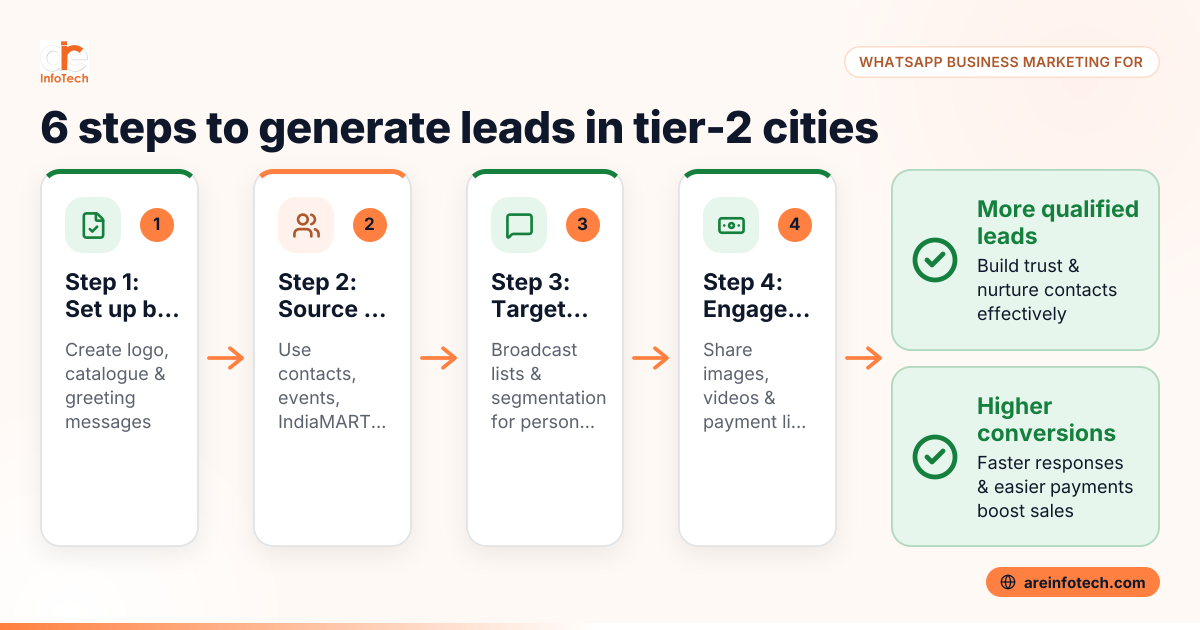
WhatsApp Business marketing for SMEs India is a cost-effective way to tap into the vast potential of mobile users in tier-2 cities. By using targeted messaging, catalogue features, and automation, small and medium enterprises can generate quality leads and build lasting customer relationships through India’s favourite business chat platform.
WhatsApp is the leading messaging app in India, with over 400 million users. Most tier-2 cities’ residents rely heavily on mobile communication for shopping, enquiries, and services. SMEs often face budget and resource limits for marketing but can leverage WhatsApp Business marketing for quick, low-cost lead generation.
The platform provides tools tailored to businesses: branded profiles, product catalogues, automated greeting messages, and quick replies. These features enable SMEs to build brand credibility and pitch personalised offers effectively.
For example, a textile exporter in Surat or a bakery in Mysore can use WhatsApp to showcase products, share offers, and quickly respond to customer queries without a separate website or app. This helps maintain buyer interest, reduces lead drop-off, and accelerates sales cycles.
AI WhatsApp Business involves using intelligent chatbots and automated responses within WhatsApp to handle customer queries automatically and guide leads through the buying process. Chatbots can provide answers instantly 24/7 and qualify leads by asking relevant questions.
This technology ensures SMEs in tier-2 cities never miss a chat or inquiry, even outside business hours. It scales personalised communication without needing a large sales team.
For instance, an electronics dealer in Indore can deploy an AI-powered WhatsApp assistant that helps customers find suitable models, shares price lists, confirms stock availability, and books orders seamlessly—all within WhatsApp.
Implementing AI automation reduces response time, improves customer experience, and increases conversion rates by promptly addressing potential buyers.
A professional profile builds trust for leads coming from online platforms like IndiaMART or local directories like JustDial.
Start with existing lead sources familiar to Indian SMEs:
SMEs in cities such as Bhubaneswar or Coimbatore can combine digital and word-of-mouth methods to quickly build a quality WhatsApp contact list.
Broadcast lists allow you to send messages to multiple contacts without revealing recipients—a key privacy feature fitting Indian business etiquette.
For example, a clothing boutique in Jaipur could send a festive season discount only to contacts who previously bought ethnic wear.
Visual content grabs attention better than plain text. Use images, short videos, PDFs, and voice notes to highlight your offerings.
Packing multimedia with text boosts leads’ interest and decision-making, fitting the Indian preference for rich information before buying.
SMEs should handle customer data per the Digital Personal Data Protection (DPDP) Act 2023 to maintain trust and legality. Use WhatsApp Business only for consented communication and avoid sharing personal data with third parties without permission.
Opt for clear opt-in messages when adding contacts. Secure backups and avoid storing sensitive data on multiple devices. Regularly update privacy settings within the WhatsApp Business app.
Being transparent about data use strengthens relationships with customers in cities like Lucknow or Nagpur and prevents regulatory issues.
WhatsApp Business lets you create templated quick replies for FAQs and common messages. Setting up these saves time and ensures prompt replies.
Timely follow-up is key to converting chats into orders especially in fast-paced markets like Pune or Bengaluru.
By integrating UPI payment links or Razorpay invoices into WhatsApp conversations, SMEs simplify the purchase journey.
This reduces friction and builds confidence, increasing lead-to-sale conversion in tier-2 Indian cities where digital payments adoption is rising rapidly.
Tracking key metrics helps hone your strategy:
Regular audits help pinpoint what messages or content lead to more sales. For example, a furniture SME in Mysore might notice video demos generate 30% more inquiries than text alone and adjust accordingly.
While entrepreneurs can start on their own, partnering with digital marketing experts like ARE InfoTech can maximise results. Experienced teams understand Indian SME challenges, can set up automation with AI WhatsApp Business tools, optimise catalogues, and create regional language content.
Expert agencies also provide insights into local audience preferences in cities like Jaipur or Indore and help integrate WhatsApp seamlessly with other channels such as Google My Business or social media.
By adopting these practical steps, SMEs across India’s tier-2 cities can leverage WhatsApp Business marketing to build trust, generate leads, and grow sales with minimal investment. The mobile-driven, chat-first Indian consumer is ready to engage—your business just needs to be available and responsive where they are.
For more detailed strategies and ongoing updates for Indian businesses, visit the ARE InfoTech blog.
WhatsApp Business app is free to download and use. The main cost involves your time or paid tools for automation and chatbot setup. Data charges may apply depending on your mobile plan. Compared to other advertising, it is very budget-friendly for Indian SMEs.
Yes, you can create groups to engage communities and loyal customers. However, groups are less private and useful for existing customers or forums. Broadcast lists are better for direct marketing and lead nurturing.
Obtain clear consent before messaging customers. Do not share personal data externally. Use WhatsApp’s security features such as two-step verification. Inform customers how their data will be used inline with DPDP regulations.
Basic chatbots can be set up with simple no-code platforms or agency help. Advanced AI integration may need technical assistance. Many Indian SMEs find working with agencies or freelancers cost-effective for initial setup.
It’s best to avoid spamming. Aim for 1-2 quality messages per week tailored with offers or updates relevant to the customer. Monitor responses and adjust the frequency accordingly.
WhatsApp itself does not process payments, but you can share UPI QR codes, Razorpay links, or payment invoices within chat. This streamlines payment collection without leaving the app, which is convenient for customers in tier-2 cities.
Google Reviews


