
Oct 19, 2026
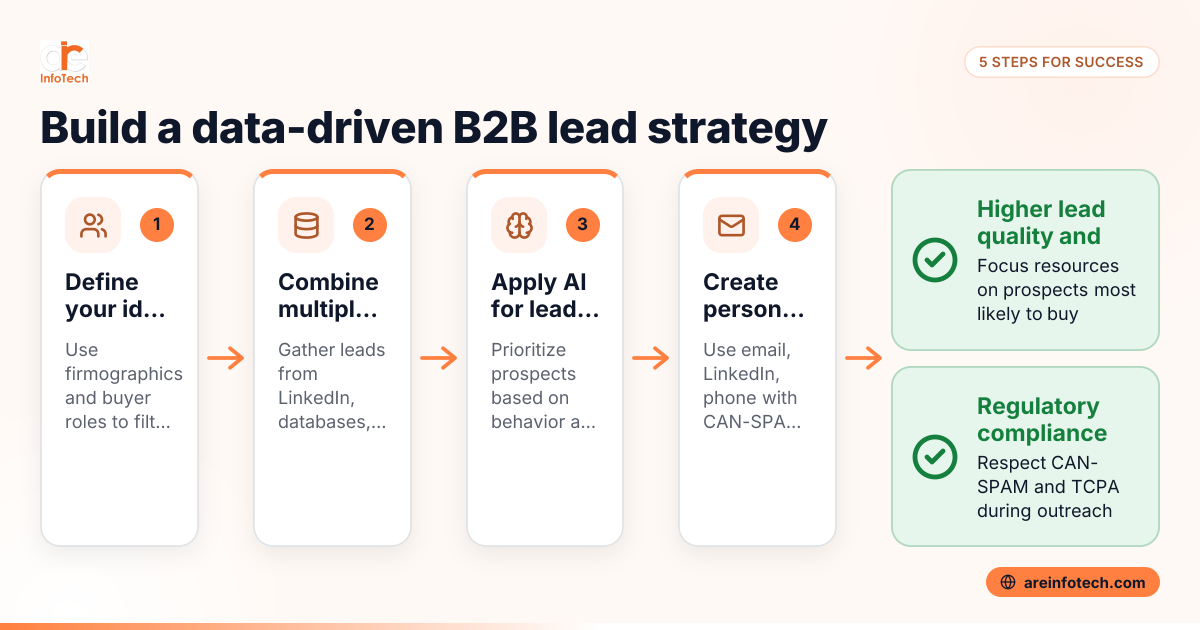
Building a data-driven B2B lead generation strategy for industrial equipment manufacturers in the United States involves leveraging precise data insights, targeted digital marketing, and automation tools to find and engage the right buyers efficiently. Utilizing AI tools and market intelligence enables manufacturers to tailor campaigns, reach decision-makers, and optimize lead quality continuously.
Data-driven lead generation helps industrial equipment manufacturers identify qualified prospects quickly by analyzing firmographics, purchase patterns, and engagement signals. This approach reduces wasted effort on unqualified leads and shortens the sales cycle.
In this sector, buyers have long research phases and specific needs. By tapping into analytics and CRM data, manufacturers can target ideal companies—for example, Detroit automotive suppliers or Houston energy producers—at the right moment with personalized messages. Data-driven strategies increase conversion rates by focusing on prospects who show genuine intent and fit.
AI b2b lead generation automates analysis of large datasets, scoring leads on engagement, growth signals, and industry trends. This helps focus sales efforts on prospects with the highest potential to buy.
In industrial manufacturing, AI identifies buying intent from online activity like product searches or content downloads. It also predicts optimal outreach timing, improving conversion chances. For example, a CNC machinery manufacturer can use AI scoring to prioritize leads based on facility expansions in key US markets such as Chicago or Houston. This targeted approach saves time and increases sales efficiency.
A precise B2B lead generation campaign begins by defining your ideal customer profiles. For industrial equipment manufacturers, ICPs typically include company size, industry type, annual revenue, geographic location, and decision-maker roles such as plant managers, procurement directors, or operations heads.
Clear ICPs help in filtering leads, creating targeted messaging, and choosing the right channels for outreach.
Building a relevant lead list requires combining different data sources, including:
Ensure the data is updated to avoid contacting outdated or irrelevant contacts. Maintaining data hygiene is critical to meet compliance standards like the CAN-SPAM Act and TCPA.
After building a comprehensive lead list, use AI-powered lead scoring to identify prospects with the highest potential to convert.
For example, a manufacturer producing industrial pumps can use AI to rank leads based on factors like recent inquiries about pump maintenance solutions or expansion of chemical plants in Houston. This enables sales teams to engage those requiring pumps soon, not just casually browsing.
Craft messaging tailored to buyer pain points, product benefits, and industry relevance. Use a combination of email, LinkedIn, and phone outreach to maximize contact opportunities.
Personalization increases engagement rates and response quality, laying the groundwork for sales conversations.
Measuring success means focusing on lead quality and ROI instead of lead volume alone. Track MQLs, SQLs, conversion rates, and costs per lead. Use CRM dashboards to monitor pipeline velocity and engagement metrics like email open or click rates. This data guides ongoing campaign optimization.
Marketing automation platforms help nurture leads through the buying journey using drip email campaigns and triggered content based on prospect behavior. Retargeting ads on LinkedIn and Google re-engage visitors who showed interest but didn’t convert immediately.
This layered approach keeps your brand top-of-mind with prospects while providing valuable educational content to move leads closer to purchase decisions.
Many manufacturers lack the internal expertise to design and implement highly targeted, data-driven lead generation campaigns. Agencies specializing in B2B industrial marketing, like ARE InfoTech, bring:
Outsourcing to a specialized agency frees manufacturers to focus on product innovation while consistently attracting qualified leads.
Email and LinkedIn are the most effective channels for engaging business decision-makers in the US industrial sector. Phone calls can complement these but require compliance with TCPA rules. Combining these channels with retargeting ads boosts visibility.
Lead generation timelines vary by product complexity and sales cycle length. Typically, initial qualified leads appear within 1-3 months of launching campaigns, but measurable ROI may take 6 months or longer in industrial markets.
Adhere to CAN-SPAM requirements for email, including clear opt-outs and sender identification. For phone outreach, follow TCPA rules regarding caller consent. Regularly update your contact lists and use opt-in data sources.
Yes. AI tools scale to businesses of all sizes, providing priority scoring and segmentation that improve targeting even with smaller datasets. Leveraging such tools enhances efficiency and competitiveness in lead generation.
Providing technical whitepapers, case studies, and how-to guides positions your company as an industry expert. Educational content improves lead quality by attracting buyers already researching solutions, thereby increasing lead conversion.
Leveraging data-driven and AI-enhanced strategies is critical for industrial equipment manufacturers in the United States seeking to generate high-quality B2B leads efficiently. Following these steps ensures your marketing and sales teams focus resources on prospects most likely to convert, while remaining compliant with industry regulations. For tailored, industry-specific digital marketing strategies, explore the ARE InfoTech blog for more insights.
Google Reviews


