.
image
  • Home
  • Blog
  • How SMEs in Tier-2 Indian Cities Can Use WhatsApp Marketing to Drive Local Sales in 2024 India
image

How SMEs in Tier-2 Indian Cities Can Use WhatsApp Marketing to Drive Local Sales in 2024 India

image

ARE InfoTech

WhatsApp marketing is a powerful, low-cost channel for SMEs in India’s tier-2 cities to connect directly with customers. Using personalised messages and AI tools, businesses can drive local sales, build trust, and automate support efficiently in 2024.

Key takeaways

  • WhatsApp marketing offers a personal touch and high engagement for SMEs in tier-2 cities.
  • Setting up a dedicated WhatsApp Business account with catalogues helps organise products and services.
  • Using AI WhatsApp marketing tools can automate replies and segment customers for better targeting.
  • Integrating UPI payments and sharing e-invoices within chats simplifies order and payment processes.
  • Consistent follow-ups and localised content improve customer trust and repeat sales.
  • Compliance with India's DPDP Act 2023 is essential while handling customer data in WhatsApp campaigns.

Why WhatsApp marketing is crucial for SMEs in tier-2 Indian cities in 2024

WhatsApp is the most widely used messaging app across India, including tier-2 cities like Surat, Indore, and Coimbatore. For SMEs, it enables instant, trusted communication that traditional advertising cannot match. This directness reduces lead costs and boosts conversions.

WhatsApp marketing taps into personal trust and interactive multimedia sharing. SMEs can engage customers with offers, updates, and support quickly, helping grow local sales in markets where word-of-mouth and referrals dominate.

How do SMEs set up WhatsApp marketing for local sales?

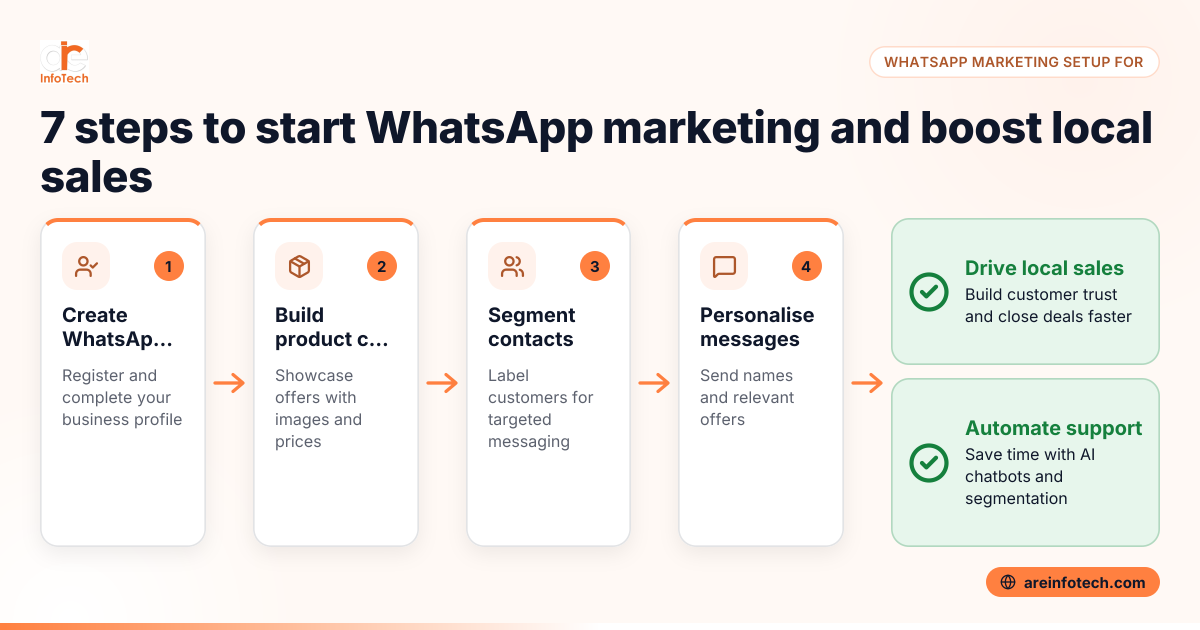
Setting up WhatsApp marketing effectively involves these steps:

  1. Create a WhatsApp Business Account: Download the app and register with your business number. Complete profile details like address, hours, and website.
  2. Build a catalogue: Showcase products or services with images, descriptions, and prices for easy sharing.
  3. Segment contacts: Label customers such as new leads or repeat buyers for targeted messages.
  4. Personalise messages and offers: Use names, relevant promotions, and multimedia to make messages engaging.
  5. Add payment options: Share UPI IDs or Razorpay links for quick payments inside chats.
  6. Automate replies: Use AI WhatsApp marketing features like quick replies to answer FAQs instantly.
  7. Respect data privacy: Get clear consent and comply with the DPDP Act 2023 when handling customer info.

What are the best WhatsApp marketing tactics for SMEs in India?

Smart WhatsApp campaigns for SMEs include:

  • Using broadcast lists to protect customer privacy while sending updates.
  • Sharing short videos, images, and voice notes for authentic engagement.
  • Running exclusive WhatsApp offers to create urgency.
  • Collecting customer feedback via quick polls.
  • Inviting loyal customers to events and launches.
  • Collaborating with local micro-influencers to widen reach.
  • Following up on enquiries, carts, and deliveries to close sales.

How does AI WhatsApp marketing improve results?

AI WhatsApp marketing uses automated, intelligent replies and customer data analysis to save time and personalise offers. It handles FAQs 24/7, segments users, sends timely reminders, and helps sales teams with chat summaries.

For instance, a Pune apparel SME can deploy AI chatbots to suggest sizes and combos based on customer inputs, boosting conversions and freeing human agents for complex queries.

How do SMEs handle payments and invoicing on WhatsApp?

SMEs simplify payments and invoices over WhatsApp by:

  1. Sharing UPI or Razorpay payment links directly in chats.
  2. Requesting payments using WhatsApp’s integrated payment features.
  3. Sending GST-compliant e-invoices as PDFs from Tally or accounting tools.
  4. Keeping transaction records synced for GST filing and audits.

This reduces payment friction and speeds up cash flow, essential for tier-2 businesses.

What challenges do SMEs face with WhatsApp marketing and how to overcome them?

SMEs must overcome issues like spam perception, limited analytics, and compliance:

Always secure customer consent and provide opt-out options to avoid spamming. Space out messages to prevent overload and focus on quality communication. Use manual tracking or supplementary tools to overcome WhatsApp Business’s basic analytics. Comply with DPDP Act 2023 for data security and be transparent about information use. SMEs with limited digital skills can benefit from training or expert help to use AI WhatsApp marketing effectively.

How do SMEs measure the success of WhatsApp marketing campaigns?

Track key metrics like:

  • Response rates to gauge engagement.
  • Conversion rates from leads to orders.
  • Repeat purchase ratios for loyalty.
  • Average response times.
  • Customer satisfaction via quick surveys.

These inform campaign improvements and better personalisation.

Is WhatsApp marketing cost-effective for SMEs in tier-2 Indian cities?

Yes. WhatsApp marketing costs mainly include internet, phone, and optional AI tool subscriptions. Compared to returns of ?50,000 or more per month in many cases, it offers excellent ROI. Personal, timely messages help SMEs build loyal customer bases affordably.

Frequently asked questions

How can SMEs in India comply with data privacy while using WhatsApp marketing?

SMEs must get explicit consent before messaging, safeguard stored data, avoid sharing without permission, and follow DPDP Act 2023 rules. WhatsApp’s end-to-end encryption adds extra security to chats.

What is the role of AI in WhatsApp marketing for SMEs?

AI automates replies, segments audiences for targeted offers, analyses chat data, and speeds up response times, making marketing more efficient and personalised.

Can WhatsApp marketing integrate with existing business tools like Tally or Razorpay?

Yes, payment links from Razorpay can be shared in chats, and GST-compliant invoices created in Tally can be sent as PDFs directly to customers.

Is WhatsApp marketing suitable for all types of SMEs?

It suits most product and service SMEs that value personal communication, such as retail, local manufacturing, and events. Mass branding businesses should also use other channels alongside.

How often should SMEs send WhatsApp marketing messages to avoid customer fatigue?

Limit to 1-2 quality messages weekly. Share only valuable offers, updates, or questions to keep engagement high and avoid spamming.


For SMEs in tier-2 cities ready to grow local sales, WhatsApp marketing offers practical benefits with minimal cost. ARE InfoTech can help implement AI WhatsApp marketing strategies and ensure DPDP Act 2023 compliance. Learn more from the ARE InfoTech blog.

Google Reviews

image

image